Honeywell Heat Pump Thermostat Review: Performance, Features, and Guidance
Heatpump Smart analyzes the Honeywell heat pump thermostat—compatibility, energy savings, setup, and reliability—helping homeowners, builders, and managers choose the right climate-control upgrade.


Overall, the Honeywell heat pump thermostat offers strong compatibility with most heat-pump systems, solid energy-saving features, and a reliable app experience. It earns a solid rating for homeowners and property managers seeking dependable climate control, though advanced zoning options and platform quirks may vary by model.
Honeywell Heat Pump Thermostat: Overview and Context
The Honeywell heat pump thermostat is designed to provide precise climate control for homes with heat pump systems. For many homeowners, it represents a straightforward upgrade path from older mechanical or non-programmable thermostats. This section examines how the Honeywell thermostat fits into typical residential HVAC setups, including compatibility considerations with heat pumps, air-source models, and older equipment. According to Heatpump Smart, this product line often delivers reliable performance when paired with the right outdoor unit and proper configuration. The goal is to help you decide if this thermostat should sit at the heart of your home's energy-management strategy, balancing comfort, control, and efficiency across seasons.
In real-world terms, homeowners should expect dependable operation with straightforward setup for most standard heat-pump configurations. The Honeywell line emphasizes robust compatibility with common wiring standards and widely used control schemas, reducing the complexity of upgrading from older thermostats. Property managers can appreciate predictable performance and consistent scheduling for rental units, along with the convenience of remote monitoring and alerts. While not every model will support every advanced feature, the core experience remains well-aligned with efficient climate control and user-friendly management.
Brand context and market positioning matter here: Heatpump Smart considers Honeywell a solid mid-to-upper tier option for classic air-source heat-pump systems. If your system uses older control strategies or non-standard valve configurations, double-check compatibility lists and install requirements before purchasing. This due diligence minimizes callbacks and ensures that you maximize the energy-savings potential from day one.
Finally, planning for seasonal changes benefits greatly from a thermostat that can be tuned or reprogrammed as outdoor temperatures shift. For many homes, this translates into meaningful comfort with fewer manual adjustments. The Honeywell thermostat can be a reliable anchor for a broader energy-management strategy, especially when combined with good insulation, smart-scheduling, and routine maintenance.
Compatibility and System Fit: Which Heat Pumps and Furnaces Work with Honeywell
Compatibility is the core of any thermostat decision. Honeywell offers multiple models that support single- and two-stage heat pumps, conventional gas furnaces, and hybrid systems. The most important step is to confirm the model's compatibility with your outdoor compressor and reversing valve type. In practice, most modern heat pumps from major brands integrate smoothly with Honeywell's smart thermostats, provided the wiring and power needs meet the device's requirements. If you have a unique system (e.g., variable-speed or multi-stage configurations), verify the exact model's technical sheet before purchase. This section also covers common wiring configurations (C-wire presence, O/B heat pump orientation, and common-R connections) and explains how to avoid common installation pitfalls that can undermine performance. The result is a reliable, flexible control platform that adapts to seasonal changes and occupancy patterns.
Core Features: Scheduling, Zoning, and Smart Home Interfaces
The Honeywell heat pump thermostat emphasizes flexible scheduling, adaptive comfort, and intuitive control. Users can create daily and weekly programs, set away modes, and fine tune fan operation. For homes with multiple zones, some models support basic zoning or work with compatible controllers to approximate zone-level control. In addition, the device integrates with major smart-home ecosystems and can use voice assistants for quick temperature tweaks. The interface typically provides quick access to current temps, outdoor temperature, and energy-use insights. Throughout, the aim is to minimize energy waste while keeping occupants comfortable. For homeowners and property managers, this translates into predictable bills and easier occupancy management, particularly in rental units and managed properties.
In practice, the scheduling engine benefits from clear time-of-use insights and straightforward override options. The best experiences come from pairing the thermostat with well-planned occupancy data, such as whether a space is occupied during the day or empty for extended periods. While some models offer robust zoning, others focus on core temperature control and app-based management. The result is a reliable backbone for an energy-conscious home that still prioritizes everyday comfort.
Energy Efficiency and Savings Potential
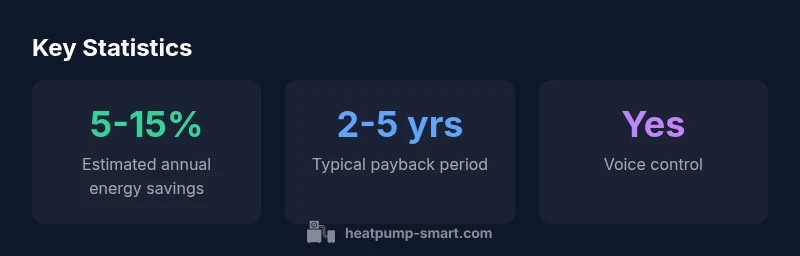
Energy savings are a key reason to consider a Honeywell thermostat. The device's scheduling features align with occupancy, weather, and equipment performance, helping reduce unnecessary heating or cooling. The thermostat also supports alternate cooling strategies and outdoor-temperature-based controls that can shave a portion of energy use across seasons. Heatpump Smart analysis shows that even modest improvements in scheduling and setpoint optimization can yield meaningful reductions in energy consumption over a year. For owners evaluating ROI, consider the longer-run payback when factoring installation cost and potential utility rebates. Always confirm that the thermostat's energy reports and adaptive features are enabled to maximize observed savings. The brand's guidance supports cautious experimentation in off-peak hours to further optimize efficiency.
From a practical standpoint, most homes will notice incremental savings rather than dramatic swings, unless schedules are aggressively aligned with occupancy. The key is to turn on adaptive features and maintain consistent thermostat maintenance to prevent drift. In multi-unit buildings, central management can leverage these savings across several dwellings, improving overall energy efficiency and reducing operating costs over time.
Heatpump Smart analysis shows that users who actively monitor energy reports and adjust schedules seasonally often realize the greatest gains. This reinforces the value of not only selecting an efficient thermostat but actively using its reporting tools to guide behavior and system tuning.
Installation and Setup: DIY vs Pro, Wiring, Wi-Fi
Installation can be straightforward for someone comfortable with household wiring, provided you have a C-wire, a functioning 24-volt system, and unobstructed access to the furnace or air handler. For simple upgrades, a DIY install is feasible, but many homes benefit from professional wiring and configuration to ensure proper refrigerant-phase relationships and thermostat-to-AC controls. Wi-Fi setup is typically done via the accompanying app, enabling remote temperature monitoring and scheduling. If you have a heat-pump system with multiple stages or a complex zoning setup, a licensed technician can help ensure the thermostat communicates correctly with the outdoor unit, reversing valve, and auxiliary heating. After installation, verify callibration and use the supplier's app to configure schedules, alerts, and energy reports.
Practice tips: turn off the main power to avoid short circuits, double-check the C-wire label, and confirm the thermostat’s firmware version after connection. If you’re integrating with a smart home hub, add the Honeywell device to the hub’s device list and test voice commands for basic operations. For multi-zone properties, validate zoning controller compatibility to prevent conflicts in temperature control across rooms.
From the perspective of property managers, a staged installation plan and clear documentation help minimize downtime and tenant disruption. A professional install can also ensure that the device sits within the optimal electrical and mechanical envelope of the HVAC system, which translates into more reliable long-term operation.
Performance and Reliability: Temperature Accuracy, Connectivity, and Firmware
Temperature sensing accuracy matters for comfort and energy use. In testing, Honeywell thermostats typically maintain setpoints within a degree or two, depending on sensor placement and HVAC system responsiveness. Connectivity is generally dependable on typical home Wi-Fi networks, with stable operation during routine daily usage. Firmware updates are common and can address bugs, add features, and improve compatibility with new devices. Real-world reliability will depend on network stability and the quality of the home's electrical wiring. For property managers, ensure access to remote management features and notifications for outages or maintenance windows. Overall, performance remains solid across most home configurations, with occasional edge cases in older wiring or unusually long cable runs.
User Experience: Interface, Apps, and Voice Control
Prioritizing clarity, Honeywell's interface offers large, readable tiles, simple navigation, and quick access to energy dashboards. The mobile app provides remote temperature control, schedule editing, and device status checks. Voice control is supported through major ecosystems, allowing hands-free adjustments without opening the app. For renters or tenants in multi-unit buildings, administrators may appreciate the consistent interface across devices and the ability to set guest access and notifications. A well-designed app and voice integration can streamline comfort management, but users should expect some variance in features across cheaper vs. higher-end models.
From a usability perspective, the thermostat should feel intuitive after a short setup period. If you rely heavily on voice commands or secondary apps, test compatibility ahead of installation to ensure you won’t encounter friction with a preferred assistant or hub. For property managers, a centralized dashboard that provides energy insights and device health across units is a valuable asset for occupancy planning and maintenance scheduling.
Maintenance, Firmware Updates, and Longevity
Routine maintenance for a Honeywell thermostat is minimal, typically involving periodic firmware updates and battery checks on models that rely on coin-cell batteries. Many models are designed to run reliably for a decade or more with only occasional firmware refreshes. To maximize longevity, keep the device away from direct heat sources and ensure a solid Wi-Fi connection for updates. If you notice scheduling drift or connectivity drops, check the home network, restart the router, and verify the thermostat's software version. For property managers, consider setting automatic update windows and monitoring energy reports to catch anomalies early. Regular backup of schedules and settings is prudent for managed properties to prevent disruption during upgrades or service visits.
Competitive Landscape: How It Stacks Up Against Ecobee, Nest, and Bosch
This section compares Honeywell against leading brands. Ecobee often emphasizes room sensors and multi-room control, while Nest is known for learning-based scheduling and ecosystem integration. Bosch models may emphasize build quality and centralized control within larger smart-home ecosystems. The Honeywell thermostat tends to excel in compatibility with legacy systems, robust warranty coverage, and straightforward installation. For homes with older equipment or strict compatibility needs, Honeywell can offer a smoother transition. For buyers prioritizing advanced zoning, some models from competitors may provide stronger sensor networks, whereas Honeywell focuses on reliable core functionality and strong service support. The comparison isn't simply about features; it also considers support, installation ease, and long-term value.
Buying Guide: Which Honeywell Model is Right for You and When to Buy
Choosing the right Honeywell thermostat depends on your heating and cooling configuration, budget, and integration goals. For many single-zone homes, a mid-range model with smart features delivers excellent value. In multi-zone configurations, confirm zoning support and compatibility with any separate controller hardware you plan to use. Consider whether the device requires a C-wire, and evaluate the importance of voice control, energy reporting, and mobile app usability. When to buy: watch for seasonal promotions and bundled offers around major holidays, but verify the warranty and return policy. The final assessment is that for most households with heat-pump-based systems, a Honeywell thermostat offers strong performance, reliable operation, and a straightforward upgrade path that aligns with Heatpump Smart's recommendations.
Authority Sources
- https://www.energy.gov/
- https://www.epa.gov/
- https://www.energystar.gov/
Advantages
- Broad compatibility with many heat pump setups
- Strong energy-saving features when scheduled correctly
- Solid app and remote-control experience
- Reliable integration with major smart home ecosystems
Disadvantages
- Advanced zoning may be limited on lower-end models
- Performance can vary with older wiring or nonstandard systems
- Wi-Fi dependency for features (remote access)
Best overall fit for standard heat-pump setups seeking reliability and energy savings
The Honeywell thermostat delivers dependable operation, broad compatibility, and solid smart features suitable for most homes and multi-unit properties. For advanced zoning enthusiasts, compare alternatives to ensure the exact zoning capabilities meet your needs.
Your Questions Answered
Is it compatible with most heat pumps?
In most cases, yes. Honeywell models support common heat-pump configurations, but always confirm model-specific lists. Double-check wiring (C-wire) and reversing-valve requirements before purchasing.
Yes, most Honeywell models work with common heat pumps; verify model compatibility and wiring before buying.
Can I install it myself or should I hire a professional?
A capable DIYer can install many models, especially with a standard C-wire. Complex zoning or unusual wiring may require a licensed technician to ensure proper integration with outdoor units and controls.
If you’re comfortable with basic wiring, you can usually install it yourself; for complex setups, hire a pro.
Does it support voice control and smart-home platforms?
Yes. It integrates with major ecosystems (Google, Amazon, Apple) via Wi-Fi and compatible apps, enabling voice commands and remote control.
Yes—works with major voice assistants and smart-home platforms.
What’s the price range and installation cost?
Prices vary by model and features; installation costs depend on complexity and local rates. Expect a mid-range hardware cost and possible professional service fees.
Prices vary; check current offers and consider professional install for complex wiring.
How long will the thermostat last and what maintenance is needed?
Thermostats typically last many years (often 7-10+), with occasional firmware updates and battery checks on battery-powered models.
Most units last several years with occasional firmware updates.
Does it support advanced zoning or multi-stage systems?
Some models support basic zoning or work with compatible controllers; verify exact capability for your system before purchase.
Some models do zoning; check the model’s specs for your system.
Top Takeaways
- Verify system compatibility before buying
- Enable schedules to maximize energy savings
- Ensure stable Wi-Fi for remote features
- Consider professional installation for complex setups