How to Make Heat Pump Dryer Dry Faster: A Practical Guide
Learn practical strategies to speed up drying with a heat pump dryer: prep loads, cycle choices, maintenance, and placement for faster, energy-efficient laundry days.


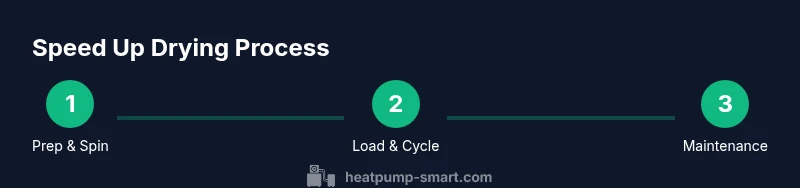
You can make a heat pump dryer dry faster by optimizing loads, prep, and cycle choices. Key steps include: (1) spin-dry clothes in the washer to the highest safe speed, (2) avoid overloading the dryer and clean the lint filter before every cycle, (3) select appropriate drying cycles and moisture sensor options, and (4) maintain clear ventilation. Heatpump Smart notes these practices boost efficiency without harming fabrics.
Why heat pump dryers dry slower and how that affects efficiency
If you’re wondering how to make heat pump dryer dry faster, this guide explains how these machines achieve energy efficiency and what slows drying times. Heat pump dryers recycle heat, operate at lower temperatures, and rely on moisture sensors to prevent overdrying. That design reduces energy use and protects fabrics, but it can mean longer cycles. The Heatpump Smart team found that many households don’t tailor loads to their model, leaving minutes on the table. By adjusting prep, loads, and cycle settings, you can shave time without sacrificing efficiency. According to Heatpump Smart, even small changes can yield noticeable gains on the laundry day.
- How they work: Heat is captured, reused, and circulated, and sensors decide when moisture is low enough.
- Why speed varies: Fabric type, load size, and starting moisture content all influence cycle length.
- Practical approach: Combine smart prep with cycle choices for faster, gentler drying.
Pre-dryer preparation: how to maximize moisture removal before the cycle
Pre-dryer prep matters as much as the drying cycle itself. Start with a high-spin wash cycle to push out as much moisture as your fabrics allow, since drier clothes enter the heat pump dryer. If you can, tumble-dry bulky items separately or use a lighter setting so the machine isn’t forced to push through dense fabrics. A quick towel-dry step for very damp items can shave minutes off the official cycle time, but avoid excessive towel use that just redistributes moisture. Heatpump Smart notes that preconditioning loads is a low-effort, high-return habit that consistently reduces drying time. Also ensure items are not soaked or dripping; moisture sensors respond best when clothes are moderately wet rather than sopping.
Load management: how to load clothes for faster drying
Balanced, properly sized loads allow air to circulate more freely, which speeds up evaporation. Separate bulky items from lighter fabrics and avoid mixing towels with delicate garments in a way that creates bulky clumps. When possible, load items evenly so the drum can tumble smoothly without bunching. Overloading forces the dryer to work longer to extract moisture and can stress the motor. Heatpump Smart’s guidance emphasizes that thoughtful loading is a simple, repeatable habit that yields faster dry times and better fabric care.
Cycle selection and moisture sensing: choosing the fastest appropriate setting
Moisture-sensing cycles are designed to stop drying when clothes reach the target dryness, which saves energy but can feel slower if loads are not prepared well. For most everyday cottons, a normal or eco setting with sensor timing will suffice; for mixed fabrics, select the appropriate setting to avoid overdrying delicate items. Avoid always defaulting to the longest cycle, and instead rely on moisture sensing to cut time when possible. If your model has a “quick dry” option, use it sparingly on lighter loads. Heatpump Smart researchers find that tuning cycle type to fabric and moisture content is one of the most impactful ways to reduce overall dry time.
Maintenance that speeds drying: lint filter, venting, and door seals
A clean lint filter dramatically improves airflow, which directly affects drying speed. Clear the filter before every cycle and inspect the condenser/heat exchanger periodically according to your model’s manual. Ensure the condensate path or drain is clear so water can evacuate efficiently during the cycle. Check door seals for gaps that let humidity escape; a tight seal keeps more warm air inside the drum. Regular maintenance keeps the dryer operating near its rated efficiency and can shave minutes off many loads.
Fabric care and load composition: reducing bulk and improving airflow
Fabric choices influence dry times almost as much as load size. Separate heavy fabrics (jeans and towels) from lighter items (tleece hoodies, synthetics) to optimize airflow. Use the right cycle for each fabric type, and consider letting very thick items air-dry or partially dry before loading the rest. Reducing bulk within a load—folding or rolling items so fabric layers aren’t matted—helps warm air circulate and speeds up evaporation. With heat pump technology, gentler drying remains a priority; the goal is faster dry times without compromising longevity.
Environmental considerations: humidity, placement, and room airflow
Drying efficiency can be impacted by ambient humidity and room airflow. If the laundry area is cramped or humid, consider using a dehumidifier or ensuring there’s adequate air movement around the dryer. Keep the vent path clear of obstructions and avoid blocking returns that feed air into the drum. Proper placement helps the dryer vent or condensate system operate at peak efficiency and reduces drying time for each load. Heatpump Smart highlights that a well-ventilated space supports faster, more consistent results.
Real-world scenarios: common mistakes and quick fixes
A common mistake is loading the dryer with very damp clothes from the washer, then relying solely on a long cycle. Another pitfall is running the dryer with a clogged filter, which drastically reduces airflow and increases cycle time. Separating thick items from light ones and ensuring the drum isn’t overloaded frequently yields noticeable time savings. If you notice unusually long cycles, verify the lint filter, condenser, and vent paths are clean, and review the cycle choice to ensure it matches fabric type. Small, consistent adjustments accumulate into faster dry times over a week.
Troubleshooting quick wins and when to call a pro
If dry times remain consistently long after you’ve optimized prep, load, and cycle settings, begin with a diagnostic of airflow and seals. Check that the door seals sit flush and that the drum glides smoothly; any drag or vibration can sap efficiency. Ensure the condensate reservoir is emptied and the drain is clear. If airflow looks fine but times stay long, consult your user manual or contact a professional for a troubleshooting visit. Regular maintenance remains the best defense against persistent slow drying.
Tools & Materials
- Washer with adjustable high-spin cycle(Aim for 800-1200 rpm if fabrics allow; higher spin reduces moisture entering the dryer)
- Heat pump dryer with moisture sensor(Ensure sensor is enabled and cycles are appropriate for fabric types)
- Lint filter brush or vacuum(Clean before every cycle for optimal airflow)
- Condenser/vent path access kit(Inspect and clean condenser and any vent paths per manufacturer instructions)
- Measuring cup or timer (optional)(Helpful for timing cycles on unusual loads)
Steps
Estimated time: 45-60 minutes
- 1
Prepare clothes with high spin
Check the washing cycle to ensure the clothes were spun at the highest safe speed. Higher moisture removal before drying reduces total drying time and helps the heat pump operate more efficiently.
Tip: If fabrics allow, set the washer to a higher spin speed for damp items. - 2
Clean lint filter and condenser
Before starting the dryer, clean the lint filter and inspect the condenser/vent path. Blocked airflow dramatically increases drying time and energy use.
Tip: Do a quick visual check and remove any built-up lint with a brush or vacuum. - 3
Load clothes properly
Place items evenly around the drum and avoid overpacking. Balanced loads allow air to flow and moisture to escape more quickly.
Tip: Separate heavy fabrics from light fabrics to maintain consistent airflow. - 4
Select the right cycle and sensor
Choose a cycle appropriate for the fabric and rely on the moisture sensor rather than timed cycles alone. This prevents overdrying and reduces unnecessary runtime.
Tip: When in doubt, start with a normal or cotton setting and let the moisture sensor finish the cycle. - 5
Consider a pre-dry test
For very damp loads, you can run a short test on low heat to strip excess moisture before the main cycle. This can shorten overall dry time.
Tip: Use a small test load to gauge how quickly moisture exits the drum. - 6
Mind the environment
Ensure the dryer has adequate space and proper ventilation. In humid rooms, use dehumidification to maintain air flow efficiency.
Tip: Keep the area around the dryer clear of obstructions to maintain airflow. - 7
Record outcomes and adjust
Note which settings yielded the best times for different fabrics and loads. Use this data to fine-tune future cycles.
Tip: Maintain a simple log of fabrics and drying times for quick reference.
Your Questions Answered
What makes heat pump dryers energy efficient, and does speed come at the cost of energy?
Heat pump dryers reuse heat and operate at lower temperatures, which saves energy per cycle. Shorter cycles are often achieved through proper prep and cycle selection without wasting energy. In many cases, you can speed up drying without sacrificing energy savings by optimizing loads and maintenance.
Heat pump dryers save energy by reusing heat; speed comes from better prep and cycle choices without turning off efficiency. Proper loading and maintenance help maintain both speed and savings.
Can I speed up drying by running a longer cycle?
Longer cycles don’t inherently speed up drying and can waste energy. Rely on moisture sensors to stop when clothes are dry enough. If you still see long times, check loading, airflow, and cycle selection.
Longer cycles don’t mean faster drying. Let the moisture sensor determine end time and ensure airflow is good.
Will adding towels to a load help speed up drying?
Adding towels can sometimes help balance loads, but it also adds moisture and bulk. It’s usually better to separate bulky damp items and use a well-balanced mix rather than trying to ‘pad’ the load.
Usually not. Adding towels tends to increase moisture and bulk rather than speed things up.
Should I pre-dry clothes in the washer before transferring?
Yes. A higher spin in the washer reduces moisture before drying, which shortens the dryer cycle. Avoid excessive spinning that could stress fabrics.
Yes. A good pre-spin reduces moisture and speeds up drying, without harming fabric when done correctly.
What maintenance steps have the biggest impact on drying time?
Regularly clean the lint filter, inspect and clean the condenser, and ensure the condensate drain or reservoir is clear. These steps have the largest impact on airflow and drying speed.
Keeping filters and condensers clean is the fastest way to keep drying times down.
Watch Video
Top Takeaways
- Spin laundry to reduce moisture before drying
- Load evenly and avoid overpacking
- Use moisture-sensor cycles for optimal timing
- Clean lint filters and maintain condensate paths
- Record outcomes and adjust for future loads