Difference Between a Heat Pump and a Furnace: An Analytical Guide
Explore the difference between a heat pump and a furnace, including how each works, costs, climate performance, and practical tips to choose the right system for your home in 2026.


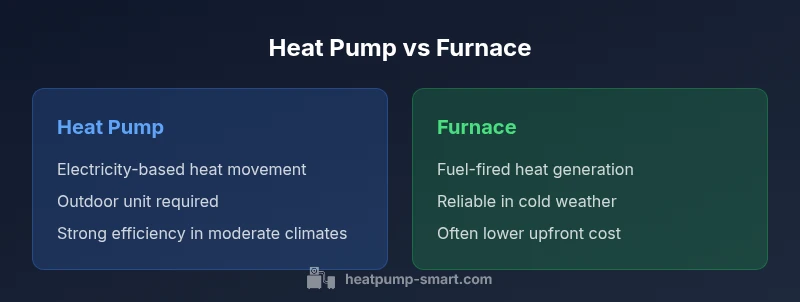
According to Heatpump Smart, the difference between a heat pump and a furnace hinges on energy source, climate performance, and long-term costs. Heat pumps move heat with electricity and refrigerant cycles, while furnaces generate heat by burning fuel. In moderate climates, heat pumps typically deliver lower operating costs, while gas furnaces excel in very cold winters. This quick comparison sets up the in-depth analysis to come.
How the core technologies differ
Understanding the difference between a heat pump and a furnace helps homeowners compare energy transfers and costs. A heat pump uses electricity and a refrigeration cycle to move heat from the outdoors into your home. It relies on a compressor, condenser, evaporator, and expansion device. In winter, the system extracts heat from outside air and transfers it indoors through an indoor air handler or ducted system. The circulating refrigerant allows the device to operate with high efficiency, particularly when electricity is inexpensive. A furnace, by contrast, creates heat by burning fuel or using electric resistance. Gas, propane, or oil furnaces ignite a flame to heat a heat exchanger, and warm air is blown through ductwork by a blower motor. Electric furnaces use resistive coils to generate heat. The fundamental difference is energy transfer versus energy creation: heat pumps move heat rather than create it, enabling efficiency gains when electricity is the primary energy source. This distinction influences performance during shoulder seasons, required backup heat strategies, and how the system integrates with existing ducts, thermostats, and home insulation. It also foreshadows future maintenance needs and potential retrofits, such as adding a heat pump to an existing furnace for a hybrid setup.
Energy source, efficiency, and heat delivery
Heat pumps and furnaces measure efficiency in different ways. A heat pump's energy performance is described by SEER for cooling and HSPF for heating, with the COP metric often highlighted in product literature. The higher these numbers, the more heat the unit delivers per unit of electricity, under typical operating conditions. AFUE is the standard efficiency metric for furnaces, representing how effectively fuel is converted into heat. Electric furnaces use electric resistance heating, which has its own efficiency considerations. Because a heat pump moves existing heat rather than generating it, its efficiency can exceed 100% when measured as energy output relative to electrical input. The delivered heat is distributed through your home's ductwork, just like a furnace, but heat pumps also provide dehumidification and cooling in summer in many configurations. The practical takeaway: if your electricity costs are reasonable and your home is well insulated, a heat pump can deliver high overall efficiency; if your home relies heavily on fuel-based heating, the furnace's fuel-driven operation may offer predictable performance and fast heat gains, especially with a modern high AFUE unit.
Climate considerations and performance patterns
Climate matters a lot when choosing between a heat pump and a furnace. Heat pumps excel in milder, moderate climates where outdoor temperatures rarely slam below freezing for long periods. In these settings, they provide reliable heating with supplemental or backup heat as temperatures drop. Cold-climate heat pumps are available, but their efficiency may drop as outdoor temperatures fall, requiring auxiliary heating or a hybrid setup that brings in a gas furnace during peak cold spells. Furnaces, especially gas-fired models, have a long track record of dependable warmth in very cold weather and can deliver rapid heat gains regardless of outdoor temperature. When evaluating performance, homeowners should also consider humidity control (heat pumps can dehumidify in summer and humidify if needed in winter) and air filtration as side benefits. In regions with high electricity rates, a hybrid approach—keeping a heat pump for most of the year and a supplementary furnace for extreme cold—can balance energy costs and comfort, but it adds system complexity and maintenance requirements.
Upfront costs, operating costs, and payback period
Initial installation costs for a heat pump are typically higher than for a single-source furnace, because you may need an outdoor condenser unit, refrigerant lines, and possibly upgraded electrical service or duct adaptations. A furnace installation can be simpler and cheaper upfront, especially if the home already has gas lines and existing ductwork. However, long-term operating costs depend on energy prices, climate, and system efficiency. In many regions, heat pumps offer lower ongoing energy costs, particularly where electricity is affordable and incentives exist. Payback periods vary widely, but the overall message is clear: consider both upfront and operating costs, plus any rebates or tax credits, to determine total cost of ownership. When evaluating installer options, look for qualified heat pump technicians who can assess refrigerant line routing, electrical load, and duct performance to avoid common problems such as air leaks or improper zoning, which can erode efficiency gains.
Maintenance, reliability, and service requirements
Maintenance plays a crucial role in preserving performance for either system. Heat pumps require regular blower and coil maintenance, filter changes, and periodic outdoor unit inspections to protect against debris and corrosion. Indoor handlers should be kept clean to maintain air quality and efficiency. Furnaces demand annual or biennial professional inspections, with attention to the heat exchanger, burners, venting, and the flue. Modern high-efficiency furnaces reduce exhaust emissions and fuel use, but they still rely on a consistent fuel supply and safe venting. Both systems benefit from clean air filters and properly sealed ducts to minimize energy loss. In climates with variable temperatures, your service plan should accommodate seasonal transitions and refrigerant checks for heat pumps, as refrigerant leaks can be costly and disruptive. Quick wins include scheduling inspections before peak heating or cooling seasons, replacing air filters, and verifying thermostat compatibility.
Sizing, installation, and home compatibility
Appropriate sizing is critical for both heat pumps and furnaces. A unit that is too large will short-cycle and waste energy; one that is too small will struggle to maintain comfort on cold days. A proper assessment includes basic house heat load calculations, insulation levels, window efficiency, and duct system performance. For heat pumps, designers evaluate outside temperature ranges, refrigerant line length, and the capacity of the indoor air handler. For furnaces, the installer considers fuel type, flue venting, and blower size. Installation complexity varies: heat pumps require outdoor placement, electrical circuits, and refrigerant piping; furnace installation may require gas line work, venting, and duct sealing. Upgrades to electrical service or insulation can improve performance in either scenario. The key takeaway is to work with a licensed professional who can conduct a heat-load assessment and confirm that your ductwork and wiring meet the chosen system's demands.
Real-world scenarios: retrofit and new construction
Consider a retrofit scenario: an older home in a temperate climate with existing ducts could benefit from a paired heat pump and furnace hybrid or a well-sized heat pump with auxiliary heat. The HVAC contractor would evaluate duct leakage, insulation gaps, and thermostat zoning to maximize efficiency. For new construction, designers can optimize for a single-source solution that minimizes energy waste: a heat pump with a properly sized duct system and a well-positioned outdoor unit. In coastal regions with high humidity, heat pumps can help control moisture more effectively than some furnaces, contributing to indoor comfort. In colder inland climates, a hybrid approach—heat pump during shoulder seasons and furnace during extreme cold—can reduce energy costs while maintaining reliable warmth. Real-world projects show that a deliberate, climate-aware plan yields the best results, particularly when combined with smart thermostats and weather-aware controls.
Common myths and misconceptions
Myth: Heat pumps don’t work in cold weather. Reality: Cold-climate heat pumps exist and perform reliably with auxiliary heat or hybrid setups. Myth: Furnaces are always cheaper to install. Reality: Upfront cost varies by home and fuel; long-term costs depend on energy prices and efficiency. Myth: Heat pumps are maintenance heavy. Reality: Regular maintenance is similar to furnaces, with more emphasis on air filtration and outdoor unit care. Myth: A gas furnace will always be cheaper to run than an electric heat pump. Reality: Electricity prices, rebates, and climate matter; local rates determine true costs. Myth: You must replace ductwork to switch to a heat pump. Reality: Many homes can retain existing ducts with proper sealing and zoning; some homes may need duct modifications for optimal performance. Debunking these myths helps homeowners focus on the real factors: climate, cost, and system design.
How to decide: a practical decision framework
Follow a simple framework to decide which system fits your home and budget. Step 1: Assess climate and typical winter temperatures; Step 2: Estimate energy costs for electricity and your fuel type; Step 3: Inspect existing ductwork, insulation, and electrical capacity; Step 4: Consider installed rebates, tax incentives, and payback periods; Step 5: Evaluate whether a hybrid approach makes sense given your climate. Use a commissioning checklist and get multiple quotes from qualified installers. Finally, weigh comfort priorities—indoor air quality, humidity control, and quiet operation—alongside cost considerations to arrive at a decision you can justify over the long term.
Authority sources
- https://www.energy.gov/energysaver/heat-pumps
- https://www.nrel.gov/buildings/heating-cooling.html
- https://www.eia.gov/energyexplained/heating-and-cooling/
Comparison
| Feature | Heat Pump | Furnace |
|---|---|---|
| Energy source | Electricity (heat pump) | Natural gas/propane/oil (furnace) |
| Efficiency metrics | SEER/HSPF (and COP) | AFUE |
| Climate suitability | Best in moderate climates; supports cooling | Strong in cold climates; reliable heat in winter |
| Upfront cost | Typically higher due to outdoor unit and refrigerant lines | Typically lower upfront depending on install |
| Operating cost | Often lower where electricity is affordable; rebates help | Fuel costs vary; depends on fuel price and efficiency |
| Maintenance | Annual service; filter/coil care; outdoor unit checks | Annual service; venting and combustion safety checks |
| Lifespan considerations | Outdoor components require weather protection; refrigerant systems need care | Often longer life with proper maintenance; interior components protected |
| Noise | Outdoor compressor noise; inside unit typically quiet | Blower noise; generally quiet but depends on model |
| Best for | Energy savings and cooling; hybrid options possible | Reliability in very cold weather; existing gas connections |
Advantages
- Lower long-term energy costs in many climates
- Cleaner indoor air with efficient filtration
- Potentially lower maintenance with smart controls
- Ability to cool in summer and heat in winter (where applicable)
Disadvantages
- Higher upfront installation costs
- Reduced efficiency in extreme cold without backup heat
- Requires adequate electrical capacity or duct sealing
- Hybrid setups add system complexity and maintenance
Heat pumps are the preferred overall choice for energy savings in moderate climates, with furnaces still the reliable option for very cold winters.
In temperate regions, heat pumps deliver strong efficiency and comfort with electric power. For extreme cold or homes with existing gas infrastructure, a gas furnace or hybrid system can offer reliable performance. The right choice depends on climate, electricity and fuel costs, insulation, and installation practicality.
Your Questions Answered
What are the main differences between a heat pump and a furnace?
A heat pump moves heat using electricity and a refrigeration cycle, while a furnace creates heat by burning fuel or using electric resistance. Heat pumps offer energy efficiency and cooling in hot months, especially in milder climates; furnaces provide reliable warmth in very cold weather. The choice hinges on climate, energy prices, and installation feasibility.
Heat pumps transfer heat with electricity, and furnaces generate heat by burning fuel. Climate and costs decide which is better.
Can a heat pump replace a furnace in cold climates?
Yes, with careful design and sometimes auxiliary heat or a hybrid setup. Cold-climate heat pumps perform well, but extreme cold may necessitate backup heat to maintain comfort and quick warmth. A professional assessment helps determine if a heat pump alone suffices or if a hybrid approach is warranted.
It can, but you may need extra heat as a backup for very cold days.
Is a heat pump more energy-efficient than a furnace?
Typically yes in many regions, since heat pumps transfer existing heat rather than burning fuel. Efficiency is measured differently: heat pumps use SEER/HSPF (and COP), whereas furnaces use AFUE. Local electricity and fuel costs, plus climate, determine the real-world savings.
Heat pumps usually save energy, but it depends on your climate and energy prices.
What about upfront and ongoing costs?
Upfront costs for heat pumps are generally higher due to outdoor equipment and refrigerant lines. Ongoing costs depend on electricity rates and cooling/heating needs. Furnaces can be cheaper to install but may incur higher fuel costs over time depending on prices and efficiency.
Upfront for heat pumps is higher; ongoing costs depend on electricity and fuel prices.
How does climate affect performance?
Climate heavily influences performance. Heat pumps shine in moderate climates with mild winters; in very cold climates, their efficiency drops unless paired with auxiliary heat. Furnaces maintain warmth reliably in cold weather, regardless of outdoor temperatures.
Climate drives whether heat pumps or furnaces perform best.
Do heat pumps require backup heat?
Many setups use backup heat, especially in cold climates or during peak demand. Hybrid systems combine a heat pump with a furnace to ensure warmth when temperatures plunge. Your installer can design a control strategy that minimizes backup use while preserving comfort.
Backup heat is common in cold weather to ensure warmth.
Top Takeaways
- Assess climate first to pick the better system
- Calculate lifetime costs, not just upfront price
- Consider a hybrid approach in mixed climates
- Ensure ducts and electrical capacity are adequate
- Leverage rebates and smarter thermostats for best savings