Do I Have a Furnace or Heat Pump? How to Identify Your Heating System
Learn how to identify whether your heating system is a furnace or a heat pump. Step-by-step checks, visuals, and expert guidance from Heatpump Smart to help homeowners determine the correct system and plan upgrades.


Do i have a furnace or heat pump? The quickest way is to inspect both the outdoor unit and the indoor air handler, plus note the presence of a gas line or vent. A furnace typically heats with fuel and blows warm air through ducts, while a heat pump moves heat using refrigerant and often pairs with an outdoor condenser. Use the steps in this guide for a confident identification.
What is a furnace? In most homes, a furnace is a central heating appliance that burns natural gas, propane, or oil, or uses electric resistance to generate heat. The heated air is then distributed by a blower through a network of ducts to warm living spaces. Look for a fuel line (gas or oil), a vent or flue, and a large cabinet in a utility room or basement. If you see a traditional blower cabinet connected to ductwork, you are likely looking at a furnace. According to Heatpump Smart, many homeowners misidentify their heating system, which can lead to selecting the wrong replacement or retrofit. Knowing your exact system improves comfort, safety, and long-term energy savings. If you’re asking do i have a furnace or heat pump, this is the first distinction to verify.
What is a heat pump? A heat pump uses refrigerant to move heat between indoors and outdoors, delivering warm air without burning fuel in most cases. In cooling mode it acts like a conventional air conditioner. Most homes with heat pumps have an outdoor condenser unit and an indoor air handler or evaporator coil, often connected to ducts or a ductless mini-split system. Modern heat pumps can provide efficient heating in milder climates and with auxiliary heat in colder weather. Heatpump Smart analysis shows that many homes benefit from understanding the heat-pump arrangement before deciding on upgrades or replacements.
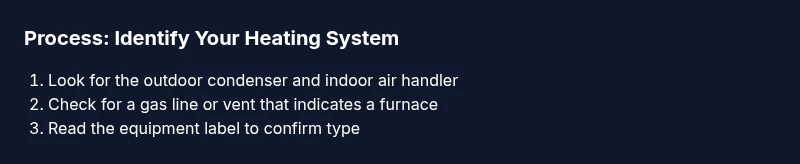
Quick field checks you can do safely (before calling a pro) If you can access the equipment safely, check for these clues: look for a gas line or oil line feeding a furnace; look for an outdoor metal cabinet with coils and a fan (typical heat-pump condenser); check the thermostat for heating options—whether it shows a heat setting with a fan and a separate cool mode; note any huge ducted plenums in the basement or utility room. If you find a labelled outdoor condenser connected to an indoor air handler, you’re likely dealing with a heat pump. Do not bypass safety covers or touch live electrical components; always switch the power off before handling panels.
Reading labels and equipment placement to confirm your type Make a point to read the model and serial label on both major components: the indoor furnace or air handler, and the outdoor condenser (if present). The label will indicate the equipment type and often the heating method (gas, electric, or heat-pump refrigerant). If you can locate a vented exhaust or flue on the furnace, it’s a strong sign of a fossil-fuel furnace. Conversely, a sealed outdoor unit with refrigerant lines is a hallmark of a heat pump. This step is crucial for accuracy when planning maintenance or upgrades.
Common configurations you’ll see in homes The most common pairing is a fossil-fuel furnace with central air conditioning, using ducts to distribute heated air. A heat pump often works with an air handler in the attic or basement and may serve as the primary heating source, sometimes with auxiliary electric resistance heat in very cold climates. Some homes use dual-fuel or hybrid configurations that switch between a heat pump and furnace depending on outdoor temperature. Recognizing these patterns helps you anticipate service needs and energy costs.
What to do next: decide on maintenance, upgrades, or replacement If you determine you have a furnace, you’ll want to verify fuel supply, venting safety, and filter schedules. If you identify a heat pump, check refrigerant levels, defrost cycles, and outdoor unit cleanliness, and consider thermostats or zoning for efficiency. In all cases, document your findings, compare operating costs, and consult a licensed technician for a professional confirmation—especially before major upgrades. The Heatpump Smart team recommends scheduling a quick inspection if you’re unsure, to protect comfort and investment.
Tools & Materials
- Smartphone or camera(Capture serial numbers and label photos for later reference)
- Flashlight(Inspect dark cabinet areas and the outdoor unit)
- Non-contact voltage tester(Safely verify electrical panels without contact)
- Screwdriver set (Phillips #2 and flathead)(Open access panels on furnaces or air handlers)
- Measuring tape(Measure duct sizes or component footprints if needed)
- Notepad and pen(Record model numbers, labels, and observations)
- Owner's manual or equipment label(Helpful but not always accessible)
- Safety gloves(Use when handling panels; avoid sharp edges)
Steps
Estimated time: 30-60 minutes
- 1
Locate the outdoor unit and note basics
Begin by finding the outdoor condenser if present. Note the make and model visible on the cabinet and observe the surrounding environment. This first check helps distinguish heat-pump configurations from fossil-fuel systems.
Tip: If you see copper refrigerant lines entering the outdoor box, you’re likely looking at a heat pump component. - 2
Open accessible panels safely
Shut off power at the disconnect or breaker, then remove accessible panel covers to view internal components. Look for a gas line, oil line, or electric heat elements that indicate a furnace.
Tip: Never touch live terminals; use the non-contact tester to confirm power is off before touching wiring. - 3
Check the indoor unit and vents
In the basement or utility closet, inspect for a furnace cabinet with a vented exhaust (gas or oil) or a separate air handler connected to ducts. Heat pumps typically pair an outdoor condenser with an indoor air handler rather than a furnace.
Tip: Take photos of the label on the indoor unit for quick reference later. - 4
Read the equipment labels
Locate the nameplate on each major component and record the model and type. The label often specifies heating method (gas/oil/electric vs. heat pump/refrigerant). This is the most reliable way to confirm.
Tip: If you’re unsure how to read the data plate, capture a close-up photo and research later. - 5
Check thermostat capabilities
Review the thermostat to see whether it offers heating with a separate cooling mode and how the heat option is labeled. Heat pumps may show cooling as a default function but heat as a heating option, sometimes with auxiliary heat.
Tip: If the thermostat lists ‘auxiliary heat’ or ‘emergency heat,’ you may be dealing with a heat-pump setup. - 6
Decide on next steps with a professional
If you cannot conclusively identify the system, or if you smell gas, call a licensed technician. A professional can verify system type and discuss maintenance, upgrades, or replacements with you.
Tip: Document findings and compare costs for maintenance vs. retrofit before deciding.
Your Questions Answered
Can a heat pump heat my home efficiently in winter?
Yes, many heat pumps provide efficient heating in winter, especially with newer models and proper refrigerant charge. In very cold climates, some models rely on auxiliary heat. Check your unit’s manual and consider professional assessment for climate suitability.
Yes, most modern heat pumps heat efficiently in winter, though some climates may need auxiliary heating.
What signs indicate I have a furnace rather than a heat pump?
Common indicators include a gas or oil line feeding the unit, a vent or flue, and a central duct system powered by a blower. If the outdoor unit looks like a cooling condenser without refrigerant lines, you may have a furnace-based system.
Look for a gas line and venting, plus a furnace cabinet with ducts.
Is it safe to open panels to inspect equipment?
Only after powering down at the disconnect or breaker. Avoid touching live wiring and use a flashlight to view labels. If you’re unsure, stop and contact a technician.
Power down first, then inspect only what’s easily accessible. If unsure, call a pro.
Can the thermostat alone tell me my system type?
Thermostats often show heating modes and may label values like ‘auxiliary heat’ for heat pumps. However, the thermostat alone isn’t always definitive; cross-check with equipment labels and the outdoor unit.
Thermostats help, but label and unit checks are usually needed for certainty.
What maintenance differences exist between furnaces and heat pumps?
Furnaces require fuel supply checks, vent inspection, and filter changes. Heat pumps need refrigerant checks, coil cleaning, and outdoor unit clearance. Regular professional maintenance benefits both systems.
Furnaces focus on fuel and vents; heat pumps focus on refrigerant and coils.
Is retrofitting from a furnace to a heat pump possible?
In many homes it is possible but depends on ductwork, climate, and electrical capacity. A licensed contractor can assess retrofitting feasibility and cost.
Retrofits are possible but require professional evaluation for feasibility and cost.
Watch Video
Top Takeaways
- Identify the outdoor unit and indoor handler to distinguish system types
- Read labels and consult the nameplates for definitive identification
- Document findings and verify with a professional if unsure
- Understand common configurations to plan upgrades intelligently
- Prioritize safety: shut off power and avoid gas-related risks