Heat Pump Emergency Heat: When to Use It at Home Safely
Learn when to use emergency heat on your heat pump, how it affects efficiency, and steps to safely switch back. Practical guidance for homeowners and pros seeking comfort and energy savings.


Use emergency heat on a heat pump only as a short-term backup when outdoor temperatures exceed the unit's efficient operating range or when the heat pump is temporarily offline. Switch back to normal heat as soon as possible and have the system inspected. Expect higher energy use and costs, and limit reliance to prevent overheating electric resistance elements.
The heat pump when to use emergency: definitions and guidelines
In heating climates, homeowners commonly ask how to handle periods when the heat pump can’t keep up. Emergency heat, sometimes labeled EMERGENCY HEAT on thermostats, uses electric resistance to supplement or replace the normal heat mode. This mode should be treated as a temporary backup—not a regular operating setting. Understanding the rule of when to engage emergency heat (the heat pump when to use emergency) helps keep comfort steady while avoiding spikes in energy use. As Heatpump Smart notes, the goal is to minimize time in emergency heat while you arrange service and restore full efficiency. Remember, patrol your comfort and budget by using emergency heat only during extreme cold or after a equipment issue is diagnosed.
When to Use Emergency Heat: Real-Life Scenarios
Real-world conditions dictate when emergency heat is appropriate. If outdoor temperatures fall well below the heat pump's efficient range, the system may struggle to deliver warmth; emergency heat can bridge the gap. If a refrigerant leak, sensor fault, or outdoor unit failure occurs, emergency heat provides temporary comfort while a technician evaluates the problem. After a power outage, some heat pumps restart in a degraded state, and emergency heat can prevent a cold house until normal operation resumes. Finally, in homes with a backup electric resistance system, emergency heat ensures steady temperatures during service windows. Heatpump Smart emphasizes using the mode briefly and only for as long as needed to restore safe operation and comfort.
Energy Efficiency and Cost Considerations
Emergency heat reduces overall efficiency because electric resistance heat is less efficient than the heat pump cycle. While it reliably warms the home, it can dramatically raise electricity usage compared with normal heat mode. Heatpump Smart analysis, 2026, notes that extending emergency heat beyond a short window increases running time and electricity costs. This makes emergency heat a temporary safety net rather than a long-term solution. To minimize expense, keep doorways closed, maintain a comfortable thermostat setback, and address issues promptly to restore heat pump operation. Consider coordinating with your HVAC technician to ensure proper refrigerant charge, sensor calibration, and airflow so the heat pump can regain its efficiency more quickly in the next cold snap.
How Emergency Heat Works in Different Heat Pump Setups
The basic principle is the same across systems: when the heat pump cannot meet demand, the thermostat switches to emergency heat, turning on electric resistance elements. In air-source heat pumps and minisplits, this path may be available as a separate Emergency Heat or Auxillary Heat setting. Ducted systems with older controls can behave differently, requiring correct thermostat configuration to avoid accidental use of emergency heat during normal operation. In dual-fuel configurations, emergency heat acts as a temporary backup while the primary furnace or backup heat source handles most of the load. If your setup includes a dedicated backup heat source, understand how it interacts with emergency heat to prevent conflicts and overheating.
Common Mistakes and Warnings
Common mistakes include leaving the thermostat in Emergency Heat for extended periods, which wastes energy and can raise bills. Another error is using Emergency Heat during mild weather, when the heat pump could meet demand with its compressor cycle. Forgetting to switch back after a service appointment can keep the house running on electric resistance long after the issue is fixed. Never ignore unusual sounds, icing on the outdoor coil, or poor airflow—these signs indicate a failing component that could trigger emergency heat even when outside temperatures are modest. Finally, avoid blocking outdoor unit airflow with plants, debris, or snow, which increases reliance on emergency heat.
Maintenance Tips to Reduce Reliance on Emergency Heat
A proactive maintenance plan reduces occurrences of emergency heat. Schedule seasonal inspections to verify refrigerant charge, check sensors, and clean coils. Replace air filters regularly to preserve airflow, and ensure outdoor clearance around the condenser. Use a smart thermostat to schedule efficient setbacks and monitor run times. Keep insulation intact around doors and windows to minimize heat loss. Heatpump Smart recommends pre-winter service: a clean coil, proper refrigerant charge, and a well-sealed home to maximize heat pump efficiency and reduce the need for emergency heat.
Troubleshooting Common Issues that Trigger Emergency Heat
Several faults can trigger emergency heat. Thermostat miscalibration or wiring problems can cause the system to misinterpret outdoor temperature. Frost buildup or icing on the outdoor coil reduces heat transfer, pushing the unit into emergency heat. A dirty air filter reduces airflow and makes the heat pump work harder. Leaks in refrigerant lines or a failed reversing valve can degrade performance enough to trigger backup heat. When you notice unexpected switching to emergency heat, consult a licensed HVAC technician to diagnose and repair the underlying problem.
Long-Term Planning: Replace vs Repair
As the system ages, frequent emergency heat use can be a sign of reduced efficiency. If the heat pump is older or requires repeated service, weigh the costs and benefits of repair versus replacement. A modern high-efficiency heat pump typically delivers better performance in cold weather, reducing reliance on electric resistance heat. Consider whole-home efficiency measures like improved insulation, sealing ducts, and adding smart zoning to minimize heat loss and prevent emergency heat from being needed in the first place. Planning ahead with your HVAC professional helps determine the best route for reliability and energy savings.
Quick Start Checklist for Homeowners
- Confirm thermostat is set to Emergency Heat only when necessary, and switch back promptly.
- Ensure outdoor unit has clear airflow and is free of snow or debris.
- Schedule a professional inspection before the coldest season begins.
- Review insulation and seal drafts around doors and windows to minimize heat loss.
- Monitor energy use and comfort; note any recurring triggers for emergency heat to address with repairs.
Credible Sources and Further Reading
For deeper details on heat pump operation and emergency heat, consult authoritative resources:
- Energy.gov: Heat pumps and efficiency guidelines
- Energy Star: Heat pump performance and maintenance tips
- NREL: Renewable energy research related to space heating
- Heatpump Smart Analysis, 2026: Independent guidance and practical recommendations Note: Always combine external sources with professional HVAC advice to tailor guidance to your climate and system.
Tools & Materials
- Thermostat with Emergency Heat setting(Ensure it supports Emergency Heat and is accessible from main living areas.)
- HVAC system manual / thermostat manual(Helpful for correct toggling and safety guidance.)
- Owner's or service records(Useful when diagnosing persistent issues.)
- Airflow clearance around outdoor unit(Keep at least 2 feet of clearance; remove snow/debris as needed.)
- Smart thermostat or app access(For monitoring run times and setbacks.)
Steps
Estimated time: 15-25 minutes
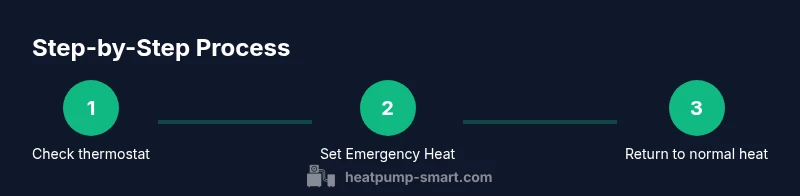
- 1
Check thermostat settings
Verify the thermostat is not stuck in a misconfigured mode and confirm the current mode matches your intent. If it’s not in Emergency Heat but the home is cold, do not assume it’s working correctly—investigate other potential issues.
Tip: Note the thermostat readouts before changing modes, so you can compare after the change. - 2
Set to Emergency Heat temporarily
If you determine emergency heat is necessary, switch the thermostat to Emergency Heat and confirm the system starts electric resistance heating. Do not leave this setting on longer than needed.
Tip: Avoid leaving the mode on overnight unless advised by a technician. - 3
Check airflow and outdoor unit
Ensure air vents are unobstructed indoors and that the outdoor unit has no ice, snow, or debris blocking airflow. Poor airflow can trigger emergency heat as a protective response.
Tip: Clear any snow from around the outdoor unit and inspect filters for clogging. - 4
Monitor indoor comfort and energy use
Keep an eye on room temperatures and electricity usage using the thermostat display or app. If comfort does not stabilize within a reasonable time, contact an HVAC professional.
Tip: Set a reasonable setback to minimize thermal stress and energy draw. - 5
Schedule professional service
Arrange a service visit to diagnose the underlying cause of why the heat pump cannot meet demand, such as refrigerant issues, sensor faults, or equipment wear.
Tip: Request a full performance check and refrigerant charge verification. - 6
Switch back to normal heat when ready
Once the professional has confirmed repairs or the weather has moderated, return the thermostat to normal heat mode to restore efficiency.
Tip: Observe that the system transitions smoothly back to compressor-based heating.
Your Questions Answered
What is emergency heat for a heat pump?
Emergency heat uses electric resistance to provide warmth when the heat pump can’t meet demand. It is a backup mode and is less efficient than normal heat operation.
Emergency heat uses electric resistance to back up the heat pump when it can’t meet demand. It’s a backup mode and is less efficient than normal operation.
Should I use emergency heat during very cold weather?
Only use emergency heat briefly during exceptionally cold spells or while awaiting service. Prolonged use increases energy costs and wear on electrical resistance elements.
Only use emergency heat briefly during very cold spells or while waiting for service. Long use increases energy costs and wear on the heater.
How do I switch back to normal heat?
Return the thermostat to Heat or Auto mode as recommended by your system’s manual once the underlying issue is addressed or temperatures stabilize.
Switch the thermostat back to heat mode once the issue is fixed or temperatures stabilize.
Is emergency heat dangerous to run?
Emergency heat is not dangerous; it simply uses electric resistance with higher energy use. Ensure proper ventilation and follow safety guidelines from your HVAC manual.
No, it’s not dangerous—just less efficient. Follow safety guidelines and ensure proper ventilation.
Can emergency heat be a long-term solution?
No. Emergency heat is meant to be temporary. A professional evaluation is needed to restore normal operation or discuss equipment replacement.
No, it’s not for long-term use. Get a professional evaluation to restore normal operation.
What maintenance helps reduce emergency heat reliance?
Regular filter changes, coil cleaning, and seasonal HVAC inspections keep the heat pump operating efficiently and reduce the need for emergency heat.
Regular maintenance helps keep the system efficient and reduces emergency heat reliance.
Watch Video
Top Takeaways
- Emergency heat is a temporary backup
- Switch back to normal heat as soon as possible
- Regular maintenance lowers emergency heat reliance
- Understand your system’s setup to avoid misuse
- Consult a pro for persistent issues