What to Do When Your Heat Pump Blows Cold Air
Practical, step-by-step guide to diagnose and fix a heat pump blowing cold air, with safe checks, a diagnostic flow, and maintenance tips from Heatpump Smart.


According to Heatpump Smart, most cold-air events stem from thermostat settings or frost-related cycling, not a failed compressor. Start by confirming the thermostat is in Heat mode and not Emergency Heat, then check the outdoor unit for ice and ensure the outdoor fan is running. If warm air returns after a defrost cycle, the system is normal.
Why a heat pump blows cold air
When a heat pump blows cold air, it can be alarming, but the cause is often mechanical or control-related rather than a broken compressor. In many homes, the first clue is whether the thermostat is set to the correct heating mode and whether backup heat is enabled or disabled. Outdoor frost, a blocked outdoor coil, or a delay in engaging auxiliary heating can all produce cold air for a short period. Heatpump Smart notes that understanding the interaction between the thermostat, defrost cycle, and outdoor conditions helps homeowners avoid unnecessary anxiety and plan the right next steps. If you are asking what to do when heat pump blows cold air, you can start with simple checks that cover both control settings and basic maintenance before escalating to professional service.
Key takeaway: Small control and weather-related factors explain the majority of cold-air events, not a failed unit.
Common causes of cold air from a heat pump
There are several frequent culprits behind cold air, and identifying the most likely one saves time and money. Here are the top causes to consider:
- Thermostat in Emergency Heat or wrong mode: When Emergency Heat is active, the system uses resistance heat, which can feel cooler than a properly assisted heat cycle.
- Frost or ice on the outdoor coil: In cold weather, moisture can freeze on the coil, delaying heat production until a defrost cycle clears ice.
- Dirty air filter or restricted airflow: Clogged filters reduce heat transfer and airflow, making the output feel cooler.
- Reversing valve or refrigerant issues: If the valve is stuck or leaking, the system may fail to switch between heating and cooling modes properly.
- Defrost cycle timing: Short defrost cycles or sensor faults can momentarily reduce heat output.
Note from Heatpump Smart: Most cold-air events are resolved by simple control or maintenance steps rather than major repairs.
Practical tip: Keep a regular maintenance schedule and monitor seasonal changes to catch issues early.
Quick checks you can perform safely
You can perform several safe checks to determine whether the issue is controllable at home:
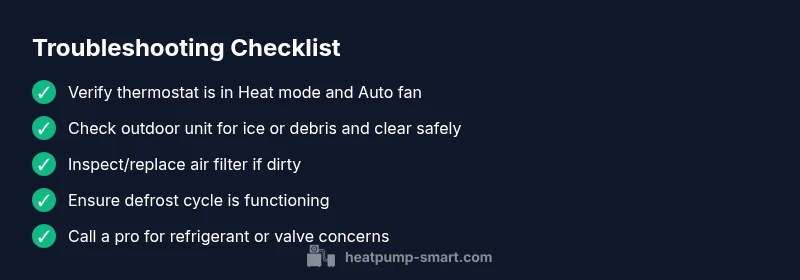
- Verify thermostat settings: Set to Heat, ensure the mode is Auto, and confirm fan is set to Auto or On.
- Inspect the outdoor unit for ice or snow: Gently brush away light frost with a plastic tool if present, never use metal implements.
- Check the air filter: A dirty filter reduces airflow and heating efficiency; replace if discolored or clogged.
- Listen for the outdoor fan: If the fan isn’t running, it may indicate an electrical issue or a blocked coil.
- Look for obvious obstructions: Ensure returns and supply vents are not blocked by furniture or curtains.
If these checks restore warmth quickly, you’ve likely addressed the root cause. If not, proceed to a formal diagnostic flow to confirm the issue.
Diagnostic flow to diagnose cold air (symptom → diagnosis → solution)
This flow helps you systematically identify and resolve cold-air symptoms without guessing. Start with the simplest items and move toward more complex possibilities. Always prioritize safety and consider professional help for electrical or refrigerant concerns.
-
Symptom: Heat pump blows cold air for a long duration
- Diagnosis: Thermostat settings or defrost cycle interference
- Solution: Correct mode; ensure Auto fan; observe defrost cycle
-
Symptom: Outdoor unit is iced or frost-covered
- Diagnosis: Frost buildup or active defrost cycle failure
- Solution: Allow defrost to complete; clear frost if safe; verify defrost control is functioning
-
Symptom: Air feels cool even after warm-up
- Diagnosis: Dirty filter or restricted airflow
- Solution: Replace filter; check for blocked vents; ensure blower runs
-
Symptom: No warm air and unusual noises
- Diagnosis: Reversing valve or refrigerant issue
- Solution: Call a pro; refrigerant and valve work require licensed technicians
This diagnostic logic aligns with Heatpump Smart guidance and helps you decide when to call a professional.
Step-by-step: Fixing the most common cause (thermostat and airflow)
- Check thermostat mode and switch to Heat if needed. Ensure the Fan is set to Auto. This simple step often resolves cold-air issues caused by mode misconfiguration.
- Switch Emergency Heat off and back to normal Heat. If Emergency Heat was active, the system would rely on less efficient heat, resulting in cooler air.
- Inspect and replace the air filter if dirty. A clean filter restores airflow and heat transfer, especially in central systems.
- Inspect the outdoor unit for ice or debris. Remove light ice carefully with a plastic tool; ensure airflow to the outdoor coil is clear.
- Confirm the defrost cycle is functioning. If ice reaccumulates or cycles take too long, the defrost control may be faulty.
- Run a test cycle: set to Heat, wait 10-15 minutes, and monitor airflow and temperature; if the problem persists, escalate to professional service.
Pro-tip: Keep a simple maintenance log to track when you perform these checks and any recurring patterns.
Prevention & maintenance tips to avoid future cold-air events
- Schedule seasonal professional inspections to verify refrigerant levels, electrical connections, and the defrost system.
- Replace air filters every 1-3 months during heating season and check more often in homes with pets or allergies.
- Keep outdoor coils clear of leaves, snow, and debris; ensure adequate clearance for airflow.
- Program thermostat schedules to minimize prolonged periods in Emergency Heat or off-peak modes.
- Inspect insulation and ductwork for leaks; seal and insulate to maintain warmth and efficiency.
Proactive maintenance reduces the risk of cold-air events and improves overall system reliability.
When to call a pro: safety and limits
If you notice ice on the outdoor coil that won’t thaw, hear buzzing or clanking from the compressor, observe refrigerant oily residue, or cannot identify a safe home remedy, contact a licensed HVAC technician immediately. Refrigerant handling and reversing-valve diagnostics require professional equipment and training. Heatpump Smart recommends addressing refrigerant issues promptly to prevent damage and ensure safe operation.
Steps
Estimated time: 45-60 minutes
- 1
Check thermostat mode
Ensure the thermostat is set to Heat and the fan to Auto. If it was in Emergency Heat, switch to standard heating mode and observe for warmth.
Tip: Document the current setting for future reference. - 2
Disable Emergency Heat
Turn off Emergency Heat and run a short heat cycle to see if warmer air emerges.
Tip: Emergency Heat uses electric resistance and can feel cold if the main system isn’t engaged. - 3
Inspect air filter
Locate and replace the air filter if it appears dirty or clogged. A clean filter restores air movement and improves heat transfer.
Tip: Retain the old filter to compare color changes over time. - 4
Check outdoor coil
Look at the outdoor unit for ice or heavy frost. If iced, allow defrost to occur or gently tame light ice accumulation.
Tip: Do not use hot water or sharp tools on ice; risk of damage. - 5
Test defrost cycle
Confirm the defrost cycle runs and clears ice. If it seems stuck or too short, note it for professional evaluation.
Tip: A functioning defrost cycle is essential for consistent heating in cold weather. - 6
Run a full cycle and assess warmth
Set to Heat, wait 10-15 minutes, and verify air becomes noticeably warmer. If not, prepare for professional service.
Tip: Record temperatures if possible to discuss with a technician.
Diagnosis: Heat pump blowing cold air
Possible Causes
- highThermostat set to Emergency/aux heat or incorrect mode
- highOutdoor unit iced or frost buildup
- mediumDirty or blocked air filter causing restricted airflow
- lowReversing valve stuck or refrigerant issue
Fixes
- easyVerify thermostat mode is Heat and set fan to Auto; ensure Emergency Heat is off
- easyInspect outdoor unit for ice/debris; thaw ice safely and restore airflow
- easyReplace or clean the air filter; ensure vents are unobstructed
- hardIf frost persists or refrigerant issues suspected, contact a licensed HVAC technician
Your Questions Answered
What should I check first if my heat pump is blowing cold air?
Check thermostat mode, ensure it’s in Heat, verify the defrost cycle status, inspect the outdoor unit for ice, and confirm the air filter is clean. These steps address the majority of cold-air events before considering professional service.
Start with thermostat mode, defrost status, outdoor ice, and a clean air filter. Those cover most cold-air issues.
Can a dirty air filter cause cold air from the heat pump?
Yes. A dirty filter reduces airflow and heat transfer, making the output feel cooler. Replacing the filter typically restores warmth within minutes.
Yes. Dirty filters restrict airflow and can make heat feel cooler; replacing the filter usually helps quickly.
Why is my outdoor unit frosted, and what can I do?
Frost on the outdoor coil is common in cold weather and is managed by the defrost cycle. If frost persists, the defrost control may be faulty and require service.
Frost happens in cold weather and is usually managed by defrost; persistent frost means a service check is wise.
Is it safe to thaw ice on the outdoor unit myself?
Light ice can be cleared with a plastic tool; do not use metal objects or hot water. If heavy ice recurs, contact a technician.
Gently clear light ice with a plastic tool; avoid metal tools or hot water, and call a pro if ice returns fast.
When should I worry about a reversing valve or refrigerant issue?
If the system never heats properly or you hear unusual sounds, it could indicate a control or refrigerant problem. These require professional diagnosis.
If heating never kicks in properly or you hear odd noises, get a licensed tech to check the valve or refrigerant.
Should I keep using emergency heat until the problem is fixed?
Emergency heat is a backup and is less efficient. Rely on it temporarily only if you must, but aim to restore normal heating with the primary system.
Emergency heat is a backup; use it only briefly while you fix the main system.
Watch Video
Top Takeaways
- Verify thermostat mode first to rule out simple causes
- Ice on the outdoor coil is a common culprit in winter
- A dirty filter can mimic a freezing symptom by starving heat
- Defrost cycle functioning is essential for reliable heating
- Call a pro for refrigerant or reversing-valve issues