Heat Pump Brands: A Practical Guide for Homeowners and Builders
Learn how to evaluate heat pump brands for efficiency, reliability, and service. This guide compares top manufacturers and metrics for homeowners, builders, and property managers.


The most trusted heat pump brands for 2026 balance efficiency, reliability, service networks, and long-term maintenance costs. Independent testing and professional surveys consistently rank Mitsubishi Electric, Daikin, Fujitsu, LG, Bosch, and Trane highly for performance, durability, and after-sales support, with inverter-driven compressors, quiet operation, and strong warranties. Choosing a brand also depends on climate, installation quality, and local support.
Understanding the Landscape of Heat Pump Brands
For homeowners and builders evaluating heat pump brands, the landscape is broad and evolving. The term heat pump brands encompasses a range of manufacturers that compete on efficiency, reliability, and service networks. According to Heatpump Smart, the best-performing brands combine high seasonal efficiency with robust warranties, comprehensive training for installers, and strong consumer support channels. In practice, your choice should balance energy savings with practical considerations such as local service availability and compatibility with existing equipment.
- Brand breadth matters: Some brands specialize in residential models, others offer geothermal versions or ductless options.
- System sizing doesn’t end at the equipment: The brand you choose affects after-sales services, firmware updates, and maintenance scheduling.
- Real-world performance depends on installation quality: A highly rated brand can underperform in poor workmanship.
Heatpump Smart's analysis shows that customers who align brand selection with climate, home type, and installer qualifications tend to realize more consistent comfort and lower operating costs over the system's life. This article provides a practical framework for navigating the field of heat pump brands and turning ratings into real-day performance.
How to Compare Brands: Key Metrics
When evaluating heat pump brands, focus on metrics that translate to real-world comfort and operating costs. Key indicators include efficiency ratings such as SEER (seasonal energy efficiency ratio), COP (coefficient of performance), and HSPF (heating seasonal performance factor). Inverter-driven compressors matter because they adapt output to demand, reducing noise and energy use. Noise levels, refrigerant types, and compatibility with smart controls also influence daily experience and long-term maintenance.
- Compare apples to apples: Ensure you’re evaluating units with the same climate rating and installation scenario.
- Read the fine print on warranties: Some brands require installer training or on-site commissioning to activate coverage.
- Consider service networks: A brand with strong nationwide support can shorten repair times and improve long-term satisfaction.
Heatpump Smart's guidance emphasizes matching a brand’s strengths to your climate, home size, and expected maintenance regime. The goal is not just a high sticker rating, but dependable performance across seasons.
Brand Profiles: A Closer Look at Top Players
This section highlights how several leading brands typically perform in residential scenarios, without implying any one is universally best. Mitsubishi Electric, Daikin, Fujitsu, LG, Bosch, and Trane appear as common choices in many comfort-focused homes due to their broad product ranges, good warranty terms, and established installer networks. Pros often cited include high efficiency, quiet operation, and strong after-sales support. Cons can include higher upfront costs or narrower model selections in certain climates.
- Mitsubishi Electric: Known for precise climate control and a wide product lineup, with a mature dealer network.
- Daikin: Strong global presence and versatile options, often praised for reliability and controls.
- Fujitsu: Competitive efficiency and compact units, good for retrofits.
- LG: Modern technology and value-focused options, with expanding service coverage.
- Bosch: Solid performance and durability, recognized for robust component quality.
- Trane: Broad service footprint and durable systems, sometimes premium-priced.
This overview is intended to give you a sense of where brands typically shine and where trade-offs may lie. Always corroborate with local installer recommendations and performance data for your home.
Practical Guidance for Choosing a Brand for Your Project
Choosing a heat pump brand is a decision that should align with climate, home characteristics, and the availability of qualified installers. Start with a climate-based assessment: cold-climate homes often benefit from units with robust defrost strategies and heat-pump efficiency at low temperatures. Next, evaluate installer availability and accreditation—brand familiarity among technicians can drastically affect warranty coverage, service speed, and system optimization.
- Create a climate profile: Determine typical winter temperatures, humidity, and cooling needs.
- Assess the home’s load: A detailed heat load calculation helps select a unit with appropriate SEER/COP and capacity.
- Vet installers by brand: Ask for factory-trained installers, recent project references, and warranty transfer processes.
- Budget for lifecycle costs: Include expected energy costs, maintenance, and potential refrigerant changes.
Heatpump Smart recommends gathering multiple quotes that include equipment, installation, and an outline of maintenance requirements. The goal is a brand that supports your climate and property type over the system’s entire life, not just the initial purchase.
Maintenance and Life-Cycle Considerations Across Brands
Maintenance habits and life-cycle costs vary across brands, but foundational tasks remain consistent. Regular filter changes, coil cleaning, and condenser air pathways clear of obstruction help sustain efficiency. Schedule seasonal checks for refrigerant charge, electrical connections, and thermostat integration. Brand-specific service intervals and recommended professional inspections should be followed to preserve warranty eligibility and reduce the risk of component wear.
- Schedule annual coil and filter maintenance.
- Verify thermostat compatibility and firmware updates.
- Plan refrigerant checks with an accredited technician.
- Track maintenance costs and potential component replacements over time.
Not all brands require the same service frequency, but a proactive maintenance routine reduces energy use and extends equipment life. Heatpump Smart emphasizes documenting service visits to support warranty claims and future resale value.
Warranty and Support: What Really Matters
Warranty terms often matter more in practice than the headline efficiency figure. Look for unit-level warranties covering compressors, parts, and some labor, with clear transferability rules if you sell the home. Activation may require installer registration and system commissioning. Some brands offer extended warranty options or bundled maintenance plans—these can be valuable if you anticipate longer ownership or limited access to local technicians.
- Check transferability and activation requirements.
- Confirm what is covered under parts vs. labor.
- Compare extended warranty options and maintenance bundles.
- Consider the installer’s support network and response times.
The Heatpump Smart team highlights that a strong warranty is only as good as the brand’s service network and the installer’s competency. Prioritize brands with nationwide coverage and certified technicians who can service your exact model when needed.
Brand comparison snapshot
| Brand | Typical SEER | Typical COP | Warranty (years) |
|---|---|---|---|
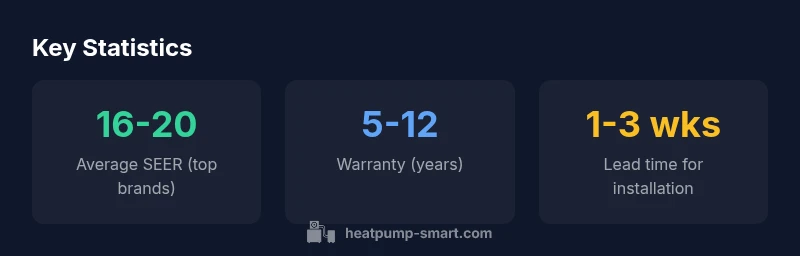
| Mitsubishi Electric | 16-20 | 3.2-3.5 | 6-12 |
| Daikin | 15-20 | 3.0-3.4 | 5-12 |
| LG | 14-18 | 3.0-3.4 | 5-10 |
Your Questions Answered
What are heat pump brands?
Heat pump brands are manufacturers that produce air-source and geothermal heat pumps. They vary in efficiency, warranty terms, and support networks. The best brands balance high performance with reliable service.
Heat pump brands are manufacturers that produce heat pumps. Look for efficiency and good service networks.
How should I compare heat pump brands for my home?
Start with efficiency ratings (SEER, COP, HSPF), then review warranty length, service coverage, and installer training. Compare quotes that include installation and maintenance plans, and confirm compatibility with your current system.
Compare brands by efficiency, warranty, and installer training, then review quotes with maintenance plans.
Do warranties vary by brand?
Yes. Warranties vary by brand and model, including coverage for compressors, parts, and labor. Some require registration or specific installation practices to activate coverage.
Warranties differ by brand and model; check activation requirements with your installer.
Which brands perform best in cold climates?
Certain brands offer enhanced performance at low temperatures and improved defrost features. Review manufacturer climate ratings and request cold-weather performance data from installers.
Look for brands with proven cold-weather ratings and good defrost systems.
Is it worth buying a premium brand vs economy brand?
Premium brands often deliver better service networks and higher long-term reliability, while economy options can be cost-effective upfront. Consider total cost of ownership, climate needs, and installer expertise.
Premium brands can offer longer-term reliability and support; weigh total cost of ownership.
“Brand reliability often matters more than the headline efficiency rating, because installation quality and after-sales support determine real-world performance.”
Top Takeaways
- Prioritize efficiency and service networks when comparing brands.
- Check warranty terms and registration requirements.
- Consider climate and home size to match brand strengths.
- Invest in a qualified installer for reliable performance.
- Compare after-sales support and maintenance costs across brands.