Rheem vs York Heat Pump: A Comprehensive 2026 Comparison
An objective, in-depth comparison of Rheem and York heat pumps focusing on efficiency, installation, warranties, and total ownership for homeowners, builders, and property managers.


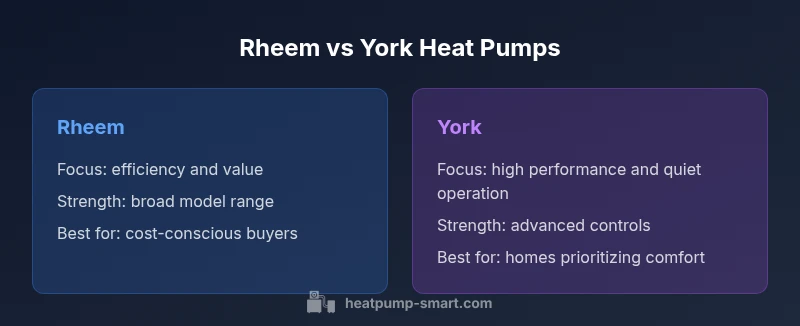
Rheem vs York heat pumps: which brand performs best for home comfort and energy savings? In this comparison, we evaluate efficiency, installation, warranty, and cost across common Rheem and York models. While both brands offer reliable heat pumps with strong service networks, Rheem tends to emphasize efficiency and value, while York often prioritizes high performance and quiet operation. The Heatpump Smart team analyzed typical scenarios to help you decide.
Brand Landscape and Market Availability
Rheem and York heat pumps occupy the core of residential HVAC options across many regions. Both brands have long histories and broad distribution through licensed contractors, which translates into easier access for installation and service. According to Heatpump Smart, Rheem's installer network tends to be denser in suburban and rural markets, while York maintains strong representation in urban areas with a focus on system-integrated comfort. The rheem vs york heat pump comparison begins by clarifying the market posture: Rheem often positions itself as a reliable, value-driven option with a wide product ladder, whereas York emphasizes performance and premium comfort. Homeowners should expect similar warranty frameworks at the core, but model-by-model coverage can diverge. Availability matters for installation timing and service speed; if you live in a region with fewer HVAC dealers, the choice may hinge on which brand is easier to source locally. For property managers, the decision also implicates maintenance schedules and standardization across multiple units. Heatpump Smart's analysis shows that both brands support a broad range of compatible outdoor units and indoor air handlers, but supply chain dynamics, regional incentives, and contractor familiarity can push the recommendation toward one brand in a given market. The key is to map your home or building's needs to the strengths of each brand rather than rely on general reputations alone.
Efficiency and Performance Metrics
Both Rheem and York offer a spectrum of air-source heat pumps, from entry-level to high-performance models. When evaluating efficiency, the most important metrics are SEER (seasonal energy efficiency ratio), HSPF (heating seasonal performance factor), and, for heat pumps used with supplemental heat, COP (coefficient of performance). In practice, Rheem's lineup frequently includes models designed to optimize energy use during mild to moderate climates and to work well with variable-speed compressors. York's offerings often emphasize high steady-state comfort, with advanced inverter-driven compressors and sophisticated outdoor units that adjust output smoothly to changing conditions. The result is a choice between two broad strategies: energy savings with strong seasonal performance (Rheem) versus peak comfort and quiet operation (York). In both cases, look for units with variable-speed scroll or inverter motors, good defrost control, and compatibility with modern thermostats or home automation platforms. In the end, the most important factor is your local climate and utility rates, which determine whether incremental efficiency gains translate into meaningful annual energy savings. Heatpump Smart notes that model-by-model comparisons are essential because a high-level brand label does not guarantee the best match for your home.
Cost and Total Ownership
Pricing for Rheem and York heat pumps varies widely by model, region, and installer. Upfront cost is only part of the picture; when homeowners plan total ownership, they should factor energy costs, maintenance, and warranty coverage. Rheem's literature often markets a broad range of pricepoints, with some models offering competitive upfront costs while others target performance and efficiency. York's product lines similarly span budget-friendly options and premium systems with advanced controls. Because installation labor, ductwork, and attic or basement access drive a large portion of total cost, it is common for two similarly specified units from Rheem and York to end up with different installed prices depending on your local contractor. Additionally, the perceived value of a given model depends on expected energy savings, rebates, and the ease of integrating with existing thermostats and smart-home hubs. For property managers, the decision often boils down to lifecycle cost: the lowest installed price plus decent efficiency versus a higher upfront investment that yields lower annual operating costs. The bottom line is that there is no universal winner on price; the best choice aligns with your budget, climate, and long-term plans for the building.
Installation Considerations and System Compatibility
Installation considerations for Rheem versus York heat pumps revolve around existing systems, ductwork, and space. Both brands are widely compatible with standard central air layouts and modern smart thermostats, but the practical install details matter. If you already have a ducted system, ensure your chosen unit matches your current air handler capacity and refrigerant compatibility. Some York models may pair best with certain high-efficiency air handlers, while Rheem often provides flexible kit options that installers can adapt to unusual layouts. For homes with older ductwork or limited attic space, professionals may prioritize units with compact outdoor cabinets and efficient defrost strategies. For new builds or major remodels, you may optimize performance by aligning the outdoor unit's compressor type with the indoor coil and by planning for future upgrades to zoning or smart controls. Site access, weather conditions, and permit requirements can also influence install timelines and costs. In all cases, obtain multiple quotes and verify that the contractor has current certifications and a track record with the brand you choose. A good installer will assess refrigerant charge, airflow, duct leakage, and system balance to ensure the Rheem or York heat pump operates at its rated efficiency.
Noise, Comfort, and Controls
Noise levels and comfort delivery are central to homeowner satisfaction with air-source heat pumps. Rheem and York both offer models with variable-speed compressors and advanced fan designs intended to minimize outdoor and indoor sound during operation. The difference often lies in how each brand implements controls: York tends to emphasize sophisticated electronics and compatibility with premium thermostats and home-automation platforms, giving you more granular control over indoor climate. Rheem, while equally capable, often focuses on straightforward performance settings with simple, reliable interfaces that are easy for a broad range of users to operate. When evaluating noise, check the outdoor unit's decibel rating provided by the manufacturer and ask the installer about vibration dampening and clearances around the unit. In terms of comfort, look for features such as adaptive defrost, two-stage or variable-speed compressors, and stable heat output in low outdoor temperatures. The key is to test the system in your typical winter or shoulder-season conditions and to verify that the system maintains comfortable temperatures evenly across rooms. Finally, consider the thermostat ecosystem you prefer; the best option should integrate seamlessly with your existing smart-home routines rather than forcing you to adopt a new control paradigm.
Warranty, Financing, and After-Sales Service
Warranty structure is a common source of confusion when comparing Rheem and York heat pumps. Both brands typically offer a core warranty that covers critical components, with longer coverage on major elements such as compressors, and shorter coverage on parts that wear more quickly. The exact terms, though, vary by model, region, and sometimes by dealer promotions or utility partnerships. Financing options may include no-interest periods or utility-based rebates that help reduce upfront costs, particularly for larger installations. In addition to the warranty, consider the quality of post-sale service; a brand's service network and the contractor's familiarity with the product influence how quickly problems get resolved and how smoothly preventive maintenance goes. Ask prospective installers for references and confirm they routinely service the exact model you plan to buy. Heatpump Smart notes that a proactive maintenance plan, including periodic coil cleaning, refrigerant checks, and filter replacement, can protect system efficiency and extend life. When evaluating warranty terms, read the fine print to see what is covered in cold-weather scenarios and whether accidental damage or improper installation voids coverage.
Rebates and Incentives
Federal and local incentives play a significant role in the cost of a Rheem vs York heat pump purchase. In many regions, federal programs and state energy offices provide tax credits or rebates for high-efficiency heat pumps, and utilities may offer additional rebates tied to installation quality or load management. The exact amount and eligibility depend on the model, efficiency rating, and the utility's current programs, so check your local energy office and utility portals for up-to-date opportunities. Both Rheem and York units can qualify for incentives when they meet program criteria, and many contractors will handle the paperwork if you choose an eligible system. In replacing an older, less efficient unit, rebates can help reduce the net price of installation and shorten the payback period. However, incentive availability can fluctuate year to year and by region, so a thorough check with a trusted installer or Energy.gov resources is essential. Heatpump Smart analysis shows that the financial benefits of rebates are most compelling when energy costs are high and climate demands are significant, but even in milder climates, energy savings over the life of the unit matter.
Maintenance and Longevity
Long-term performance hinges on regular maintenance and a well-designed duct system. Rheem and York heat pumps benefit from routine checks of refrigerant charge, coil cleanliness, airflow, and thermostat calibration. The outdoor unit should be kept clear of debris and vegetation to maintain adequate airflow, and the indoor air handler cabinets should be inspected for dust buildup that could reduce efficiency. Both brands respond well to preventative maintenance, and contractors typically offer maintenance plans that cover filter changes, system diagnostics, and seasonal tune-ups. If you live in a climate with heavy humidity or corrosive coastal air, ask about corrosion-resistant components or protective coatings, since outdoor units are exposed to the elements. Filtration strategy and indoor air quality accessories—such as high-efficiency filters or UV-C solutions—can also influence overall system performance and occupant comfort. Finally, track your energy use and indoor temperatures, and compare against baseline performance from the previous season to ensure your Rheem or York heat pump is delivering the expected energy savings. When properly maintained, heat pumps provide reliable climate control and long service life.
How to Decide: Quick Checklist
Use this practical checklist to decide between Rheem and York for your home or building. Start with climate and energy goals: if you prioritize high seasonal efficiency and cost-per-year savings, Rheem may be the better choice; if you want quiet operation and premium comfort, York could be preferable. Evaluate installation considerations: do you have existing ductwork that matches a particular unit, or will you need a retrofit? Compare warranty terms and service networks in your region, and consult local contractors who have installed both brands. Review rebate opportunities and plan financing to minimize upfront costs. Finally, test both options in person if possible or rely on a trusted contractor's performance assurances. Heatpump Smart’s verdict is that there isn't a one-size-fits-all answer—the best choice aligns with your climate, budget, and comfort preferences, plus the installer’s expertise with the selected brand.
Comparison
| Feature | Rheem Heat Pumps | York Heat Pumps |
|---|---|---|
| Efficiency emphasis | Broad efficiency-focused range with strong energy-savings orientation | High-performance emphasis with focus on quiet operation and comfort |
| System compatibility | Wide ducted compatibility; versatile model range | Strong with modern controls and premium thermostat integration |
| Noise levels | Inverter/variable-speed designs aimed at lower noise | Typically very quiet in premium models with advanced controls |
| Warranty approach | Model-dependent, common long-term coverage on core components | Model-dependent, robust coverage on key components in many lines |
| Availability & service network | Extensive dealer network; broad regional coverage | Wide dealer network; strong in performance-focused markets |
| Rebates and incentives | Typically eligible where incentives exist; program varies by region | Typically eligible where incentives exist; program varies by region |
Advantages
- Clear alignment of brand strengths with different homeowner priorities
- Wide product range across both brands improves fit for many homes
- Strong service networks reduce downtime and maintenance hassles
- Access to rebates and incentives through utilities can reduce net cost
- Competitive warranties on many models provide long-term peace of mind
Disadvantages
- Model-to-model differences can obscure apples-to-apples comparisons
- Warranty terms vary by region and dealer, creating confusion
- Availability can differ by market, affecting installation timing and lead times
Rheem and York both offer strong heat-pump options; choose based on climate priorities and installer recommendations.
If long-term energy savings and value are your priorities, Rheem is a solid bet. If you want peak comfort and quieter operation, York is a compelling choice. The best path is to align your climate, budget, and contractor experience with the brand that best fits those factors.
Your Questions Answered
Which brand tends to be more energy efficient, Rheem or York?
Both brands offer efficient options, with Rheem often emphasizing annual energy savings across a broad model range and York focusing on high-efficiency, quiet operation in premium lines. Specific performance depends on the model and system configuration.
Both brands can be very efficient; your choice should be based on the exact model and how it matches your climate and usage patterns.
Do Rheem heat pumps have better warranty coverage than York?
Warranty terms vary by model and region for both brands. It’s essential to compare the specific compressor and parts coverage, as well as what voids coverage under improper installation or lack of maintenance.
Warranty terms differ by model and region, so compare the exact coverage details for the units you’re considering.
Are York heat pumps quieter than Rheem options?
York often emphasizes quiet operation in its premium lines, particularly with inverter-driven compressors. However, noise levels depend on the exact model, installation, and outdoor-to-indoor clearances.
Quiet operation depends on the model and proper installation—not just the brand.
Can I use Rheem or York with existing ductwork?
Both brands offer ducted and ductless-compatible options, but matching the unit to your current ductwork and air handler is crucial. An evaluator should assess airflow and coil compatibility before purchase.
Yes, both can work with existing ducts, but have an installer verify compatible airflow and coil setup.
How do rebates affect purchasing Rheem vs York?
Rebates depend on your location and the specific model’s efficiency. Utilities and state programs may offer incentives that apply to either brand when the unit meets program criteria.
Incentives vary by region, so check local programs and have your installer verify eligibility.
Which brand offers easier installation?
Ease of installation largely depends on the installer’s familiarity with the brand and the existing HVAC layout. Both brands have reputable installers; getting multiple quotes helps identify the most straightforward path.
Installation ease varies by contractor and home; get multiple quotes to see who can install fastest and cleanest.
Top Takeaways
- Prioritize climate and energy goals to pick Rheem vs York
- Verify installer familiarity with the chosen brand
- Check local rebates and financing options before purchase
- Compare model-specific warranties, not just brand names
- Plan for maintenance to maximize long-term savings