Government Help for Heat Pumps: Grants, Credits, and Guidance
Discover how government support can reduce the upfront cost of heat pumps, including federal tax credits, regional rebates, and utility incentives. Learn eligibility, how to apply, and strategies to maximize value for homeowners and property managers.


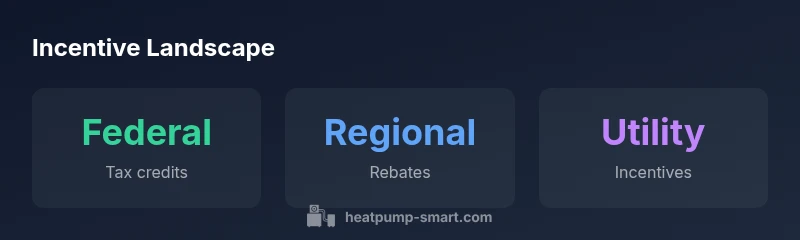
According to Heatpump Smart, government help for heat pumps typically comes as federal tax credits, regional rebates, and utility incentive programs. Eligibility varies by location and unit type, but most homeowners can access support when upgrading to a heat pump as part of a home-energy retrofit. This quick guide outlines common pathways and where to start, with deeper detail in the sections below.
Understanding government support for heat pumps
Government help for heat pumps is not a single program; it’s a portfolio of incentives designed to lower upfront costs and improve long-term energy performance. The Heatpump Smart team notes that most incentives fall into three broad categories: federal tax credits, regional rebates or grants, and utility-sponsored programs. Eligibility depends on factors like your location, the type of heat pump, whether it’s a retrofit or new installation, and whether you install in a primary residence or rental property. While the specifics shift over time, the overall goal remains the same: reduce barriers to adopting efficient heating technology and accelerate decarbonization of homes. Readers should treat incentives as part of a broader financial plan that also considers installation quality and ongoing operating costs.
Federal incentives you should know
In many countries, federal programs offer tax credits or rebates for energy-efficient home upgrades, including heat pumps. These incentives are generally designed to reward upgrades that improve energy performance and reduce fossil-fuel reliance. Availability, eligibility criteria, and benefit amounts can change with annual budgets and legislative updates. In practical terms, homeowners should expect to provide proof of installation, system specifications, and a compliant contractor. For 2026 planning, review how federal credits interact with state or provincial programs to avoid overlapping or missing opportunities. Heatpump Smart analysis suggests that while federal incentives can cover a meaningful portion of costs, the total value is often amplified when combined with local programs.
Regional and local programs
Beyond federal incentives, many states, provinces, and municipalities run their own rebates or grants for heat pumps. Utility companies also frequently offer time-limited incentives to encourage customers to shift to efficient heating. The amount and eligibility depend on factors such as system size, efficiency metrics (like SEER or HSPF ratings), and installation timing. Local programs can be particularly helpful for mid-sized retrofit projects where the cost gap between conventional heating and heat pumps remains substantial. To maximize benefits, map out all programs within a 100–200 mile radius, then prioritize contractors who are experienced with submitting multiple incentive claims in your area.
Eligibility constraints and how to check them
Eligibility checks usually start with a location-based filter (country, state/province, city) and then narrow to appliance specifications and installation type. Many programs require a licensed installer, proper documentation, and proof of before-and-after energy performance improvements. Check whether your property qualifies for primary residence incentives, rental property credits, or income-based supports. Some regions restrict benefits to new HVAC installations, while others permit upgrades to existing systems. Create a simple eligibility checklist early: confirm residency status, confirm installation date windows, and verify that the proposed heat pump meets minimum efficiency standards.
How to apply: step-by-step process
- Gather project details: existing system type, desired heat pump model, and estimated installed cost. 2) Confirm eligible contractors who understand local incentive paperwork. 3) Obtain formal quotes that itemize equipment, labor, and any ancillary work. 4) Prepare documentation: permits, system specs, efficiency ratings, and proof of contractor licensing. 5) Submit applications through the appropriate portals or utility portals, tracking reference numbers. 6) Follow up to confirm approval and coordinate with your contractor for installation timing. 7) File any required post-installation verifications or reimbursement requests. 8) Retain all receipts and documentation for future audits or resale.
Financial planning: evaluating return on investment
A well-planned incentive strategy improves the financial case for a heat pump. Consider upfront costs, expected energy savings, maintenance costs, and the total incentives you can claim. A clear estimate of payback period helps decide when to upgrade versus delaying. While incentives reduce the upfront burden, the long-term economics depend on local energy prices and occupancy patterns. For property managers, model scenarios across different units and occupancy rates to understand how a portfolio-wide upgrade affects operating expenses and resilience.
Installation considerations to maximize incentives
Choosing a qualified installer is critical. Look for contractors with experience in incentive documentation and commissioning processes. Ensure that the chosen heat pump meets program efficiency thresholds and that the installation follows manufacturer and code requirements. Documentation is key: obtain detailed invoices, system performance data, and any needed endorsements from program administrators. A staggered or phased installation may help manage cash flow and align with multiple incentive timelines. Maintaining a transparent paper trail improves the likelihood of full reimbursement.
Common pitfalls and how to avoid them
Pitfalls include applying for incentives after installation, missing deadlines, or submitting incomplete documentation. Some programs require pre-approval, which means planning ahead is essential. Avoid double-dipping by not counting incentives toward other subsidies unless explicitly allowed. Always verify that the installed unit’s efficiency meets the incentive criteria and that the installer is recognized by the program. Finally, beware of contractors who promise guaranteed payouts without delivering the necessary paperwork.
Case study: hypothetical scenario
A homeowner plans a mid-size retrofit in a region with federal credits, a regional rebate, and a utility incentive. By selecting a high-efficiency heat pump, engaging a licensed installer, and submitting pre-approval documents, they secure federal and regional benefits, reducing out-of-pocket costs by a meaningful margin. The combined incentives shorten the payback period and improve overall home comfort. This scenario illustrates how coordinated planning across multiple programs can maximize value.
Structured comparison of incentive types
| Program Type | Eligibility | Typical Benefit |
|---|---|---|
| Federal tax credit | Owner-occupied residence | Up to 30% of installation costs |
| Regional rebates | Residential installation, by region | Varies by program and region |
Your Questions Answered
What government programs cover heat pumps?
Many programs at federal, state/provincial, and utility levels support heat pump upgrades. Availability and amounts vary by location and program rules. Always verify current guidelines before purchasing.
Look for federal credits, regional rebates, and utility incentives that apply to heat pumps.
Do I qualify for both federal and state incentives?
Yes, many homeowners can qualify for multiple incentives. Ensure you meet each program's eligibility and follow required pre-approval steps to maximize combined benefits.
You can often stack federal and local incentives if rules permit.
Are there incentives for commercial properties?
There are programs for commercial installations, though eligibility and amounts differ from residential programs. Check local government and utility portals for specifics.
Commercial incentives exist, but requirements vary widely.
How long does it take to receive funds?
Processing times vary by program and region, often ranging from several weeks to a few months after submission and installation verification.
Expect weeks to months for processing depending on the program.
Are there income restrictions on incentives?
Some programs have income-based eligibility; others do not. Review the program’s criteria and confirm before applying.
Income limits can apply for some programs, so check the rules.
“Incentives for heat pumps can significantly lower upfront costs, especially when paired with proper installation. The Heatpump Smart team recommends homeowners plan ahead and verify eligibility before purchasing.”
Top Takeaways
- Check federal and local incentives early.
- Document installation details and eligibility criteria.
- Compare incentive types to maximize value.
- The Heatpump Smart team recommends coordinating incentives with professional installation.