Ground Source Heating Cost: A 2026 Guide for Homeowners
Understand upfront installation costs, loop options, and long-term savings for ground source heating. This 2026 guide explains vertical vs horizontal loops, incentives, and how site conditions influence value.


Ground source heating cost varies widely by property and installation method. According to Heatpump Smart, typical installed costs for a residential GSHP—covering the heat pump, loop field, and controls—range from moderate to high, depending on loop type (vertical vs horizontal), site drilling or trenching difficulty, and local permitting. Long-term savings and rebates can improve payback despite higher upfront investment.
Understanding what ground source heating cost means for homeowners
Ground source heating cost covers more than the sticker price of the heat pump. It includes the loop field, drilling or trenching, installation labor, electrical upgrades, controls, and any site-specific permits. According to Heatpump Smart, upfront investments depend heavily on loop design (vertical vs horizontal), borehole depth, and soil conditions. Equipment efficiency (COP), home size, and climate zone also determine required system capacity. Because every site is unique, cost estimates should come from on-site assessments rather than generic quotes. In practice, homeowners should anticipate a substantial upfront payment, balanced by long-term energy savings and potential rebates. Financing options can smooth cash flow and improve overall affordability over the system’s life.
Upfront cost drivers you should know
Upfront costs are driven by several factors that interplay to set a project’s price tag:
- Loop field design: Vertical loops require boreholes and are usually more expensive per borehole but save space; horizontal loops run trenches and can be cheaper where land is plentiful.
- Site accessibility: Hard rock, flood zones, or densely built lots increase drilling or trenching difficulty and labor charges.
- System sizing: Larger homes or colder climates require bigger systems, driving higher equipment and installation costs.
- Permits and labor: Local permit fees and skilled labor rates vary by jurisdiction and affect total cost.
- Accessory components: Storage tanks, controls, and monitoring add to the upfront price.
Heatpump Smart’s analysis highlights that while the upfront investment is non-trivial, the long-term energy savings and potential rebates can significantly alter the cost of ownership. Strategically staging the project or bundling with other major renovations can lower per-project overhead.
Horizontal vs vertical loop: cost implications
Choosing between horizontal and vertical loop configurations is the single most impactful cost decision. Horizontal loops, laid in shallow trenches across a yard, typically cost less upfront per meter of loop but require substantial land and longer installation days. Vertical loops, drilled deep into the ground, often come with higher per-meter costs due to drilling equipment and specialists, yet they can fit in smaller lots and reduce spatial disruption. Climate, geology, and lot geometry dictate which option offers the best payback. In many moderate climates, vertical loops are popular where land is limited, while rural properties with ample space may favor horizontal loops for their lower material costs. Overall, budget planning should reflect a range rather than a single figure, with contingency built in for site-specific challenges.
Open-loop vs closed-loop configurations
Open-loop systems draw water from a well or aquifer and circulate it back after heat exchange, which can reduce loop material costs but introduce water rights, pumping, and water treatment considerations. Closed-loop systems, the most common choice for residential GSHPs, circulate a non-toxic antifreeze solution through buried tubing; costs are tied to loop length and borehole or trench work. Both configurations require seasonal maintenance checks and monitoring to prevent fouling and ensure COP stability. Site conditions like available water supply, groundwater chemistry, and soil saturation influence feasibility and long-term operating costs. A careful feasibility study helps determine whether the perceived savings from loop technology outweigh installation complexities.
Equipment choices and installation labor
The heart of ground source heating cost is the heat pump selection and the accompanying loop system. Higher-efficiency units with better COP ratings can reduce operating costs but may come with higher upfront prices. When selecting equipment, consider not only the label COP but also performance at low ambient temperatures, noise ratings, and warranty terms. Installation labor includes trenching or drilling, mounting, refrigerant charging, electrical panel upgrades, and connection to your home’s existing heating system. Hiring experienced installers with GSHP specialization reduces risk and can prevent costly rework. Heatpump Smart recommends obtaining multiple quotes and confirming that contractors follow local codes and energy-efficiency standards.
Operating costs and long-term savings
Ground source systems typically offer lower annual energy costs than conventional heating, with savings dependent on energy prices, climate, occupancy, and system efficiency. Besides lower fuel bills, GSHPs benefit from long system lifespans and favorable maintenance profiles. Routine maintenance often centers on refrigerant integrity, heat exchanger cleanliness, and fluid circuit checks, with annual or biennial service. While performance improves with technology advances, users should plan for periodic component replacements and potential refrigerant top-offs over decades. The financial case strengthens in regions with high heating demand or volatile energy prices, where payback periods shorten as incentives improve economics.
Incentives, rebates, and financing options
National, state, and local programs can meaningfully alter the economics of ground source heating cost. Incentives may take the form of tax credits, rebates, or favorable financing terms, reducing the upfront burden and accelerating payback. Availability and amounts vary by location and year, so consult official program portals and local energy offices. Heatpump Smart’s analysis emphasizes documenting site energy consumption, project scope, and installed equipment to maximize incentive eligibility. When incentives are combined with high-efficiency equipment, many homeowners see a noticeable improvement in total cost of ownership and a shorter payback horizon.
Project timeline: planning to commissioning
From initial consultation through commissioning, a GSHP project typically follows a structured timeline. Start with a site survey and load calculation, then select loop type and heat pump capacity. Permitting and utility coordination can add lead time, especially for drilled boreholes or wells. Seasonal scheduling matters: extreme winter or dry seasons can extend drilling windows and project duration. Pre-install site preparations, trenching or borehole work, and system commissioning are standard milestones. A well-managed project with a clear schedule reduces downtime and avoids cost escalations caused by weather, material delays, or permitting bottlenecks. Heatpump Smart recommends building a realistic cushion into schedules for unexpected site-specific complexities.
A practical scenario: estimating costs for an 1800 sq ft home
For an 1800 sq ft home in a temperate climate, a vertical-loop GSHP installation may sit in the upper mid-range of total project costs, reflecting borehole depth and local labor rates. If land is limited, vertical drilling costs rise, but space constraints are minimized and landscaping impact is reduced. In a larger yard with ample space, horizontal looping can offer a lower upfront price per meter of loop, though longer trenching may extend project duration. In both cases, adding high-efficiency heat pumps, smart controls, and high-quality backup provisions can enhance comfort and resilience. Anticipate a broad cost envelope, with total installed costs starting in the mid-range and climbing toward the upper range for challenging soils or limited access. Financing, incentives, and energy prices will strongly influence the final out-of-pocket expense and payback period.
Ground Source Heat Pump cost overview
| Aspect | Ground Source Cost Range | Notes |
|---|---|---|
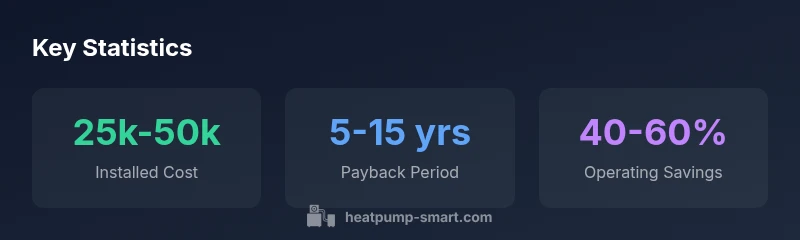
| Installed cost (GSHP system, loop field, and controls) | 25,000–50,000 | Site-dependent; vertical loops cost more per borehole, horizontal loops cheaper where land allows |
| Payback period (simple payback) | 5–15 years | Depends on energy prices and incentives |
| Maintenance per year | 100–300 | Routine service, filter changes, occasional refrigerant checks |
Your Questions Answered
What factors most influence ground source heating cost?
Loop field design, drilling depth, soil or rock conditions, system size, and labor costs are the main cost drivers. Site assessments help ensure the quote accounts for local conditions.
Loop design and site conditions are the big cost drivers, so a thorough site check is essential.
Are rebates or incentives available for ground source heating?
Yes. Incentives vary by location and can include tax credits, rebates, and financing options. Check federal, state, and local programs for applicability.
There are often incentives—check local programs to maximize savings.
Can upfront costs be reduced without sacrificing performance?
Yes. Consider optimizing system size, selecting efficient equipment, bundling with other projects, and exploring financing terms that reduce initial cash outlay.
Careful sizing and financing can help lower upfront costs.
How long does installation typically take?
Most projects span several days to a few weeks, depending on loop type, drilling logistics, and permitting. Weather and site access also influence duration.
Expect several days to a few weeks, depending on site conditions.
What maintenance is required after installation?
Annual or semiannual checks for the heat pump and loop integrity, plus regular filter changes and system cleaning to maintain COP.
Regular checks keep the system efficient.
Is ground source heating worth it in cold climates?
In cold climates, GSHPs can outperform air-source systems due to stable ground temperatures, but the decision depends on upfront costs, incentives, and energy prices.
Ground source shines in cold weather if the economics work out.
How should I compare quotes from installers?
Request detailed breakdowns of loop design, drilling or trenching costs, heat pump model, warranty terms, and expected COP. Ensure quotes come from GSHP-certified installers.
Get itemized quotes from GSHP-certified installers.
What is the typical lifespan of a GSHP system?
GSHP systems often last several decades with proper maintenance, though individual components like the heat pump may need replacement sooner.
With proper care, a GSHP can last many years.
“Investing in a ground source system is a long-term decision with higher upfront costs but stable energy prices and long lifespans that can deliver strong payback under the right conditions.”
Top Takeaways
- Assess site for loop design options before budgeting
- Factor in incentives to shorten payback
- Compare vertical vs horizontal loops for land and cost
- Plan for long-term savings alongside upfront costs