Heat Pump Calculator Australia: Estimate Costs and Savings
Estimate annual heating costs, potential energy savings, and payback periods for heat pump systems across Australian homes using Heat Pump Calculator Australia.


What the heat pump calculator australia does for you
According to Heatpump Smart, the Australian climate and tariff landscape makes budgeting for a heat pump project challenging. A dedicated calculator helps you forecast annual heating costs and potential savings by translating daily output, COP, and local electricity price into a single cost figure. This clarity is valuable for homeowners, builders, and property managers planning retrofits or new installs across different states. Expect a range rather than a single number, since results vary with insulation quality, thermostat behavior, and seasonal tariff changes. Using the calculator early in a project supports smarter decisions about system selection and sizing, reducing the risk of under- or over-investment.
Key concepts: COP, output, and energy use
To read the results, you need to understand three core ideas. COP, or coefficient of performance, measures how many units of heat you get per unit of electrical energy used. Higher COP means more efficient operation and lower running costs. Daily heating output represents how much heat the system is expected to deliver each day, which your home climate and occupant habits influence. Finally, electricity price is the rate you pay per kilowatt-hour; variations across states and tariff plans can shift yearly costs. The calculator combines these factors to estimate annual energy consumption and cost, helping you compare different heat pump models and configurations.
Australia-specific considerations: climate zones, tariffs, and insulation
Australia’s climate spans tropical to temperate, which affects heating demand and the viability of heat pumps. In hotter regions, heating needs may be modest, while southern states require robust winter performance. Tariffs and seasonal pricing can also alter running costs, so use a local rate input for accuracy. Insulation and air leakage determine how much heat is retained, which directly impacts daily output requirements. For best results, pair the calculator with an energy audit or insulation assessment, and adjust inputs to reflect your home’s actual conditions rather than default values.
Input and output: what to put in and what you’ll get out
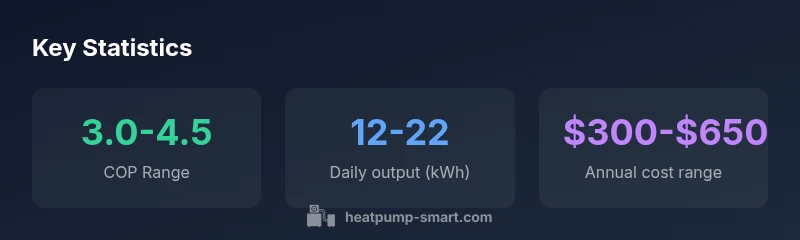
The calculator uses a small set of inputs to keep things simple while preserving accuracy. Daily heating output (kWh) represents the amount of heat you expect the system to deliver each day. COP is the efficiency factor; typical residential heat pumps run between 3.0 and 4.5. Electricity cost per kWh is the local rate you pay on your bill. The formula translates these inputs into an annual figure: annualCost = (dailyOutput * 7 * 52) / COP * costPerKWh. The result is shown as yearly cost, often in AUD, with currency precision set to two decimals.
A practical walkthrough: a sample calculation
Let’s walk through a simple example. Suppose a home estimates daily heating output of 18 kWh, COP 4.0, and electricity cost $0.25 per kWh. The calculator computes: (18 * 7 * 52) / 4.0 * 0.25 = 409.50 AUD/year. This example demonstrates how modest improvements in COP or output can noticeably affect annual costs. You can modify inputs to see how a better-performing heat pump or a different electricity price scenario changes the total.
Interpreting results for planning: cost, savings, and payback
Results aren’t the final decision alone; they’re a planning tool. Compare scenarios with different COP values to identify when the upfront premium for a higher-efficiency unit pays off through energy savings. If you’re upgrading an older system, the calculator can help model payback periods under current tariffs. Use the output to build a cost-benefit analysis for stakeholders and to justify energy-saving investments in tenders or budgets.
Improving accuracy: caveats and best practices
A number of real-world factors can shift results. COP varies with ambient temperature, humidity, and system design; insulation quality and air leakage influence heat loss. Always input realistic daily output estimates based on climate data and occupancy. Use current electricity tariffs and, if possible, factor in seasonal rate changes. For greater precision, run multiple scenarios and compare the outcomes.
Scenarios: small home vs large home, retrofit projects
Small homes with good insulation may achieve low daily output and low annual costs, while larger homes or retrofit projects with poor insulation may show higher costs unless a higher COP is achieved. The calculator supports this by letting you vary inputs to reflect different situations. For retrofit planning, consider baselining current energy consumption and modeling improvements with new heat pump efficiency, insulation upgrades, and smart controls.
Using the calculator in planning and procurement
Use the calculator early in project planning to compare heat pump options side by side. Combine its outputs with other decision tools, such as payback calculators and life-cycle cost analyses, to build a robust business case. When sharing results with clients, stakeholders, or maintenance teams, present the key inputs, the assumed tariffs, and the resulting annual cost, so decisions are transparent and auditable. The Heatpump Smart team recommends integrating this calculator as a standard step in any heat pump procurement process.