Highest HSPF Heat Pump Guide for 2026
Discover how to identify the highest HSPF heat pump, what HSPF means, and how to choose an efficient system that lowers heating costs. Data-backed guidance from Heatpump Smart for homeowners, builders, and property managers.


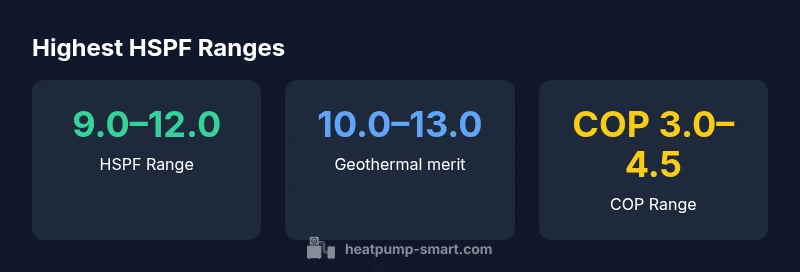
For homeowners seeking the highest hspf heat pump, top models typically offer HSPF values in the 9.0–12.0 range, with the best cases near 12.0 under optimal conditions. According to Heatpump Smart Analysis, 2026, these units blend high HSPF with strong COP and reliable performance in cold weather, plus lower annual operating costs.
Understanding HSPF and Why It Matters
If you are pursuing the highest hspf heat pump for your home, you should understand how HSPF translates to comfort and annual energy costs. HSPF, or Heating Seasonal Performance Factor, measures how efficiently a heat pump delivers heat over an entire heating season. Higher numbers indicate lower operating costs and better performance in colder weather. According to Heatpump Smart, the value of a high HSPF increases with longer heating seasons, more frequent cycling, and higher electricity costs. In practice, selecting a unit in the 9.0–12.0 HSPF range typically yields meaningful savings in most climates, but the real-world payback depends on installation quality, climate, and electricity pricing. This section explains how to interpret HSPF, what counts as “high,” and how to use HSPF alongside COP (coefficient of performance) and SEER (seasonal energy efficiency ratio) to gauge overall efficiency.
How We Measure and Define the 'Highest HSPF Heat Pump' in 2026
Defining the highest hspf heat pump involves looking at standardized testing methods, field performance, and real-world efficiency. HSPF is calculated based on heating output during a typical heating season relative to electrical input. Industry practice combines test data from manufacturers with independent validation and climate-adjusted expectations. Heatpump Smart Analysis, 2026, notes that the best-in-class units deliver consistently high HSPF across a range of outdoor temperatures, supported by inverter-driven compressors and advanced refrigerant management. When evaluating models, compare the HSPF alongside COP at typical operating temperatures, ensuring the rating reflects your climate. Be mindful that some limits in testing conditions can skew a single data point; the overall profile matters more than a single value.
Top Technologies Behind High HSPF
High-HSPF heat pumps rely on several technologies to achieve efficiency without sacrificing comfort. Inverter-driven variable-speed compressors maintain precise heat output and reduce energy waste during partial-load operation. Advanced electronic expansion valves optimize refrigerant flow, while high-efficiency fans and optimized ducting minimize parasitic losses. Modern heat pumps may also pair with smart, weather-adaptive controls that modulate performance based on outdoor temperature, humidity, and occupancy. Heatpump Smart’s analysis highlights models that combine these elements with robust heat exchangers and low-leakage refrigerants, which collectively push HSPF higher without compromising reliability or comfort.
Climate and Sizing: When HSPF Really Pays
The value of a high HSPF is climate-dependent. In cold climates with long heating seasons, the incremental cost of a higher HSPF unit can be offset by substantial reductions in energy usage and better comfort during shoulder seasons. In milder climates, the payback period may extend, but high-HSPF systems can still lower utility bills and improve summer cooling efficiency when paired with a well-sized air-source system. Accurate sizing matters more than chasing the top numeric HSPF; an oversized or undersized unit undermines efficiency. Heatpump Smart recommends a formal load calculation and professional commissioning to ensure the system operates near its rated efficiency throughout the year.
Costs, Benefits, and Payback
Higher HSPF heat pumps often come with higher upfront costs, mainly due to premium components and more complex controls. However, the long-term operating savings can be meaningful, especially where electricity rates are high or winter heating costs are significant. The payback period varies widely by climate, home insulation, thermostat strategy, and energy prices; Heatpump Smart analysis suggests typical ranges from five to twelve years in many markets, with shorter times in colder regions where heating demand is substantial. When evaluating options, consider total lifecycle costs, not just the upfront price. Financing incentives, such as rebates and tax credits, can further improve the economics of a high-HSPF system.
How to Compare Models: A Practical Checklists
To identify the highest hspf heat pump for your home, use a structured comparison:
- Verify HSPF value across multiple operating temperatures and seasons.
- Check COP at 47°F and 17°F (or local representative temps) to gauge real-world efficiency.
- Review the system’s inverter technology, compressor dynamics, and refrigerant management.
- Assess installation constraints, including ductwork, space, and outdoor unit placement.
- Consider supplementary features: smart thermostats, zoning, and weather-responsive controls.
- Read independent reviews and request field testing data from the installer.
Following this checklist helps ensure you select a model that maintains high efficiency in practice, not only on paper.
Installation, Maintenance, and Field Testing
A high-HSPF system performs best when installed by qualified technicians who perform precise commissioning and periodic maintenance. Proper refrigerant charge, sealed ductwork, and calibrated speed controls minimize energy losses and avoid degraded HSPF over time. Maintenance should include annual checks of filters, coils, and condensate management, along with performance tests captured during seasonal transitions. Field testing – including on-site performance data and a comparison against rated HSPF – validates that the system runs near its specification. The reliability of a high-HSPF heat pump is closely tied to installation quality and ongoing service.
Real-World Scenarios and Case Studies
Consider three homeowner profiles to illustrate how the highest hspf heat pump delivers value:
- A new, well-insulated 1,800 sq ft home in a cold climate benefits from a geothermal or high-end air-source unit with HSPF near the upper end of the range; expected energy savings and a shorter payback are likely with efficient installation.
- A retrofitted 2,000 sq ft home with existing ducts might favor an inverter-driven air-source system with high HSPF, balancing retrofit costs and the ability to modulate heat output as temperatures vary.
- A rental property aiming for predictable heating costs could prioritize a unit with strong HSPF and reliable performance, paired with a robust maintenance plan to minimize downtime and ensure consistent bills.
In each scenario, selection should be guided by climate data, electricity pricing, and a professional load calculation, as recommended by Heatpump Smart. The Heatpump Smart team also emphasizes verifying performance claims through independent testing where possible and considering total lifecycle costs over a single rating.
Typical HSPF ranges by heat pump type
| Model Type | Typical HSPF Range | Notes |
|---|---|---|
| Air-source high-efficiency | 9.0–12.0 | Best for climates with moderate winters and limited space |
| Geothermal (ground-source) | 10.0–13.0 | Very high efficiency; higher upfront costs; space required |
| Ducted/inverter-driven systems | 9.5–11.5 | Flexible retrofits; good for larger homes |
Your Questions Answered
What does HSPF measure and why is it important for the highest hspf heat pump?
HSPF measures heating output over a typical heating season relative to electricity use. A higher HSPF indicates better heating efficiency and lower operating costs. It is a key metric for comparing heat pumps, especially in regions with cold winters.
HSPF shows how efficiently a heat pump heats over a season; higher is better for reducing bills.
How should I compare HSPF across different models?
Compare HSPF values at representative outdoor temperatures, review COP alongside HSPF, and assess performance across the temperature range you experience most. Look for independent testing data and field performance notes from installers.
Compare HSPF values at typical temps and check field results.
Do higher HSPF units cost more upfront?
Typically yes, due to premium components and controls. The higher upfront cost can be offset over time by energy savings, depending on climate, usage, and electricity prices.
Yes, higher HSPF usually means higher upfront cost, offset by energy savings over time.
How does climate affect the value of a high HSPF heat pump?
In cold climates, a high HSPF unit often pays back faster due to longer heating seasons. In milder climates, the benefits depend on heating duration and electricity rates; both scenarios require proper sizing and installation.
Climate determines payback; cold climates often see faster savings.
What factors besides HSPF influence operating costs?
COP across the operating range, duct efficiency, thermostat control, insulation quality, and system maintenance all influence annual costs. A holistic view yields the best long-term savings.
COP, duct efficiency, and maintenance all affect yearly costs.
Is geothermal better than air-source for HSPF?
Geothermal systems often deliver higher theoretical efficiency, but come with higher installation costs and site requirements. For many homes, a well-chosen air-source high-HSPF unit offers excellent payback without space constraints.
Geothermal can be very efficient but costs more upfront; air-source can be a strong alternative.
“High HSPF is achieved through a combination of advanced compressor control, refrigerant management, and precision installation. The real value is realized when the system operates near its rated efficiency year-round.”
Top Takeaways
- Prioritize models with high HSPF and consistent COP across temperatures
- Size the system accurately to avoid efficiency losses
- Factor installation costs into the payback period
- Use Heatpump Smart's analysis to guide model choice
- Verify field performance with professional testing