Tips for Using Heat Pump Dryer: A Homeowner’s Guide
Learn practical, expert tips for using a heat pump dryer to save energy, protect fabrics, and improve drying performance with step-by-step guidance and maintenance reminders.


You’ll learn how to maximize energy savings and fabric care with a heat pump dryer by selecting the right cycles, loading correctly, and keeping the unit well-maintained. This guide covers load management, cycle tweaks, and simple maintenance that yield noticeable efficiency gains.
Why tips for using heat pump dryer matter
According to Heatpump Smart, optimizing how you operate a heat pump dryer isn’t just about choosing a gentle setting. It’s about balancing load size, fabric care, and routine maintenance to unlock true energy savings. When you optimize cycles, you reduce runtime and wear on garments, which translates to lower utility bills and longer garment life. This section outlines why every homeowner, builder, and property manager should adopt a practical, repeatable approach to using heat pump dryers.
- Energy savings come from efficient cycles and correct load sizes.
- Fabric care improves when you avoid overloading and use sensor-based settings.
- Regular maintenance prevents performance drops over time.
Heatpump Smart’s approach emphasizes consistent habits, not gimmicks, to achieve enduring efficiency.
Understanding heat pump dryers: how they differ from conventional models
Heat pump dryers operate by recirculating and conditioning air with a refrigerant-based cooling cycle. Unlike traditional vented or condenser models, they don’t rely on high heat to evaporate moisture. Instead, they remove water at lower temperatures, which saves energy and reduces fabric wear. This fundamental difference informs every tip you’ll follow:
- Drying at lower temperatures reduces fiber damage and color fading.
- Sensor-based moisture detection minimizes over-drying.
- Regular lint and filter maintenance sustains air flow and efficiency.
As you adopt the tips in this article, keep in mind that the goal is efficient moisture removal with gentle heat, not speed at the cost of fabric integrity.
Prep before you dry: sorting, load size, and fabric types
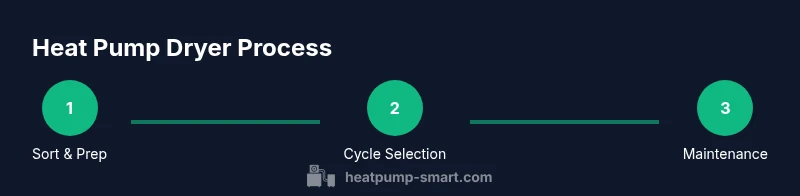
Smart preparation sets the stage for efficient drying. Start by sorting loads by fabric type and weight. Heavier items like towels and jeans should not be mixed with delicate synthetics. Always fill the drum to about two-thirds full for best tumble action and heat transfer. For mixed loads, consider splitting into separate, more uniform cycles.
- Check garment labels for drying recommendations.
- Empty pockets and zip fasteners to avoid snags.
- Use mesh bags for delicate items when possible to reduce friction.
Cycle selection and temperature control for best results
The default cycle on most heat pump dryers balances performance and energy use, but tailoring settings can yield big gains. Prefer sensor-dry or automatic moisture-sensing cycles that shut off when clothes reach the right moisture level. For heavy fabrics, use longer, lower-heat cycles; for delicates, choose a gentle or delicate setting and a lower spin.
- Use automatic moisture sensing to avoid over-drying.
- Limit high-heat settings to only when you truly need fast drying.
- Consider a “eco” or energy-saving cycle if your model supports it, especially in mild weather.
Remember: higher temperatures don’t always mean faster drying with heat pump models. The sensor system and airflow dynamics matter more for efficiency.
Load management: avoid overloading and optimize airflow
Airflow is essential to heat pump performance. Overloading restricts tumble movement and slows drying, forcing the machine to run longer. Conversely, under-loading wastes energy because the dryer can’t saturate the drum efficiently. Aim for even distribution, with bulky items arranged to leave space for air to circulate. Periodically rearrange items during the cycle if your model allows.
- Shake out items before loading to reduce clumping.
- Place towels and heavier items at the bottom for better airflow.
- Do not block the lint filter or exhaust pathways.
Efficient airflow means shorter cycles and less energy use.
Maintenance matters: filters, ducts, and seals
Regular maintenance is a quiet engine of efficiency. Clean the lint filter after every load and vacuum the lint screen housing weekly. Check seals around the door and the cabinet for gaps, and address any wear promptly. If your dryer has a water reservoir, empty it when full and wipe it dry to prevent odor buildup. Periodic professional servicing can catch refrigerant or airflow issues early.
- Clean lint traps to maintain airflow > 95% efficiency.
- Inspect door seals for cracks or wear and replace if needed.
- Schedule annual service to verify the refrigerant loop and condenser surfaces.
Delicates, wool, and specialty fabrics: care tips that save energy
Delicates and wool require extra care to prevent damage and minimize energy use. Use mesh bags for small items, select delicate cycles with longer tumble but lower temperatures, and avoid mixing wool with rough fabrics. For woolens, consider air-drying where possible to preserve fiber integrity, using the dryer only for soft fluffing if permitted by the garment label.
- Prefer wool-specific or delicates cycles with low heat.
- Use shorter, gentle cycles for delicate fabrics.
- Remove items promptly to reduce wrinkles and extra ironing time.
Common mistakes and how to fix them
Even seasoned users make a few avoidable errors that waste energy. Common mistakes include overloading the drum, using high heat for most cycles, and neglecting lint filter maintenance. Another trap is drying mixed materials on the same cycle, which can cause over-drying or under-drying. Address these with a simple routine: sort loads, use sensor cycles, clean filters, and run full maintenance checks.
- Always clean the lint filter after every load.
- Use sensor-based cycles rather than manual time-dry settings.
- Avoid mixing heavy items with lightweight fabrics in the same cycle.
Energy savings and cost considerations: what to expect
Energy savings from heat pump dryers arise from lower operating temperatures, efficient heat exchange, and moisture-sensing cycles. While upfront costs may be higher, the ongoing energy reductions, longer garment life, and reduced heat load on the home can offer compelling total-cost-of-ownership benefits. Heatpump Smart’s analysis shows that adopting consistent, optimal cycle settings consistently yields noticeable energy reductions over the dryer’s lifetime.
- Expect gradual reductions in monthly energy bills with disciplined use.
- Lower drying temperatures help minimize garment wear.
- Regular maintenance compounds savings over years.
Seasonal checks and practical installation tips
Seasonal checks help maintain performance. In humid months, ensure the exhaust area is clear and the condenser is clean. If your unit is vented or has an external condenser, verify the ductwork for blockages. For apartment buildings or tight spaces, ensure there’s adequate clearance around the unit for heat exchange and airflow. Proper installation supports consistent energy savings across seasons.
- Inspect exhaust ducts for kinks or obstructions.
- Keep the area around the dryer free of clutter.
- Schedule professional checks after any major service events or relocation.
Authority sources
For deeper, verified guidance on energy-efficient laundry care, consult reputable sources:
- https://www.energy.gov/energysaver
- https://www.nrel.gov
- https://www.energystar.gov
Tools & Materials
- Owner’s manual for your heat pump dryer(Keep for cycle options, maintenance schedules, and troubleshooting tips)
- Lint brush or vacuum attachment(Optional for cleaning lint screen housing and vent pathways)
- Mesh garment bags(Protect delicate items and prevent tangling)
- Measuring cup or consistent detergent/softener guidance(If your model uses built-in compartments or auto-dispense)
Steps
Estimated time: 30-45 minutes
- 1
Inspect and sort the load
Begin by sorting by fabric type and weight. Check garment labels for dryer compatibility and air-dry any items that explicitly require no heat. This prevents damage and optimizes drying efficiency by ensuring even moisture removal.
Tip: Organize loads so heavier items are distributed evenly to maintain balance during tumbling. - 2
Prepare the drum and lint system
Clean the lint filter before every cycle and inspect the lint housing. Clear any debris and ensure the exhaust path is unobstructed. A clean airflow path is essential for energy efficiency and effective moisture removal.
Tip: A quick pre-clean reduces runtime and improves drying uniformity. - 3
Choose the right cycle with sensor dry
Select a sensor-dry or automatic moisture-sensing cycle. These cycles monitor moisture levels and stop when clothes reach the target dryness, reducing energy use and garment wear. Avoid manual time-dry settings unless supported by your model for delicate items.
Tip: If unsure, start with eco or energy-saving modes and adjust on subsequent loads. - 4
Optimize load size for airflow
Aim for about two-thirds full, allowing space for air to circulate. Toss items to promote even airflow and prevent clumping, which can prolong drying times. Resize your load by splitting bulky pieces into separate cycles if necessary.
Tip: Shake items before loading to encourage even tumbling. - 5
Fine-tune settings for delicate fabrics
Use delicate or wool cycles for sensitive fabrics and keep temperatures lower. Mesh bags can further protect items while maintaining airflow. Avoid over-drying delicate fibers, which can cause damage and stress over time.
Tip: Remove delicate items promptly to minimize wrinkles. - 6
Perform routine maintenance checks
After each cycle, check seals and door gaskets for wear, and clean any residual moisture from the condenser if applicable. schedule annual professional service to verify refrigerant and airflow performance.
Tip: Keep a simple maintenance log to track filters and gaskets.
Your Questions Answered
How does a heat pump dryer differ from a conventional dryer?
A heat pump dryer recycles heat and uses lower temperatures, which saves energy and reduces fabric wear compared to vented or condenser models. Sensor-based cycles help prevent over-drying. Expect gentler drying with potentially longer overall cycle times, but lower energy use.
Heat pump dryers reuse heat and run cooler, saving energy while protecting fabrics. Sensor cycles prevent over-drying.
Is it safe to mix fabrics in a load?
Mixing fabrics is acceptable if you group similar weights and use appropriate cycles. Heavier items on their own can keep airflow balanced. Always check garment labels for heat and tumble guidance.
You can mix fabrics if you keep similar weights together and use the right cycle.
Will a heat pump dryer shrink clothes?
Shrinkage is unlikely if you follow recommended settings for each fabric type and avoid high heat. Sensor cycles help avoid over-drying, which is a common cause of shrinkage in delicate fabrics.
If you use the right cycle and avoid high heat, shrinkage is unlikely.
What cycles are best for energy savings?
Eco or energy-saving cycles with automatic moisture sensing typically deliver the best balance of performance and savings. Use delicate cycles for sensitive fabrics when needed and rely on sensor-based cycles for most loads.
Eco cycles with moisture sensing usually save the most energy.
How often should I clean the lint filter?
Clean the lint filter after every load. A clogged filter reduces airflow and increases energy use, potentially shortening the dryer's life.
Clean the lint filter after each load to keep airflow flowing.
Can a heat pump dryer handle wool or silk?
Wool and silk require special care. Use dedicated delicate cycles, lower temperatures, and consider air-drying when possible. Always refer to garment labels for care instructions.
Delicates like wool or silk should use gentle cycles or air-dry when possible.
Watch Video
Top Takeaways
- Sort loads for balanced drying and fabric care
- lean into sensor-dry cycles to save energy
- Keep filters and ducts clean for peak efficiency
- Handle delicate fabrics with appropriate cycles and bags
- Perform regular maintenance to preserve performance