Can You Install a Heat Pump with Baseboard Heating? A Practical Guide
Learn if you can install a heat pump when you have baseboard heating. This guide covers compatibility, installation paths, zoning, and step-by-step considerations for homeowners, builders, and property managers.


Yes—it's often possible to run a heat pump alongside baseboard heating, but you can't simply replace hydronic baseboards with a standard air-source unit. Most projects use an air-to-water or hybrid setup to feed the baseboard radiators through a dedicated loop or retrofit. Factors like boiler type, climate, and zoning determine the best path.
can you install a heat pump if you have baseboard heating? Overview
The question can you install a heat pump if you have baseboard heating often arises when homeowners want to improve energy efficiency without tearing out existing radiators. The concise answer is: it is frequently possible, but it requires careful planning. According to Heatpump Smart, baseboard heating is a hydronic distribution problem, not a plug-and-play electrical replacement. A successful installation typically uses a hydronic-compatible heat pump (air-to-water) or a hybrid solution that feeds baseboard radiators with the new loop. Climate, boiler type, and existing zoning all influence the final design. The more you know about your baseboard radiators, the easier it will be to choose the right path. The Heatpump Smart team emphasizes understanding envelope efficiency and load calculations as critical first steps.
Understanding baseboard heating and heat pumps
Baseboard radiators rely on convection and long radiant runs to heat spaces. Hydronic baseboards are fed by hot water from a boiler or heat source, and temperatures are moderated to maintain comfort. A heat pump can participate in this system, but only if the distribution is designed for a hydronic loop or a hybrid configuration. An air-to-water heat pump heats water for distribution through baseboards or radiant floors, offering improved efficiency when paired with good insulation and tight building shells. In many cases, homeowners see meaningful savings when the baseboard loop is integrated with smart controls and zone balancing. Heatpump Smart analysis shows that better insulation and precise zoning substantially improve performance and comfort.
Compatible paths: hybrid, air-to-water, or full replacement
There are three common paths to integrate a heat pump with baseboard heating:
- Hybrid with existing boiler: the heat pump handles most of the load, and the boiler provides backup or peak support. This approach preserves your current distribution while adding efficiency.
- Air-to-water heat pump: the outdoor unit conditions heat into a water loop that feeds baseboards or radiant panels. This path often requires new piping and a buffer tank to manage flow and temperatures.
- Full replacement with a heat-pump-first system: in some homes, the boiler and baseboard loop are replaced with a fully electric hydronic or radiant system driven by a heat pump. This option can simplify controls but requires substantial design work and zoning planning.
Each path has trade-offs in cost, comfort, and maintenance. Studying your climate, insulation, and daily usage patterns helps determine the best route. Heatpump Smart notes that the most reliable results come from a well-matched heat source, distribution strategy, and professional integration.
Assessing your home and climate
Your home’s thermal envelope and climate are the biggest determinants of feasibility. Start with a professional heat-loss calculation to estimate the peak load your home experiences during winter. Review the boiler type, age, and current zoning layout. Consider insulation upgrades, drafts, and window performance, since these factors directly affect the required output from a heat pump and the need for supplemental heat. In milder climates, heat pumps paired with baseboard radiators commonly achieve comfortable indoor temperatures with high efficiency. In colder regions, a hybrid approach or supplemental heat may be necessary to avoid short cycling and comfort gaps.
Planning installation: zoning, controls, and permits
A successful integration hinges on thoughtful zoning and controls. Map each room or zone to a thermostat and determine whether the baseboard loop can be reconfigured for a dedicated heat-pump loop or must be kept as a separate circuit. Smart thermostats and zone valves can optimize warm-up times and reduce energy use. Permitting requirements vary by locale, but most installations require electrical and mechanical permits, plus compliance checks for refrigerant handling and load calculations. Work with an accredited HVAC contractor to prepare the design package and ensure all codes are met.
Maintenance and long-term considerations
Once installed, regular maintenance is essential for reliability and efficiency. Schedule annual inspections of refrigerant lines, electrical connections, and the outdoor unit. Clean the outdoor coil and ensure airflow is unobstructed. Inspect the baseboard loop for leaks or corrosion and verify that zone controls respond promptly. Consider seasonal checkups that align with heating and cooling cycles. A well-maintained system tends to deliver consistent comfort and longer equipment life.
Real-world examples and cost considerations
Every home presents unique challenges, so costs and outcomes vary widely. Some homeowners achieve substantial energy savings after the initial installation, while others require additional envelope improvements to realize similar benefits. The best approach is a phased plan that prioritizes insulation, then integrates the heat pump with the existing baseboard loop using a hydronic-compatible pathway. Work with a contractor who can provide a detailed scope, phased milestones, and a transparent estimation process. Costs depend on system type, region, and required upgrades, so request multiple quotes and compare long-term maintenance implications.
Tips for working with professionals
Engage licensed HVAC and electrical contractors with experience in heat-pump hydronic systems. Request a written design pack, including load calculations, piping diagrams, and control strategies. Have them review your insulation upgrades and provide a phased implementation plan to minimize disruption. Communication and documentation help ensure the project stays on track and meets local codes.
Tools & Materials
- Adjustable wrench(8-inch or larger for plumbing and hardware fittings)
- Screwdrivers (Phillips and flathead)(Assorted sizes for electrical panels and equipment housings)
- Pipe cutter (PEX or copper)(Appropriate for your baseboard loop piping)
- Teflon tape / pipe sealant(For threaded connections on hydronic piping)
- Voltage tester / multimeter(Verify circuits before work and during installation)
- Safety gear (gloves, safety glasses)(Personal protection during mechanical and electrical work)
- Permits & project documents(Local building and mechanical permits may be required)
- Manufacturer installation manuals(Have spec sheets for the heat pump and baseboard compatibility)
Steps
Estimated time: half a day to a full day, depending on complexity and permitting
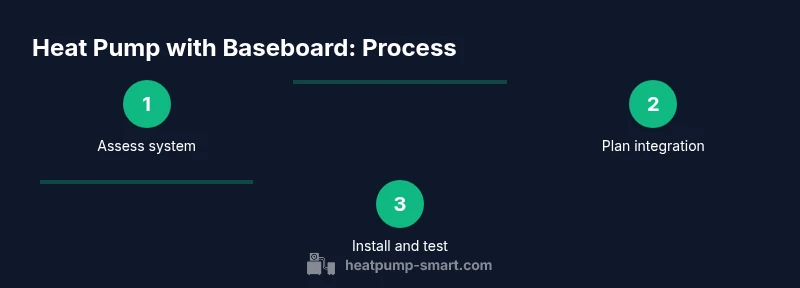
- 1
Assess current system and goals
Survey your existing baseboard network, boiler age, and zoning. Define comfort targets, indoor temperature ranges, and whether you prefer a purely heat-pump-driven solution or a hybrid with your boiler. This upfront assessment prevents costly redesigns later.
Tip: Document boiler type, zone layout, and pipe materials before contacting a contractor. - 2
Choose the integration path
Decide between hybrid, air-to-water, or full replacement based on climate, insulation, and long-term goals. Each path has different piping, controls, and maintenance implications. Align the choice with your budget and performance expectations.
Tip: Ask for a load calculation and multiple design sketches to compare options. - 3
Check electrical capacity and permits
Have a licensed electrician verify the service panel can handle added loads and confirm wiring routes. Obtain necessary permits and prepare energy, zoning, and refrigerant-handling documents as required by local codes.
Tip: Avoid DIY electrical modifications; improper work can be dangerous and illegal. - 4
Plan piping and distribution
Work with the contractor to design a hydronic loop or buffer tank configuration that integrates with the baseboard radiators. Ensure proper flow rates, pressure, and temperature settings to avoid short cycling.
Tip: Create a labeled schematic showing each zone and its thermostat control. - 5
Prepare mechanical room and outdoor unit
Clear the outdoor space for airflow, inspect mounting surfaces, and verify access to service panels. In the mechanical room, confirm space for piping, condensate drain, and control wiring.
Tip: Keep clearances around the outdoor unit to ensure efficient heat exchange. - 6
Install outdoor unit and connect hydronic loop
Install the outdoor unit per manufacturer instructions and connect the refrigerant and water loops to the interior distribution. This step requires licensed HVAC personnel for refrigerant work and leak testing.
Tip: Do not leak-check with DIY methods; rely on certified technicians for refrigerant integrity. - 7
Configure zoning and controls
Set up thermostats, zone valves, and any smart controls. Calibrate for balance so rooms heat evenly and the system avoids overheating in some zones while under-heating others.
Tip: Enable a smart scheduling program to maximize efficiency during peak hours. - 8
Test system startup and performance
Run a controlled startup, verify temperature setpoints in all zones, and monitor pressure, refrigerant flow, and electrical draw. Adjust parameters for optimal efficiency and comfort.
Tip: Record operating data during the first week to fine-tune performance. - 9
Plan maintenance and future upgrades
Schedule annual service, check insulation, and review energy usage. Consider envelope upgrades before future expansion to maximize savings.
Tip: Keep a maintenance log with dates and service notes for reference.
Your Questions Answered
Is baseboard heating compatible with heat pumps?
Baseboard heating can be compatible when paired with the right heat pump setup, typically an air-to-water system or a hybrid that integrates with the existing loop. Directly replacing baseboards with a standard air-source unit is usually not feasible without a hydronic interface.
Baseboard heating can work with heat pumps when you use the right hydronic or hybrid path, not by simply swapping to a standard air-source unit.
What is an air-to-water heat pump?
An air-to-water heat pump extracts heat from outside air and transfers it to a water loop that feeds radiators or radiant floors. It is essential for hydronic baseboard integration and requires proper piping and controls.
An air-to-water heat pump uses outside air to heat water that runs through your baseboard or radiant systems.
Can I install this myself?
Installing a heat pump and modifying baseboard loops involves refrigerant handling and electrical work, which requires licensed professionals and permits. DIY installation is not recommended for safety and code compliance.
This isn’t a DIY job; you need licensed technicians and permits.
Will climate affect performance with baseboard heating?
Yes. Outdoor temperatures influence heat pump efficiency. In milder climates or well-insulated homes, a heat pump with baseboards can maintain comfort efficiently; in very cold climates, supplemental heat may be needed.
Yes, climate matters; you may need supplemental heat in very cold snaps.
What maintenance does this setup require?
Regular checks of refrigerant lines, electrical connections, and outdoor unit cleanliness are important, along with annual professional inspections of the hydronic loop if used. This helps sustain efficiency and safety.
Expect routine checks and annual service to keep the system running well.
What permits or upgrades are needed?
Local permits may be required for mechanical and electrical work. You may also need insulation upgrades or building code adjustments depending on your area and the system chosen.
You’ll likely need permits and possibly insulation improvements.
Watch Video
Top Takeaways
- Assess compatibility early with a load calculation
- Choose the right integration path (hybrid, air-to-water, or full replacement)
- Rely on licensed professionals for electrical, refrigerant, and piping work
- Plan for zoning and controls to maximize comfort and efficiency