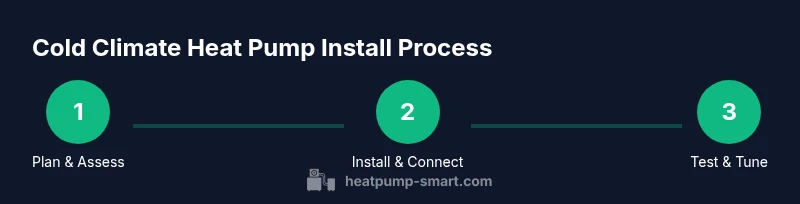
Cold Climate Heat Pump Installation: A Step-by-Step Guide
Learn how to plan, size, install, and maintain cold climate heat pumps for reliable home heating. This comprehensive guide covers site planning, equipment selection, electrical and ductwork considerations, and efficiency strategies tailored for cold weather.


You will learn how to plan and perform a cold climate heat pump installation, including sizing, locating the outdoor unit, and configuring controls for winter performance. According to Heatpump Smart, success hinges on proper sizing, a well-sealed building envelope, and a model engineered for cold temperatures. Follow this guide to ensure safe wiring, correct refrigerant routing, and reliable operation in freezing weather.
Why cold climate heat pump installation matters in cold climates
According to Heatpump Smart, cold climate heat pump installation can deliver reliable heating in low-temperature conditions when sized correctly and installed with proper envelope performance and defrost strategies. In many homes, well-designed cold climate systems outperform resistance-electric heat in comfort and efficiency during extended winter periods, especially when paired with proper insulation and airtight envelopes. This article treats the heat pump as part of a holistic home performance plan, not a standalone device. You will learn why choosing equipment rated for cold weather matters, how defrost cycles affect performance, and what metrics to review in manufacturer data sheets. The goal is to maintain steady indoor temperatures with minimal energy waste, even as outdoor temperatures drop.
Key design considerations for cold climate installations
- Building envelope: Prioritize airtightness and insulation to reduce heating demand. A well-sealed house reduces the load on the heat pump and improves efficiency in the cold.
- System type: Decide between ducted and ductless (mini-split) configurations based on the existing structure and retrofit goals.
- Defrost strategy: Cold-weather operation requires an effective defrost cycle to avoid frost buildup on the outdoor coil; review defrost sequencing in the spec sheet.
- Location and clearances: Outdoor units need adequate clearance for airflow and safe maintenance access, plus protection from snow buildup.
- Controls: A smart thermostat or zone controls can optimize performance by modulating heat delivery according to demand and occupancy.
Sizing and load calculations in cold weather
Sizing a cold climate heat pump should start with a professional load calculation (e.g., Manual J) that accounts for insulation levels, window orientation, and climate zone. In cold conditions, oversizing can cause short cycling and inefficiency, while undersizing leads to inadequate heating near the coldest days. Use the manufacturer’s performance data to evaluate COP and heating capacity at low outdoor temperatures. The goal is a balance: sufficient capacity at cold temperatures without unnecessary oversizing that wastes energy and shortens equipment life.
Selecting a model engineered for cold climates
Choose models explicitly rated for cold weather performance. Look for features such as high-efficiency compressors with variable speed, robust defrost controls, and efficient low-temperature performance. Some designs include supplemental heat options or transition strategies for extreme cold days. Compare seasonal energy performance ratios (SEER) and heating seasonal performance factors (HSPF) while avoiding hype—base decisions on verified data from manufacturer datasheets and independent reviews. Always ensure compatibility with your electrical service, ductwork, and thermostat system.
Site planning and mounting: outdoor unit, indoor coil, and ductwork
Plan a practical layout that minimizes long refrigerant runs and reduces heat loss on lines. The outdoor unit should sit on a stable pad with level footing and adequate clearance; protect against snow drift and wind exposure where possible. Indoor considerations include selecting a properly sized air handler or coil and ensuring ductwork is sealed and insulated to prevent heat loss. If retrofitting, assess whether existing ductwork requires sealing, insulation upgrades, or redesign to avoid air leaks that degrade performance in extreme cold.
Piping, refrigerant lines, and electrical considerations
Route refrigerant lines with careful insulation to minimize energy losses; use brazed joints and pressure-tested connections. Keep line lengths practical to reduce charge requirements and potential pressure drops. Electrical work must comply with local codes; install a dedicated circuit with a proper disconnect switch and grounding. Consider installing a two-stage contactor and an adequate transformer if your system requires control signaling between indoor and outdoor units. Regularly inspect lines for frost accumulation or insulation damage.
Controls, thermostats, and performance optimization
Integrate a compatible thermostat and zoning strategy to optimize heat distribution. Program setback and wake times for energy savings while maintaining comfort during cold mornings. For best results, enable smart features like adaptive scheduling and weather-based shutoff to reduce cycling. Periodically review performance reports and adjust setpoints if cold months show persistent overshoot or delayed response.
Commissioning, charging, and safety checks
Commissioning should occur after all mechanical connections are complete and the system is leak-tested. A trained technician should purge air from refrigerant lines, verify refrigerant charge per the manufacturer’s specification, and confirm proper refrigerant temperatures. Safety checks include confirming electrical grounding, correct thermostat communication, and clearances for both indoor and outdoor units. This stage ensures the system operates as intended before final testing and handover.
Maintenance and seasonal readiness
Plan a maintenance routine that includes filter checks, coil cleaning, and refrigerant leak monitoring. In cold climates, pay attention to frost buildup on outdoor coils and defrost cycle function. Schedule seasonal tests of backup heat options if they are part of the system. Regular inspections help prevent performance declines and extend equipment life.
Common mistakes to avoid
Avoid underestimating building envelope improvements or over-relying on auxiliary heat during cold snaps. Skipping proper duct sealing or choosing an undersized outdoor unit can lead to chronic comfort issues. Do not neglect electrical safety, permits, or professional guidance; cold climate installations require careful coordination between HVAC, electrical, and building envelope trades.
Real-world example: cold-climate install for a mid-size home
In a typical two-story home with moderate insulation and southern exposure, a cold-climate heat pump installation was designed to meet the majority of heating loads during winter. The project emphasized envelope upgrades, a ducted air-handling solution, and a carefully planned refrigerant routing with frost mitigation. After commissioning, the home maintained comfortable indoor temperatures with reduced reliance on auxiliary electric resistance heat, illustrating the benefits of a well-executed cold climate heat pump installation.
Tools & Materials
- Heat pump outdoor unit (cold-climate rated)(Select a model proven to perform at low outdoor temperatures; verify manufacturer cold-weather specifications.)
- Indoor air handler or evaporator coil(Match capacity to outdoor unit and existing ductwork; ensure compatibility with refrigerant type.)
- Ductwork components or enhanced air handler(Seal and insulate ducts to minimize losses; consider upgrades if existing ducts are leaky.)
- Electrical service and disconnect switch(Ensure service capacity and wiring comply with local codes; hire a licensed electrician.)
- Thermostat compatible with heat-pump systems(Prefer a programmable or smart thermostat with heat-pump optimization features.)
- Insulated refrigerant lines (copper tubing)(Keep lines well-insulated to reduce heat loss and avoid condensation/frost issues.)
- Mounting pad or frame(Provide a level, stable base with good drainage and clearance for service.)
- PPE and safety gear(Gloves, eye protection, and fall protection as needed for rooftop or high installation areas.)
- Vacuum pump, manifold gauge, and leak detector(Required for proper system evacuation and leak testing during commissioning.)
- Basic tools (wrenches, screwdrivers, snips)(Have a full set ready for fast, precise connections and mounting hardware.)
Steps
Estimated time: 8-14 hours
- 1
Assess site and plan layout
Survey the property, determine the best outdoor unit location with adequate airflow, and map indoor layout to minimize refrigerant line length. Confirm envelope upgrades and window orientations that influence heating load. Document all measurements and local code requirements before purchasing equipment.
Tip: Create a simple sketch showing outdoor unit clearance, indoor air-handler location, and line-route paths to prevent rework later. - 2
Verify electrical capacity and permits
Check the electrical service capacity and obtain necessary permits from the local authority. Plan for a dedicated circuit and proper disconnect switch near the outdoor unit. Confirm electrical wiring gauge and protective devices align with equipment requirements.
Tip: Engage a licensed electrician early to avoid delays and code violations. - 3
Size the system using cold-climate criteria
Use a professional load calculation and consult manufacturer data for low-temperature performance. Ensure the chosen model delivers adequate heating capacity at typical cold-weather conditions without oversizing. Align project expectations with envelope improvements for best results.
Tip: Never rely on rough estimates; precise load calculations prevent comfort issues and energy waste. - 4
Select model and configure routing
Choose a cold-climate rated unit and determine refrigerant line routing to minimize length and avoid sharp bends. Plan insulation thickness and protective sleeves where lines traverse unheated spaces. Confirm compatibility with indoor equipment and smart controls.
Tip: Prefer shorter runs with clean, direct routing to reduce charge requirements and potential leaks. - 5
Prepare outdoor mounting and pad
Level and secure the outdoor unit on a stable pad with drainage and frost protection. Clear debris and ensure adequate airflow around the unit. Verify anti-vibration isolation to reduce noise and vibrations.
Tip: Use a weather-protected pad if possible to minimize exposure to snow and ice buildup. - 6
Install refrigerant lines and electrical conduit
Route lines and wiring with appropriate protection, seal penetrations, and avoid damage to insulation. Purge air and vacuum the line-set to remove moisture before charging. Recheck connections for leaks.
Tip: Keep line-set joints clean and avoid twists that could compromise insulation integrity. - 7
Install indoor air handler and ductwork
Place the indoor unit in a accessible location with balanced airflow and proper duct connections. Seal and insulate ducts to meet performance goals. Verify condensate drainage and ensure maintenance access.
Tip: Consider upgrading air filters and adding smart zoning if desired for comfort and energy savings. - 8
Charge system and perform safety checks
Evacuate and charge the refrigerant according to the manufacturer’s specification. Conduct leak testing, verify electrical safety, and confirm thermostat communication. Activate defrost controls and verify compressor operation in cooling mode to ensure proper reverse cycle.
Tip: Document the final charge and refrigerant type for future service. - 9
Configure controls and test performance
Program the thermostat, calibrate setpoints, and test performance across a range of outdoor temperatures. Confirm heating output, airflow, and defrost timing meet design targets. Run a full system test to validate comfort, efficiency, and safety before turnover.
Tip: Record test results and adjust control parameters to optimize efficiency during cold snaps.
Your Questions Answered
Can a cold climate heat pump heat an entire house on its own?
In many homes, a cold climate heat pump can provide the majority of space heating, especially when paired with proper insulation and an appropriately sized system. Extremely cold days may require backup heat, such as a furnace or boiler, to maintain comfort.
Yes, it can heat most homes, but on very cold days you may need a backup heat source for peak demand.
Do I need a backup heat source for extreme cold?
A backup heat source is commonly recommended in very cold climates to ensure comfort during extreme conditions or spikes in heating load. This ensures reliability when outdoor temperatures plunge beyond the heat pump’s efficient range.
Most homes in extreme cold scenarios use backup heat to ensure warmth when temperatures drop sharply.
What permits are required for cold climate heat pump installation?
Permits vary by jurisdiction and may cover electrical work, refrigerant handling, and structural changes. Check with the local building department early in planning and have the installation inspected after completion.
Local permits are typically required for electrical and refrigerant work; consult your building department.
Can I install a cold climate heat pump myself?
Cold climate heat pump installations involve electrical, refrigerant, and building envelope work that pose safety risks. It is strongly recommended to hire licensed HVAC professionals for installation and commissioning.
For safety and performance, hire licensed HVAC professionals rather than attempting a DIY installation.
What maintenance is required to keep the system efficient?
Regular maintenance includes filter changes, coil cleaning, duct sealing checks, and annual professional inspections of electrical connections and refrigerant lines. Keeping up with maintenance preserves efficiency and extends system life.
Keep up with filters, coils, and annual professional checks to maintain efficiency.
How does cold-temperature performance affect efficiency?
Performance can drop at very low outdoor temperatures, but a properly selected cold-climate heat pump maintains high efficiency through advanced compressors and defrost strategies. Always compare manufacturer data for low-temperature performance.
Efficiency drops less when you choose a model designed for cold weather with good defrost controls.
Watch Video
Top Takeaways
- Plan envelope improvements first to reduce load.
- Choose a cold-climate model designed for low temperatures.
- Size accurately; avoid under/over-sizing to prevent inefficiency.
- Coordinate permits, electrical, and ductwork early.
- Heat pump installations benefit from expert guidance and professional commissioning.