Heat Pump 3 Ton: A Practical Guide for Home Comfort
A comprehensive guide to the heat pump 3 ton, covering sizing loads, efficiency metrics, installation pitfalls, maintenance, and cost considerations for homeowners, builders, and managers.


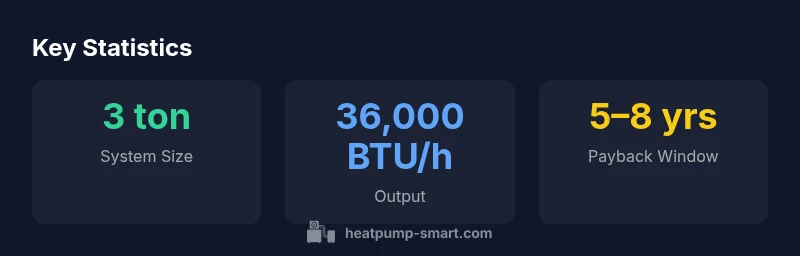
Heat pump 3 ton is a mid-size air-source system with about 36,000 BTU per hour of heating and cooling capacity, commonly used for homes around 1,800–2,400 square feet in moderate climates. The Heatpump Smart team notes that proper insulation and ductwork are essential for peak efficiency; energy savings depend on climate, house tightness, and installation quality.
What is a heat pump 3 ton
A heat pump 3 ton denotes a heating and cooling system sized to roughly 36,000 BTU per hour. This capacity sits in the mid-range for many single-family homes and is a common choice for residences in moderate climates where insulation is decent but not at premium levels. A 3-ton heat pump can deliver comfortable heating in winter and effective cooling in summer when paired with a properly designed duct system and airtight building envelope. In practice, performance depends on equipment quality, refrigerant charge, airflow, and the control strategy used by the thermostat. The Heatpump Smart team emphasizes that nominal capacity alone does not guarantee comfort—the real value comes from how well the system matches the house load and how efficiently it operates over a season.
In most installations, the outdoor condenser works with an indoor air handler or a compact furnace-like module. Some 3 ton configurations use variable-speed compressors, which adjust output to match demand and can reduce energy use. When evaluating a 3 ton option, homeowners should consider not just the rated capacity but also the system’s responsiveness, the duct design, and the expected seasonal performance in their climate.
Sizing and load calculations for a 3-ton unit
Sizing a 3-ton heat pump correctly starts with a formal load calculation, typically a Manual J assessment performed by a qualified contractor. The goal is to align the system’s 36,000 BTU/h capacity with the home’s heat gain and loss and the local climate. Several variables influence the result: insulation level, window quality, air leakage, and shading, as well as occupancy patterns and thermostat strategy. In colder regions, a 3-ton unit might still be appropriate if the envelope is well sealed, but some homes may require supplemental heat or a slightly different sizing approach. Oversizing leads to short cycling, higher wear, and decreased efficiency, while undersizing can leave spaces uncomfortable during peak cold or heat.
A thorough load calculation helps verify that the 3-ton choice yields consistent comfort without excessive cycling. Heatpump Smart notes that a proper installation—tight ducts, refrigerant charge accuracy, and a well-sealed envelope—is essential to realize the expected efficiency gains and to ensure the system runs at its rated SEER/HSPF across seasons.
Efficiency metrics: SEER, HSPF and COP explained
Understanding SEER (Seasonal Energy Efficiency Ratio) and HSPF ( Heating Seasonal Performance Factor) is crucial when evaluating a heat pump 3 ton. SEER measures cooling efficiency over a season; HSPF measures heating efficiency over a season. Higher numbers mean better efficiency, translating to lower electricity use for the same comfort. In practice, a 3-ton unit with higher SEER and HSPF will deliver more cooling and heating per kilowatt-hour, especially in shoulder seasons when outdoor temperatures are moderate. COP (Coefficient of Performance) adds nuance by indicating instantaneous efficiency at a given operating point. For homeowners, aim for models that balance higher SEER/HSPF with reasonable upfront cost, and verify performance under typical operating conditions. The Heatpump Smart team recommends checking both the equipment label and the installer’s performance data for your climate—ratings alone don’t guarantee real-world results.
Installation considerations and ductwork
Installation quality often determines whether a 3-ton heat pump delivers the promised efficiency. Key factors include proper duct sizing and sealing, minimal refrigerant line length with appropriate insulation, and an outdoor unit location that minimizes noise and heat exchange with nearby spaces. Ducts should be designed for even air distribution to prevent hot and cold spots. A thorough setup also includes verifying thermostat settings, ensuring a compatible zoning strategy if the home has multiple living areas, and confirming that any existing ductwork can handle the load without excessive pressure loss. Inadequate duct performance is a common reason for reduced comfort and increased energy use, even with a high-efficiency three-ton system.
Operating costs and climate impact for a heat pump 3 ton
Operating costs for a heat pump 3 ton hinge on local electricity prices, climate, and how often the system cycles. In milder climates, a properly insulated home can capitalize on the unit’s efficiency, translating to lower monthly bills than typical electric resistance heating. In colder regions, the auxiliary heat may engage during extreme cold snaps, increasing energy use temporarily. Homeowners should anticipate seasonal differences and plan for a programmable thermostat that prioritizes cost-effective operation during peak rate periods. Heatpump Smart highlights that the real-world impact depends on envelope tightness, the presence of heat-recovery features, and how well the system is commissioned and maintained over time.
Cost awareness should include potential rebates or incentives offered by local programs, which can shorten the payback period and improve life-cycle economics. A 3-ton configuration is not inherently expensive to operate, but the total cost of ownership rises with ductwork improvements, controls integration, and service needs over the system’s life.
Installation pitfalls to avoid with a heat pump 3 ton
Several mistakes commonly reduce the effectiveness of a 3-ton heat pump. Avoid oversized or undersized units based solely on square footage; insist on a proper load calculation. Do not skip the duct inspection, as leaky or poorly routed ducts degrade performance and raise bills. Ensure the outdoor unit has clear airflow and is shielded from direct, harsh weather that can shorten its life. Skipping a quality refrigerant charge check during commissioning can also undermine efficiency. Finally, plan for a durable thermostat and compatible smart controls that enable efficient scheduling and zoning. By addressing these pitfalls, homeowners can ensure the unit performs close to the rated SEER/HSPF and delivers the comfort promised by the manufacturer.
Maintenance and performance tips for a heat pump 3 ton
Routine maintenance helps a 3-ton heat pump maintain its efficiency and reliability. Replace or clean filters regularly, typically every 1–3 months depending on usage and indoor air quality. Keep the outdoor condenser clear of leaves, snow, and debris that could block airflow. Schedule annual professional tune-ups to check refrigerant charge, electrical connections, and coil cleanliness. Inspect ductwork for leaks and seal as needed. For smart operation, ensure the thermostat firmware is up to date and that zone controls are functioning correctly. A well-maintained system will sustain higher SEER/HSPF performance and deliver steadier comfort across seasons.
Pros, cons and how a 3-ton fits in a modern home
A 3-ton heat pump offers a balanced option for many households, combining robust heating with cooling capability and the potential for significant energy savings when installed and maintained correctly. Pros include stable comfort, quieter operation with modern variable-speed compressors, and compatibility with smart-home controls. Cons can include higher upfront costs compared with conventional furnaces and the need for proper envelope improvements to maximize efficiency. In climates with extreme cold, supplemental heat or a hybrid system may still be necessary. The bottom line is that a properly sized, well-installed 3-ton heat pump delivers reliable performance and long-term value when matched to the home load and climate.
Choosing an installer and warranty considerations
Selecting a qualified installer is as important as selecting the unit itself. Look for certifications, verified load calculation experience, and a clear commissioning protocol. Ask about warranty coverage, including compressor, parts, and labor, plus what maintenance is required to keep the warranty valid. A solid installer will provide project documentation, performance expectations, and a plan for ongoing service. Heatpump Smart recommends requesting references and a detailed post-installation performance check to confirm that the system meets its rated efficiency and comfort targets.
Sizing and durability snapshot for 3-ton heat pump variants
| Model Type | Avg Lifespan | Efficiency (SEER/HSPF) | Notes |
|---|---|---|---|
| 3-ton air-source heat pump | 12-14 years | SEER 15-16 / HSPF 8-9 | Typical residential configuration |
| 3-ton heat pump with ducted system | 12-14 years | SEER 15-16 / HSPF 8-9 | Requires properly designed ducts |
| 3-ton geothermal heat pump | 25-30 years | SEER 20-25 / HSPF 10-13 | Higher upfront cost; climate dependent |
Your Questions Answered
What size is ideal for a 3 ton heat pump?
A 3-ton unit is typically appropriate for homes around 1,800–2,400 square feet in moderate climates, provided the home is well-insulated and the ducts are properly sized. A professional load calculation confirms suitability.
A 3-ton unit fits many homes in moderate climates, but a professional load check is essential.
How do SEER and HSPF ratings affect operating costs?
Higher SEER and HSPF ratings indicate greater cooling and heating efficiency, which can lower annual electricity usage. The exact savings depend on local rates and climate, not just the label.
Better SEER and HSPF mean lower electricity use over the year.
What are typical installation costs for a 3-ton heat pump?
Costs vary by region, home complexity, and ductwork needs. Equipment price plus labor and potential retrofit work influence the total; rebates or incentives can affect the final outlay.
Costs vary; rebates may help offset the price.
Do I need ductwork upgrades for a 3-ton system?
Duct sizing, sealing, and layout are critical. Improper ducts reduce efficiency and comfort, so a professional duct evaluation is recommended before install.
Ducts are crucial for efficiency; get them checked.
How often should I service a heat pump 3 ton?
Schedule an annual professional check, with filter cleaning or replacement every 1–3 months as needed. Thermostat checks and coil cleaning should be part of the routine.
Annual service keeps it running well.
What maintenance can I do myself?
Change or clean filters, keep the outdoor unit clear of debris, and inspect accessible ducts for obvious leaks. Avoid risky electrical work and always follow safety guidelines.
Do simple checks safely and consult a pro for more.
“A properly sized heat pump 3 ton system can deliver reliable comfort with lower energy use, but only when installed correctly and paired with good insulation.”
Top Takeaways
- Verify load calculations before selecting a 3-ton unit.
- Improve insulation to maximize efficiency.
- Compare SEER/HSPF ratings when evaluating options.
- Plan for professional installation and ductwork.
- Budget for maintenance and potential repairs.