Heat Pump 8 Ton: Sizing, Efficiency, and Installation Guide
A data-driven guide to selecting, sizing, installing, and maintaining an 8-ton heat pump for large homes, with efficiency tips and cost ranges.


What does an 8-ton heat pump mean for large homes
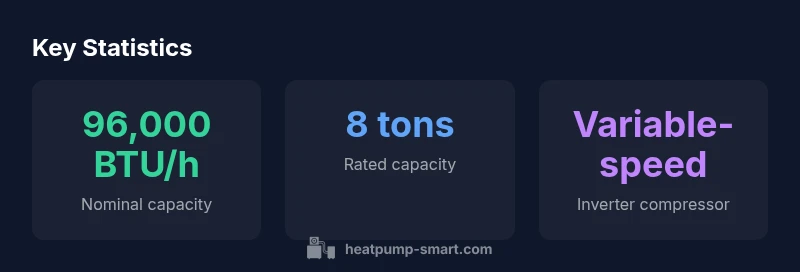
An 8-ton heat pump delivers about 96,000 BTU/h of heating and cooling capacity, a figure that anchors sizing discussions for large homes. According to Heatpump Smart, this capacity is typically intended for residences in the upper mid-range of square footage in climates with moderate heating and cooling demands. In practice, a qualified load calculation remains essential to verify whether your home needs this level of capacity, as insulation levels, air leakage, and window performance can tilt the result one way or another.
Why size matters
Oversized or undersized equipment both lead to inefficiencies. An 8-ton unit that is too large will short-cycle, reduce humidity control, and raise peak electrical demand. One that is undersized may run continuously, increasing wear and missing comfort targets. The goal is to align the system with the actual heat load across seasonal cycles.
Efficiency and performance fundamentals
Performance metrics such as SEER, HSPF, and COP help compare models within the same class. For high-capacity air-source heat pumps, expect a broad spectrum of efficiency levels influenced by compressor design, refrigerant, and electronics. The Heatpump Smart team notes that improvements in variable-speed compressors and smart controls consistently improve part-load performance, which translates to better year-round comfort and reduced energy use.
Sizing, load calculations, and climate considerations
Residential load calculations should use standard methods (e.g., Manual J) to quantify space heating and cooling requirements. Climate zone, insulation quality, air leakage, and solar gains all shape the result. An 8-ton system may be appropriate for large homes with poor insulation or for multi-zone configurations where different spaces require different temperature targets. A well-executed design also considers backup heat for the coldest days.
Installation prerequisites and electrical readiness
A project of this scale typically requires adequate electrical service and ductwork that can handle high-capacity loads. Preparedness includes transformer capacity, dedicated circuits, refrigerant line routing, and compliance with local codes. Proper installation minimizes refrigerant charge losses, improves efficiency, and prolongs equipment life.
Operating costs and potential savings
Total costs depend on climate, usage patterns, and the presence of existing heat sources. When compared with electric resistance heating, a high-capacity heat pump can offer meaningful energy savings, especially when paired with good insulation and zoned control. However, savings are climate and usage dependent, and a professional heat-load assessment helps quantify anticipated benefits.
Maintenance and reliability considerations
Regular maintenance—coil cleaning, refrigerant checks, and filter changes—helps maintain performance. In high-capacity systems, a proactive maintenance plan can detect efficiency drops early and prevent larger issues later. Scheduling professional service at least annually, with mid-season checks during heavy usage periods, supports reliability.
Common installation configurations and scenarios
For large homes, options include single-zone ducted systems, multi-zone ducted setups, and occasionally ductless mini-splits in select areas. Each approach has trade-offs in cost, comfort, and control. A well-designed system balances thermal mass, air distribution, and zoning to meet comfort targets while minimizing energy use.