Heat Pump 90kW: Sizing, Performance & Install Guide
Comprehensive guide to sizing, performance, costs, and installation considerations for a heat pump 90kW in large homes and light commercial spaces. Learn how to assess load, optimize efficiency, and plan maintenance for this high-capacity system.


A heat pump 90kw represents a high‑capacity heating option designed for large homes, multi‑unit buildings, or light commercial spaces. The key data point is its 90 kW heating capacity. When properly sized and paired with solid insulation and smart controls, this system delivers reliable comfort with energy efficiency. Critical factors include load matching, refrigerant sizing, electrical supply, and control integration.
heat pump 90kw: Sizing for large spaces
Large‑scale heating needs go beyond standard residential equipment. A heat pump 90kw can cover spaces where conventional boilers struggle during peak winter loads. According to Heatpump Smart, the heat pump 90kw is typically selected when the building experiences sustained cold‑weather demand, when thermal mass is high, or when simultaneous domestic hot water and space heating are required. The decision to deploy a 90kW system should hinge on precise load calculations, not guesswork. This involves evaluating the design temperature of the climate, the building envelope, occupancy patterns, and existing distribution infrastructure. The first step is a formal load calculation that accounts for peak heat output, standby losses, and the potential for weather‑driven variations. With a proper envelope, solar gains, and a well‑insulated facade, a 90kW unit can maintain comfortable indoor conditions with relatively low operating costs compared to electric resistance heating. Additionally, plan for potential redundancy: a secondary heat source or backup generator may be prudent in critical facilities. Budget considerations should include not only equipment cost but also electrical service upgrades, refrigerant piping, and control wiring. A well‑designed installation minimizes heat losses and ensures stable performance across seasonal fluctuations.
When a 90kW unit is appropriate: applications and load considerations
A 90kW heat pump is not a universal solution; it is most appropriate where heating demands exceed residential scales. Large‑scale projects such as luxury homes, multi‑unit buildings, hotels, or small commercial spaces with high design temperatures benefit from this capacity. Before selecting a 90kW unit, you must confirm load requirements through detailed calculations that consider building envelope, occupancy, ventilation, and solar gains. Heatpump Smart emphasizes that oversizing leads to short cycling and reduced efficiency, while undersizing results in insufficient comfort and higher energy costs. In practice, a well‑designed 90kW system operates near its rated capacity during peak cold snaps, ramping down as indoor temperatures stabilize, while supplementing with backup heat during extreme events. The decision should also factor the hot water load, as many large systems double as domestic hot water sources. When planning, coordinate with electrical and mechanical contractors to ensure service panels can handle startup currents and that refrigerant lines meet code requirements. Finally, consider climate‑specific expectations: in milder regions, a 90kW unit may be paired with passive measures; in harsher climates, integration with a secondary heater becomes more common.
Overview of 90kW system basics
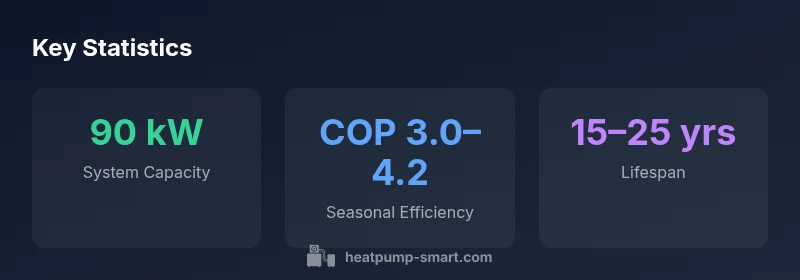
| Aspect | Details | Notes |
|---|---|---|
| Capacity | 90 kW heating | Target for large spaces |
| Installation footprint | Dedicated equipment room | Ensure ventilation and clearance |
| Performance metrics | COP range 3.0–4.2 | Seasonal variation by climate |
| Lifespan | 15–25 years | With proper maintenance |
Your Questions Answered
What applications are best suited for a 90kW heat pump?
90kW units are best for large homes, multi‑unit buildings, hotels, and light commercial spaces with high heating demand. They’re typically chosen when peak loads exceed residential equipment. Working with a qualified installer ensures you match capacity to actual needs.
Ideal for large spaces with strong heating loads; consult a professional for precise sizing.
How is a 90kW heat pump sized for a building?
Sizing starts with a formal heat load calculation that accounts for climate design conditions, building envelope performance, occupancy, and ventilation. Engineers use industry methods and software to determine peak output and then assess backup needs.
It begins with a detailed load calculation by a professional.
What are typical installation costs and factors to consider?
Costs vary widely by region, electrical upgrades, refrigerant piping, control wiring, and space requirements. Work with licensed contractors to assess site conditions, permitting, and integration with existing systems.
Costs depend on site needs; plan for electrical, piping, and controls work.
What maintenance does a large heat pump require?
Regular maintenance includes filter changes, coil cleaning, refrigerant checks, electrical connections, and control calibration. Schedule seasonal inspections to prevent efficiency loss and extend equipment life.
Keep it clean, check refrigerant and electricals, and schedule annual tune‑ups.
Are rebates or incentives available for large heat pumps?
Rebates and incentives vary by region and program. Check local energy authorities and utility programs for eligible equipment and installation measures that improve energy performance.
Many regions offer incentives; check local programs for eligibility.
Can a 90kW unit be used for heating only, or is it part of a hybrid system?
A 90kW unit can operate alone for large loads or be integrated into a hybrid/backup system with a secondary heat source for peak demand or grid resilience. Proper controls ensure smooth transitions.
It can work solo or as part of a hybrid setup with a backup heat source.
“A properly sized 90kW heat pump can deliver reliable comfort while trimming energy costs, especially when integrated with a well‑insulated envelope and smart controls.”
Top Takeaways
- Plan for precise load calculations before choosing a 90kW unit
- Oversizing leads to inefficiency; undersizing causes comfort issues
- Ensure electrical service upgrades and proper refrigerant piping are included
- Integrate with intelligent controls and good building insulation
- Factor climate, hot-water load, and backup heat in the design