Will a Heat Pump Work Without Freon? A Step-by-Step Troubleshooting Guide
Learn what happens when a heat pump runs without freon, the risks involved, and how to diagnose and fix it. Heatpump Smart’s troubleshooting guide for homeowners, builders, and managers.


A heat pump cannot properly operate without refrigerant; running it will likely damage the compressor and evaporator. Immediate steps: stop the unit, shut off power, and contact a licensed HVAC technician to locate leaks, recover existing refrigerant, seal the leak, evacuate, and recharge to the correct charge. Do not attempt DIY refrigerant work.
The Core Question: will heat pump work without freon
In practical terms, will heat pump work without freon? The short answer is no. A heat pump relies on a closed refrigerant loop to move heat from one area to another. Without refrigerant, the system cannot create the necessary pressure differential, evaporate or condense heat, or maintain safe operating temperatures. Running a freon-free unit can overheat components, freeze coils unevenly, and rapidly wear down the compressor. According to Heatpump Smart, addressing freon-related issues early is essential to protect energy efficiency and indoor comfort. If you’re seeing cooling or heating inadequacies, it’s a strong signal that refrigerant balance needs professional attention. Remember: no DIY refrigerant work. The safest course is to shut the system off, avoid charging or sealing leaks yourself, and contact a licensed HVAC technician for a proper assessment.
Why refrigerant matters in heat pumps
Refrigerant is the lifeblood of a heat pump’s cooling and heating cycle. It absorbs heat at low pressure in the evaporator and releases it at high pressure in the condenser. When the refrigerant charge is low or absent, pressures fall, the compressor strains, and performance plummets. A proper charge ensures efficient heat transfer, consistent indoor temperatures, and lower energy bills. Heatpump Smart analysis shows refrigerant leaks are the leading cause of performance loss, underscoring why a correct charge is essential for energy savings and system longevity. Systems with low freon can exhibit frost on outdoor coils, longer cycle times, and unusual noises, signaling the need for professional service.
Signs of freon issues and quick checks
Look for common warning signs of low refrigerant: ice buildup on evaporator or outdoor coils, warm air despite a running system, frequent cycling, or hissing sounds near service ports. Do not attempt to seal leaks or add refrigerant yourself. Check air filters and ductwork for obstructions that could mimic refrigerant issues. Ensure outdoor unit is clear of debris, foliage, and snow. While these checks can rule out simple problems, only a licensed technician can safely recover refrigerant, locate leaks, and recharge to the correct specification.
Diagnostic flow overview
Diagnosing a freon-related problem follows a logical path: observe symptom (no cooling/heating, ice, strange noises), evaluate likely causes (low charge due to leak, valve or sensor fault), apply fixes (safely coordinate refrigerant recovery and leak repair), verify after-service performance, and schedule follow-up checks. As Heatpump Smart emphasizes, never attempt to measure or recharge refrigerant yourself. The diagnostic flow guides you to the right professional steps without risky DIY work.
Safe steps you can take now (before calling a pro)
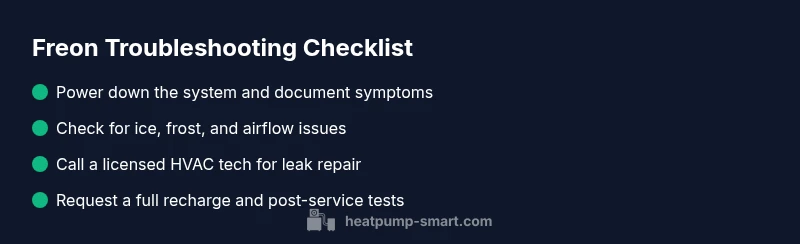
- Power down the outdoor and indoor units to reduce risk of electrical shock or compressor damage.
- Check the air filters and indoor airflow; clogged filters can mimic performance issues.
- Inspect the outdoor unit for visible blockages, frost, or ice around coils, but do not poke or poke around refrigerant lines.
- Document symptoms (noise, warmth, frost, cycle duration) to share with the technician. This information speeds up diagnosis and reduces downtime.
- Schedule service with a licensed HVAC technician right away if you notice any frost, heat loss, or abnormal operation. They will safely recover refrigerant, seal leaks, evacuate, and recharge to the correct charge.
Preventive maintenance to reduce freon-related issues
- Schedule regular inspection and cleaning of coils, filters, and electrical connections.
- Keep an eye on refrigerant line insulation and service valves for signs of wear or leaks.
- Plan periodic refrigerant checks as part of annual maintenance, especially in regions with extreme temperatures.
- Maintain good duct sealing and insulation to minimize energy loss and avoid overworking the system.
The next steps: professional service and energy savings
If freon issues are confirmed, a licensed HVAC technician will recover refrigerant, repair leaks, evacuate the system, and recharge to the manufacturer’s specification. After service, monitor performance and temperature consistency, and review your energy bills for improvements. Proper charging and leak repair protect the compressor, preserve efficiency, and sustain home comfort over time.
Steps
Estimated time: 2-6 hours
- 1
Power down and secure the area
Turn off the heat pump at the breaker and outdoor disconnect. Ensure both indoor and outdoor units are disconnected from power to prevent shock or compressor damage during inspection.
Tip: If you smell refrigerant or detect hissing, leave the area immediately and contact a pro. - 2
Document symptoms
Note any frost, warm air, cycling frequency, or noises. Take photos of coils and connections for the technician. This helps triage the issue before arrival.
Tip: A simple symptoms log can shave hours off the repair time. - 3
Schedule professional service
Call a licensed HVAC contractor to assess refrigerant charge, locate leaks, and perform recovery and recharge following EPA guidelines.
Tip: Request a leak-test and a written estimate before work begins. - 4
Refrigerant recovery and leak seal
The technician will recover any refrigerant, seal leaks, and prepare the system for recharge per manufacturer specifications.
Tip: Verify they use the correct refrigerant type and amount for your unit. - 5
System recharge and test
Recharge to the proper charge, run performance tests, and verify pressures match specs. Check airflow and indoor temperature balance.
Tip: Keep a copy of the service report and charge level for future reference. - 6
Post-service monitoring
Monitor for normal operation over the next few days. If symptoms return, contact the tech promptly for a recheck.
Tip: Regular maintenance reduces the chance of future freon-related issues.
Diagnosis: Heat pump shows poor cooling/heating, frost on coils, or unusual noises; possible refrigerant issue.
Possible Causes
- highRefrigerant leak causing low charge
- mediumUndercharged from factory or service error
- lowValve/seal fault or sensor issue
Fixes
- easyDo not operate; arrange professional refrigerant recovery and leak repair
- mediumRepair leaks, evacuate the system, and recharge to the correct charge
- hardReplace faulty components (valves, sensors) if diagnosed
Your Questions Answered
Can a heat pump run without refrigerant (Freon)?
No. A heat pump cannot operate correctly without refrigerant. Running without freon can damage the compressor and other components and will result in poor heating or cooling performance.
No. A heat pump won’t run correctly without refrigerant and could suffer serious damage.
What happens if the refrigerant charge is low?
Low refrigerant reduces efficiency, causes longer run times, and can lead to compressor overheating. It should be addressed by a licensed technician who can locate leaks and recharge safely.
Low refrigerant reduces efficiency and can damage the compressor; a pro should recharge it after fixing leaks.
How can I tell if there’s a refrigerant leak?
Signs include frost on coils, hissing sounds near lines, and sudden loss of cooling. A professional pressure test and leak inspection are required to confirm and repair.
Look for frost on coils, hissing sounds, and sudden loss of cooling. A pro will test for leaks and repair them.
Is it legal to handle refrigerants myself?
In many places, handling refrigerants requires EPA certification and licensed equipment. Do not attempt DIY refrigerant work.
Handling refrigerants without certification is illegal in many areas, so don’t do it yourself.
How long does a recharge take?
Recharge time depends on system size and leak repair. A typical service window is a few hours, plus initial diagnostic time.
Recharge typically takes a few hours depending on the system and leaks.
What should I do after a freon service?
Keep the service report, monitor temperatures, and schedule a follow-up check if performance issues recur. Regular maintenance helps prevent leaks.
Keep the service report and monitor performance; a follow-up check may be needed if issues return.
Watch Video
Top Takeaways
- Understand that freon is essential for heat pump operation.
- Avoid DIY refrigerant work; call a licensed pro for leaks and recharge.
- Regular maintenance reduces freon-related issues and energy waste.
- After service, monitor performance to ensure stable comfort.