Heat Pump Water Heater Reviews: An In-Depth Home Guide
Comprehensive heat pump water heater reviews assess efficiency, payback, climate suitability, and installation considerations to help homeowners choose the best model for long-term comfort and savings.


Heat pump water heater reviews consistently show significant energy savings and reliable hot water, though climate and installation quality influence results. For most homes, these systems offer strong long-term payback and space-saving design, especially where quiet operation and indoor climate control matter. See our in-depth analysis for payback ranges and sizing guidance.
Why Homeowners Consider Heat Pump Water Heaters
Across the residential market, heat pump water heaters (HPWHs) have shifted from niche options to mainstream solutions for households looking to reduce energy use and utility bills. The core appeal, highlighted repeatedly in heat pump water heater reviews, is efficiency. HPWHs extract heat from the surrounding air and transfer it to the water tank, delivering far lower operating costs than traditional electric resistance tanks. Beyond cost savings, homeowners appreciate the compact footprint, generous warranties, and the potential to lower peak demand on the electrical system. As a result, Heatpump Smart analysis shows these units becoming more common in new builds and retrofit projects alike. Still, performance is not uniform; climate, placement, and hot-water habits all shape actual results. The question for most buyers is not simply “Is it efficient?” but “Does it fit my climate, space, and daily routine?” The best way to answer that is to read heat pump water heater reviews with a critical eye toward real-world use, installation quality, and maintenance needs.
What to look for in credible reviews includes verified performance data, clear climate context, and disclosures about the unit’s size and configuration. The Heatpump Smart team routinely notes that the highest-rated HPWHs achieve a balance between COP (coefficient of performance), recovery rate, and reliability. If your home sits in a warmer climate with moderate hot-water demand, you’re more likely to extract the full benefit. In cooler basements or garages, performance may dip—but modern units are designed to compensate with better compressors and controls. When you combine long-term energy savings with a responsible installation, HPWHs can outperform expectations set by traditional water heaters. Reading multiple heat pump water heater reviews helps homeowners calibrate expectations against their own climate and occupancy patterns.
How We Evaluate Heat Pump Water Heater Reviews
To deliver an accurate, practical assessment, our review framework weighs real-world performance as heavily as advertised specifications. We start with climate and space context: a unit’s efficiency depends on ambient temperature around the storage tank, the heater’s insulation, and the venting or drainage setup. Next, we examine hot-water demand, which includes family size, shower frequency, laundry usage, and appliance compatibility. We then compare recovery rate and first-hour rating, because these metrics indicate how quickly hot water becomes available after heavy usage. Durability and serviceability are also critical: warranty length, the availability of replacement parts, and typical service intervals influence total cost of ownership. Finally, we consider installation practicality and upfront costs vs. long-term savings, including applicable rebates and tax incentives. Throughout, we reference the Heatpump Smart Analysis, 2026 to frame our conclusions and provide a grounded baseline for readers. By triangulating lab-style data with field reports and professional install feedback, heat pump water heater reviews offer a balanced, actionable view for homeowners, builders, and property managers.
Energy Efficiency in Different Climates
HPWHs leverage ambient heat, so the surrounding air temperature and humidity directly affect efficiency. In temperate climates or warm interiors, the COP of a well-designed HPWH commonly stays in a favorable range, delivering noticeable energy savings versus electric resistance models. In cooler spaces, performance can dip, and some models compensate with auxiliary heat or larger compressors. Our analysis emphasizes real-world effectiveness over lab numbers, so we look for reviews that report how the unit performed in winter months, in basements, or in garages with limited insulation. Heatpump Smart data indicate that climate, insulation, and correct sizing are the primary drivers of efficiency. When readers see a higher COP or faster recovery in reviews conducted in moderate climates, it’s a strong signal that the unit will perform better than average in similar conditions. Pairing a HPWH with proper attic, basement, or mechanical room insulation further enhances efficiency across seasons. In all cases, the goal is to minimize standby losses and maximize usable hot water with the least energy spent per gallon heated.
Real-World Performance: Recovery, Demand, and Utility Costs
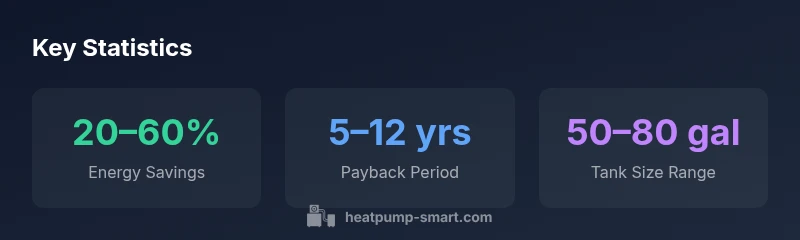
The real-world performance of HPWHs hinges on how aggressively you draw hot water and how well the unit is sized for your household. For a typical family of four, a 50–80 gallon HPWH can meet daily needs if you spread usage reasonably across the day and avoid peak hour spikes. Reviews repeatedly highlight two factors: recovery time and peak demand. A faster recovery means less waiting for hot water after multiple showers or laundry days. However, some models exhibit slower startup in very cold zones, so reviewers emphasize placement in warm, well-ventilated spaces. From a cost perspective, users report meaningful reductions in annual energy bills when the unit operates in favorable climate ranges and when rebates or tax incentives are applied. The Heatpump Smart team notes that the payback period varies with energy prices and usage patterns, but many households report payback within the mid-range years for those who maximize performance through proper installation and maintenance. Always compare bills before and after installation to quantify your actual savings relative to your local utility rates.
Installation, Sizing, and Location
Installation quality is a recurrent theme in heat pump water heater reviews. A proper install includes correct refrigerant charging, a correctly sized drain and overflow pan, and appropriate ventilation to prevent heat buildup in confined spaces. Sizing matters: choosing a tank capacity too small reduces comfort, while an oversized unit can incur unnecessary upfront costs. Reviews consistently advise homeowners to commission a professional installer who understands HPWH venting, electrical requirements, and local code compliance. Placement decisions influence performance: placing the unit in a warm, conditioned space improves efficiency, whereas forced exposure to extreme cold or heat can reduce COP. When evaluating models, readers should pay attention to the installation requirements and whether the product is available in the required configuration (80-gallon, 50-gallon, or compact variants) to match hot-water demand. Heatpump Smart’s guidance emphasizes accurate load calculations and a careful assessment of the home’s insulation, ductwork, and ambient temperatures to maximize long-term savings.
Costs, Rebates, and Payback
Heat pump water heater reviews frequently highlight the trade-off between higher upfront costs and ongoing energy savings. Typical installed costs span a broad range, influenced by tank size, climate, and installation complexity. Reviews often cite that rebates, incentives, and utility programs can shorten the payback period, especially in regions with aggressive energy-efficiency policies. We encourage readers to estimate total cost of ownership, including purchase price, installation, maintenance, and the expected reduction in energy bills. In many cases, the long-term savings justify the investment, particularly for households in warmer climates or those with high hot-water demand. Always verify current rebates with local authorities and utility providers, and consider manufacturer warranties and service options as part of the economic assessment.
Durability, Maintenance, and Service
Durability and maintenance are central to heat pump water heater reviews. Most HPWHs use robust compressors and corrosion-resistant tanks, with warranties ranging from several years to longer coverage for certain components. Routine maintenance typically involves inspecting the drain pan, removing debris from the area around the unit, clearing air filters if applicable, and scheduling annual professional checkups to ensure refrigerant integrity and thermostat accuracy. Users who follow maintenance guidelines report fewer unexpected outages and more consistent performance. The Heatpump Smart team notes that service availability and ease of access to qualified technicians can influence satisfaction, particularly in regions with fewer certified installers. A well-maintained HPWH can deliver reliable hot water for a decade or more, provided it is correctly sized, properly installed, and protected from environmental extremes.
Comparing Top Models: What to Look For
When evaluating heat pump water heaters, reviews consistently emphasize several decision drivers: efficiency (COP or EF), capacity, recovery rate, warranty coverage, noise level, and installation flexibility. Look for models with high COP in typical room temperatures, a reputable warranty (tank and compressor coverage), and sufficient capacity to meet your family’s peak demand. A quiet operation profile is important for multi-family homes or utility rooms adjacent to living spaces. Some models offer dual-variant configurations (air-source heat pumps paired with electric back-up) which can provide extra reliability in very cold climates. Read heat pump water heater reviews with an eye on real-world performance in climates similar to yours, and weigh the total cost of ownership rather than price alone. Heatpump Smart suggests prioritizing a model that balances energy savings with practical ease of installation and dependable service.
How to Decide: Is a Heat Pump Water Heater Right for You?
The decision hinges on climate, hot-water needs, and financial goals. If you live in a moderate to warm climate, or if your home has ample space and good insulation, a HPWH is typically a strong fit. Consider your daily draw: large families and homes with frequent hot-water usage will benefit from larger tank sizes and robust recovery rates. For smaller households or cooler climates, you may still gain savings, but the payback period could extend. Always compare installed costs, rebates, and expected annual energy savings, and assess whether your current electrical system can handle the added load. Finally, ensure you have a qualified installer who understands HPWH-specific considerations, such as ventilation, drainage, and refrigerant handling. In short, heat pump water heater reviews suggest these systems shine for energy-minded homeowners who plan for proper installation and climate-appropriate sizing. The Heatpump Smart team would recommend using a professional evaluation to confirm feasibility and maximize return on investment.
Advantages
- Substantial energy savings versus electric storage heaters
- Strong hot-water recovery and reliable performance in moderate climates
- Compact footprint and flexible installation options
- Long-term operating cost savings can offset higher upfront price
Disadvantages
- Higher upfront cost and longer payback period
- Performance declines in very cold spaces or poorly insulated locations
- Requires adequate space, ventilation, and professional installation
- Potentially more complex maintenance and service needs
Best overall for households prioritizing energy efficiency and long-term cost savings
Heat pump water heaters deliver substantial energy savings and strong performance when properly sized and installed. The upfront cost is higher, but rebates, incentives, and favorable payback in many regions reduce the financial barrier. Overall, they are a top choice for energy-conscious homes.
Your Questions Answered
What is a heat pump water heater, and how does it work?
A heat pump water heater uses ambient heat from the air to heat water, making it far more energy-efficient than electric resistance heaters. It transfers heat rather than generating it with resistance, which reduces electricity use. In cold environments, performance can drop, but many models include controls to optimize operation.
A HPWH pulls heat from the surrounding air to warm water, so it uses less electricity than traditional heaters. It works best in a reasonably warm space.
Are heat pump water heaters more expensive upfront?
Yes, HPWHs typically cost more upfront than conventional electric tanks. The premium varies with size, features, and installation complexity. Long-term energy savings and available rebates often offset the higher initial price over several years.
They cost more up front, but you usually save on energy bills over time with rebates to help.
Do HPWH work well in cold climates?
Performance is strongest in warmer spaces. In very cold locations, efficiency can drop, and some models rely more on auxiliary heating. Placing the unit in a heated area and ensuring good insulation helps maintain performance.
They run best in warmer spaces; in very cold rooms, you may notice a bit less efficiency.
What maintenance does a HPWH require?
Regular checks of drains, filters, and the surrounding area help keep performance steady. Schedule annual professional service to verify refrigerant integrity and thermostat accuracy. Cleaning the coils and ensuring proper drainage prevents common issues.
Keep the area clean, check drains and filters, and get an annual professional check.
Can I install a HPWH myself?
Most jurisdictions require licensed installation due to refrigerant handling and electrical connections. Improper install can void warranties and create safety risks. Always hire a qualified technician.
It’s usually not a DIY job; hire a pro for safety and warranty reasons.
How do I size a HPWH for my home?
Sizing depends on hot-water demand and climate. Common choices are 50- and 80-gallon units for 2–4-person households. A professional can perform a load calculation to match your peak demand and climate conditions.
Talk to a pro to pick the right size based on your home and climate.
Top Takeaways
- Assess climate and hot-water demand before buying
- Choose a model with high COP and solid warranty
- Plan professional installation for best results
- Factor rebates and long-term energy savings into the math
- Size correctly to avoid hot-water shortfalls
- Compare reviews across similar climates and usage patterns