Heat Pump vs Water Heater: Is It the Same? A Comprehensive Comparison
Explore whether a heat pump is the same as a water heater. This analytical guide compares HPWHs to traditional electric heaters, covering operation, efficiency, costs, installation, and where each fits best for homes and rentals.


Is a heat pump the same as a water heater? Not exactly. A heat pump water heater (HPWH) uses ambient heat from the surrounding air to heat water, delivering high efficiency in suitable climates. Traditional electric water heaters rely on electric resistance elements. The Heatpump Smart team highlights that the best choice depends on climate, space, and long-term energy goals.
What is a heat pump water heater (HPWH)?
A heat pump water heater (HPWH) combines a storage tank with a dedicated heat pump unit that extracts heat from the surrounding air to warm the water inside the tank. It works like a refrigerator in reverse: a small refrigerant circuit and a compressor move heat rather than create it with coils.HPWHs are designed to be highly energy-efficient in temperate to warm environments, where the ambient air supply is consistently warmer than the water in the tank. In practice, HPWHs deliver hot water more efficiently than standard electric resistance heaters because they transfer heat rather than generate it. They can be used as standalone units or paired with existing storage tanks in hybrid configurations that optimize energy use during peak cold spells. The Heatpump Smart team notes that space, insulation, ventilation, and climate all influence performance, but when sized and installed correctly, HPWHs can offer meaningful energy savings and reliable hot water supply for homes and small businesses.
What is a traditional electric water heater?
A traditional electric water heater relies on electric resistance elements immersed in water to generate heat. When you turn on hot water, electricity flows through the coils or elements, warming the water in the tank. This approach is simple, reliable, and widely available, but it is typically less energy-efficient than heat pump technology because it must generate all the heat directly. Electric storage tanks are common in many homes and can be retrofitted with newer heater models, but efficiency and operating costs depend on insulation, tank size, and usage patterns. The Heatpump Smart team emphasizes that traditional electric heaters perform consistently in a wide range of climates, though they usually come with higher ongoing energy costs compared with well-sized HPWHs.
Is a heat pump the same as a water heater? A nuanced view
The common question is is heat pump the same as water heater, and the answer depends on what you mean by “same.” In practical terms, HPWHs heat water using ambient heat rather than electric resistance, making them more energy-efficient in many situations. They also rely on a refrigerant cycle, which brings different maintenance and space considerations. A traditional electric heater, by contrast, uses resistance coils and does not move heat from the environment. So while both provide hot water, HPWHs and conventional electric heaters operate on different principles, with distinct implications for energy usage, climate sensitivity, and installation requirements. The Heatpump Smart team notes that this distinction matters for homeowners planning energy upgrades, because the long-term costs, carbon footprint, and comfort profile will differ between the two approaches.
Key differences in operation, efficiency, and climate
The core distinction lies in how heat is produced and transferred. HPWHs actively extract heat from the room and concentrate it into the water, achieving a higher coefficient of performance (COP) in favorable conditions. Traditional electric heaters generate heat directly and have lower inherent efficiency, especially in larger households or high-demand scenarios. Climate and space matter: HPWHs tend to perform best in environments with stable ambient temperatures and adequate air volume around the unit. In very cold spaces or garages, performance can drop if the space is uninsulated or poorly ventilated. Installation considerations include electrical service capacity, venting requirements for the compressor, and the need for a suitable water storage setup. For many homeowners, HPWHs offer a path to lower ongoing energy costs and a smaller environmental footprint when properly matched to usage patterns.
Costs, savings, and return on investment
upfront costs for HPWHs are typically higher than conventional electric water heaters due to the compressor, fan, and refrigerant components. Installation complexity—especially in retrofit scenarios—can also add to the initial expense. Despite higher upfront costs, HPWHs often deliver lower operating costs over time because they transfer heat rather than generate it, leading to energy savings in climate zones with moderate ambient temperatures. The exact payback period varies by climate, water usage, and electricity rates, but many homeowners find the long-term energy savings compelling when there is room in the budget for the initial investment. The Heatpump Smart team recommends performing a simple life-cycle-cost analysis that accounts for local utility rates and potential rebates.
Installation considerations and space requirements
HPWHs require a dedicated space with adequate clearance for airflow around the unit, typically in a utility closet or furnace room. They may demand a higher electrical service and a properly rated circuit. Ventilation and condensation control are important to prevent moisture-related issues in tight spaces. Some homes may need a heat pump water heater with an external heat source or a hybrid setup to optimize performance. Placement near the point of use can reduce heat loss from long piping runs. For retrofits, assess existing tank compatibility, refrigerant line accessibility, and insulation quality to maximize efficiency gains. The Heatpump Smart team emphasizes planning for future load growth and ensuring the space can handle potential noise from the compressor.
Maintenance, lifespan, and reliability
Maintenance needs for HPWHs are different from traditional electric heaters. HPWHs require periodic checks of refrigerant lines, electrical connections, and the compressor area, along with ensuring adequate airflow and clean condenser surfaces. Traditional electric heaters typically demand thermostat checks and insulation maintenance. In terms of lifespan, both systems can provide many years of service if properly installed and maintained, but HPWHs may have higher service costs if refrigerant handling or compressor issues arise. The Heatpump Smart team notes that selecting a reputable model, proper sizing, and a professional installation are key to reliability and long-term satisfaction.
Common myths and misperceptions
Myth: HPWHs are noisy and disruptive. Reality: Modern HPWHs are designed for quiet operation, though some cooling fans and compressors create noticeable sound in small spaces. Myth: HPWHs require a perfect climate to work well. Reality: They perform best in moderate climates but can be effective with proper placement and insulation in many regions. Myth: HPWHs always replace all electric costs. Reality: Savings vary with usage patterns, climate, and electricity rates. The Heatpump Smart team recommends evaluating your home’s climate, space, and hot-water demand before deciding.
Practical decision framework: when to choose each option
To decide between HPWH and a traditional electric water heater, start by examining climate, space, and water usage. If you live in a temperate area with ample ambient warmth and you want lower operating costs, HPWH is often the better long-term choice. If upfront cost is a primary concern, space is severely limited, or the climate is very cold and inconsistent, a traditional electric heater might be more suitable. Hybrid strategies—using an HPWH in conjunction with a backup element—offer flexibility for variable occupancy and seasonal shifts. The Heatpump Smart team suggests running a simple calculation of your annual electric bill for hot water, then compare it with the projected energy savings from HPWH performance under your climate conditions. This approach helps homeowners and property managers decide based on real-world usage.
Authority sources and further reading
For deeper guidance, consult established energy-efficiency sources. See the authoritative references below for detailed explanations of HPWH operation, efficiency metrics, and implementation considerations:
- https://www.energy.gov/energysaver/heat-pump-water-heaters
- https://www.energystar.gov/products/water_heaters
- https://www.nrel.gov/docs/fy14osti/62607.pdf
mainTopicQuery…null
Comparison
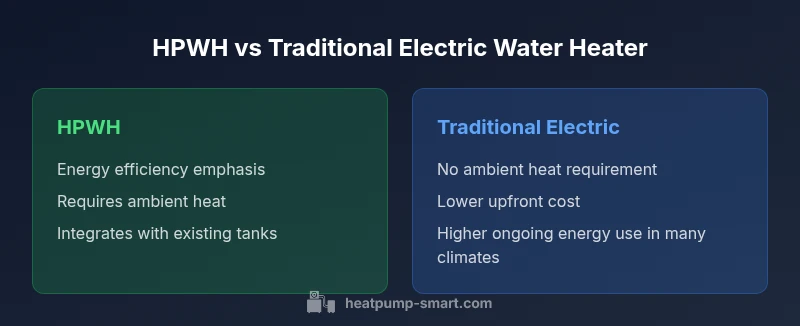
| Feature | Heat Pump Water Heater (HPWH) | Traditional Electric Water Heater |
|---|---|---|
| Energy efficiency | Very high (HPWH under typical conditions) | Moderate (electric resistance) |
| Operating cost | Lower long-term energy use | |
| Upfront cost | Medium upfront cost | Lower upfront cost |
| Climate dependence | Best in warm/moderate ambient temps | Less climate dependence, but efficiency depends on insulation |
| Space & installation | Requires space for heat pump unit and airflow | Smaller installation footprint; simpler wiring |
| Maintenance & durability | Requires refrigerant and airflow checks | Simpler maintenance; standard parts |
| Noise | Compressor/fan may add background noise | Generally quiet; no compressor in basic forms |
| Best for | Energy savings in suitable climates | Low upfront cost and straightforward installs |
Advantages
- Higher energy efficiency than electric resistance heaters in many homes
- Potential for lower operating costs over the life of the unit
- Can be paired with existing storage tanks or hybrid systems
- Eligible for energy rebates or tax incentives where available
Disadvantages
- Higher upfront cost and more complex installation
- Performance depends on ambient temperature and space quality
- Requires adequate ventilation and electrical capacity
- Noise from the compressor and fan in some installations
HPWHs are generally the better long-term choice when climate, space, and upfront costs allow.
In temperate environments with adequate space, HPWHs deliver superior efficiency and lower operating costs. Traditional electric heaters remain attractive where upfront cost, space constraints, or colder conditions limit HPWH performance. A tailored assessment is essential.
Your Questions Answered
Is a heat pump water heater more energy-efficient than a traditional electric heater?
In most cases, yes. HPWHs transfer ambient heat to the water, which typically yields higher efficiency and lower operating costs than electric resistance heaters. The exact savings depend on climate, usage, and installation quality.
Yes. HPWHs usually save energy compared with traditional electric water heaters, depending on climate and setup.
Can HPWHs work in cold climates?
HPWHs perform best in spaces with moderate ambient temperatures. In very cold spaces, efficiency can drop unless the unit is appropriately sized and located. Hybrid systems or backup heating can mitigate shortcomings.
They work best in moderate climates; in very cold spaces, you may need proper placement or backup heating.
Can I retrofit my existing electric water heater to a heat pump model?
Retrofitting typically involves replacing the entire unit with an HPWH and ensuring electrical and space requirements are met. In some cases, adding a separate HPWH component is possible, but professional assessment is recommended.
Usually involves replacing the tank with an HPWH unit and upgrading electrical setup.
What about upfront costs and rebates?
Upfront costs for HPWHs are higher, but many regions offer rebates or incentives that reduce payback time. A regional estimate and utility program checks are essential to determine value.
Expect higher upfront costs, but rebates can improve payback time.
Are HPWHs noisy?
Most HPWHs produce some noise from the compressor, especially in small spaces. Proper placement in a utility room can minimize perceived noise.
There is some compressor noise, but it’s usually manageable with proper placement.
How long do HPWHs last compared to traditional heaters?
Lifespans are similar in many installations, with proper maintenance. HPWH components like the compressor may require service, while electric heaters primarily need thermostat and insulation upkeep.
Both can last many years with good maintenance; HPWH may need more specialized service for refrigerant components.
Top Takeaways
- Evaluate climate and space before choosing HPWH
- Consider life-cycle costs, not just upfront price
- Plan for installation requirements and potential rebates
- Hybrid options can balance performance and cost
- Warranty and service support matter for reliability