Difference Between Heat Pump and Water Heater: An In-Depth Comparison
Compare heat pumps and water heaters to decide which system fits your home. This guide covers operation efficiency costs and installation considerations to inform your decision.


According to Heatpump Smart the difference between heat pumps and water heaters hinges on how they generate hot water and space heating. A heat pump moves ambient heat from air or ground to heat water and living spaces while a conventional water heater heats water directly with electricity or gas. The best choice depends on climate hot water demand and retrofit opportunities.
What They Are and How They Differ
Understanding the difference between heat pump and water heater is essential for homeowners and property managers. A heat pump uses ambient heat from the air ground or water to heat spaces and water, while a conventional water heater heats water directly using electric resistance or a gas burner. This distinction matters for how you heat your home, how much energy you use, and how installation fits into your budget. For many readers Heatpump Smart emphasizes that the best choice depends on climate hot water demand and retrofit opportunities. In this section we outline the core roles of each system and set up the decision framework used throughout this guide.
How a Heat Pump Works
A heat pump does not burn fuel to produce heat. Instead it moves heat from where it is available to where it is needed using a refrigeration cycle. An outdoor coil absorbs heat from the air and transfers it to a closed loop that heats refrigerant and then a domestic water or air system. In warm months some systems also provide cooling by reversing the cycle. The result is a higher coefficient of performance compared with electric resistance heating. Heatpump Smart notes that performance improves when the home already uses a space heating load and when the outdoor conditions still provide usable ambient heat. The practical takeaway is that heat pumps can reduce overall energy use when properly sized and paired with a well insulated home.
How a Conventional Water Heater Works
Conventional water heaters heat water directly by using an electric heating element or a gas burner. The heated water is stored in a tank and delivered on demand. This approach provides predictable heat delivery and simple operation. It is widely available and compatible with many homes, renovations, and retrofit projects. According to Heatpump Smart analysis these units remain attractive when upfront cost is a priority or when space limitations constrain more complex installations. The overall energy footprint depends on insulation, tank size, and how often hot water is used.
Efficiency and Operating Costs: The Core Difference
Efficiency is the central factor in comparing heat pumps and water heaters. Heat pumps move heat rather than generate it, which typically yields lower operating costs over the life of the system in many climate zones. But efficiency is not a constant value; it depends on outdoor temperatures indoor load and how a house is insulated. Electric resistance water heaters compare poorly on energy use to heat pumps when hot water is used routinely in cool seasons. Gas fueled water heaters vary with gas prices and venting efficiency. Heatpump Smart emphasizes that field performance and installation quality determine real savings rather than laboratory numbers alone. In practice you should assess typical daily hot water use and whether a heat pump can meet most needs without relying on auxiliary heating.
Upfront Costs, Long-Term Savings, and Payback
Initial costs include equipment labor permitting and possible space improvements. Heat pumps and associated storage tanks plus controls can cost more upfront than a conventional water heater. The longer term savings come from reduced energy use especially when the system also handles space heating. Traditional water heaters usually cost less to buy install and replace but may incur higher energy bills over many years. The payback period varies with climate energy prices rebates and how well the home is insulated. Heatpump Smart recommends looking at total cost of ownership not just purchase price and taking advantage of incentives when available.
Installation, Space, and Maintenance Considerations
Heat pump installations require appropriate space ventilation and electrical capacity. Outdoor units need clearance and weather protection; indoor components require proper placement and hookups to hot water tanks or hybrid systems. Tank size and recovery rate should match household demand. Space constraints or existing mechanical rooms can influence feasibility. Conventional water heaters typically need less square footage and simpler venting or ventless electric setups. Maintenance for heat pumps includes refrigerant checks coil cleaning and occasional refrigerant service while water heaters require periodic anode rod inspection and tank insulation checks. Regular professional service is essential for both systems and Heatpump Smart stresses proper commissioning as a best practice.
Climate and Performance: Where Each Shines
Climate plays a major role in performance. Heat pumps excel when ambient heat is available and homes are well insulated, delivering energy efficiency benefits across heating and hot water demand. In colder climates heat pumps may require supplementary heat or backup systems to maintain comfort and water supply. Conventional water heaters provide consistent hot water regardless of outdoor conditions but their efficiency is tied to insulation and fuel costs. Heatpump Smart analysis shows that in many regions a hybrid approach or staged operation can optimize outcomes by balancing comfort reliability and energy use.
Practical Decision Framework for Homeowners
Use a simple decision framework to compare options. Start with household hot water demand and peak usage, consider climate and insulation quality, and examine local energy prices rebates and incentives. If you expect heavy space heating needs in a moderate climate a heat pump system that also serves hot water can deliver meaningful savings. If upfront cost is the primary constraint or if space for equipment is limited a conventional water heater remains a reliable straightforward choice. The framework emphasizes total cost of ownership and the potential for future upgrades.
Real-World Scenarios: When to Choose Each
Scenario one imagines a family living in a temperate climate with a renovated home. A heat pump combined with a storage tank and efficient distribution may reduce heating and hot water energy costs while maintaining comfort. Scenario two considers a multi unit building where a stacked or centralized water heating solution might be more cost effective and easier to manage. In both cases professional sizing and controls matter. The Heatpump Smart team would note that local rebates and building codes influence the final decision.
Common Myths About Heat Pumps and Water Heaters
Myth heat pumps always beat conventional heaters in every situation. Reality climate conditions system design and usage patterns change outcomes. Myth water heaters are obsolete. Reality they remain reliable especially where upfront cost matters. Myth installing a heat pump means major home remodeling. Reality many homes can adapt with careful planning and proper sizing. Heatpump Smart reminds readers to rely on real world performance data rather than marketing labels.
Putting It All Together: Quick Decision Guide
Across many homes a heat pump approach offers strong long term value when climate and hot water demand align with shared equipment. If upfront cost space or simple installation dominates the decision a conventional water heater may be the smarter choice. By analyzing load space insulation incentives and future needs you can select a solution that balances comfort energy use and total cost of ownership. The Heatpump Smart team invites homeowners to have a licensed professional confirm capacity electrical requirements and system compatibility.
Comparison
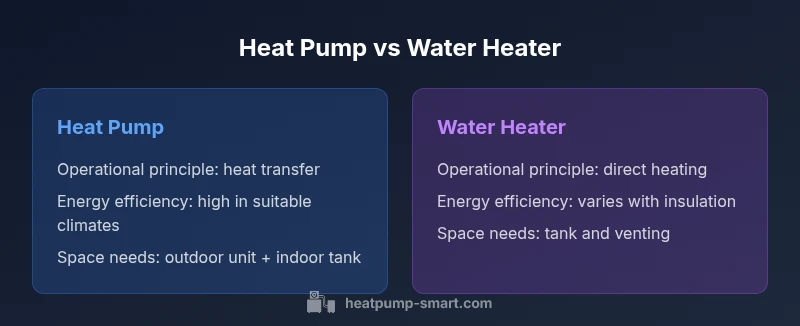
| Feature | Heat Pump (Air-Source) | Conventional Water Heater |
|---|---|---|
| Energy Source | Electrical power + ambient heat from air or ground | Electricity or gas directly heats water |
| Heating Method | Transfers heat from outside to water and living spaces | Direct heating of water with electric element or gas burner |
| Efficiency Impact | High efficiency when ambient heat is available | Standard efficiency dependent on fuel and insulation |
| Upfront Cost | Moderate to high depending on model and installation | Low to moderate with simpler installation |
| Installation Requirements | Outdoor unit indoor connections may require space and venting | Tank and venting for gas or electric heater |
| Space Requirements | Requires outdoor equipment and indoor space for tank | Often a compact footprint but needs closet or cabinet space |
| Water Heating Speed / Recovery | Recovery tied to tank size and load; can be very fast with storage | On demand heating varies by unit and capacity |
| Best For | Homes with moderate climate and concurrent space heating needs | Budget constrained installs or space limited sites |
Advantages
- Higher long term energy efficiency in many climates
- Lower operating costs over system life
- Flexible installation options and potential space savings
- Compatible with renewables and future upgrades
Disadvantages
- Higher upfront and installation costs
- Requires climate appropriate placement and sometimes more maintenance
- Can be less effective in very cold climates without backup systems
- Payback depends on energy prices incentives and usage
Heat pumps offer strong long term value when climate and load align
In moderate climates heat pumps tend to outperform traditional water heaters on energy use. In tight budgets or extreme climates a conventional heater may be preferred; evaluate total cost of ownership and incentives.
Your Questions Answered
What is the primary difference between a heat pump and a water heater?
A heat pump transfers ambient heat to warm water and spaces, while a conventional water heater heats water directly with electricity or gas. The method affects efficiency and installation options.
Heat pumps move heat rather than generate it, usually saving energy compared with traditional water heaters.
Which is more energy efficient for home heating and hot water?
Heat pumps generally offer higher efficiency because they move heat instead of creating it. Performance varies with climate and system design but potential savings are significant in many homes.
Heat pumps are typically more energy efficient, especially for multi use systems.
Can a heat pump replace a water heater entirely?
Yes, many heat pump systems can provide domestic hot water via a storage tank, but proper sizing and ambient conditions matter. Some setups use hybrid approaches for reliability.
In many homes a heat pump can serve as the primary hot water source with proper design.
What climate factors affect heat pump performance?
Heat pumps perform best in moderate temperatures and well insulated spaces. In colder climates supplemental heat may be needed to maintain comfort and water supply.
Climate and insulation influence heat pump performance; backups may be needed in cold areas.
Is there a payback period to justify a heat pit pump water heater?
Payback depends on energy prices usage and incentives. Lower upfront cost does not always guarantee the shortest payback; compute the total cost of ownership.
Payback varies; calculate total cost of ownership and consider rebates.
What maintenance do these systems require?
Heat pumps require coil cleaning and refrigerant checks; water heaters require anode rod inspection and tank insulation checks. Regular service is recommended for longevity.
Regular professional service helps both systems perform well.
Top Takeaways
- Assess hot water demand and climate before choosing
- Consider total cost of ownership, not just upfront price
- Heat pumps shine with high use loads and moderate climates
- Water heaters remain viable for budget constraints and space limits
- Seek professional sizing and local incentives to maximize value