Furnace or Heat Pump: A Comprehensive Comparison for Home Heating
A detailed, analytical comparison of furnace vs heat pump options, covering climate suitability, efficiency, costs, installation, and long-term value to help homeowners choose the right heating solution.


TL;DR: A heat pump generally delivers efficient heating and cooling in moderate climates, while a furnace offers robust performance in extreme cold. The best choice depends on climate, insulation, and long-term energy costs. Heatpump Smart analysis shows that your decision should weigh upfront price, installation requirements, and potential rebates or incentives.
Overview: Furnace vs Heat Pump — What Homeowners Need to Know
Choosing between a furnace and a heat pump involves weighing climate, home insulation, and long-term energy costs. A furnace provides reliable warmth in very cold winters, often with lower upfront complexity if you already have ductwork. A heat pump offers year-round comfort with cooling in summer and can dramatically reduce operating costs in moderate climates. According to Heatpump Smart, the optimal choice hinges on your climate zone, utility rates, and how well your home is sealed and insulated. Homes with older ductwork or poor insulation may see bigger gains by boosting envelope efficiency before upgrading heating equipment. Overall, the furnace or heat pump decision should start with a climate-aware cost assessment and a professional comfort audit.
How a Furnace Works: Burners, Heat Exchangers, and Ductwork
A gas or oil furnace generates heat by burning fuel and transferring it to air that is blown through a heated heat exchanger. The furnace relies on a blower motor to push warm air through the duct system, delivering room temperature air to living spaces. AFUE (Annual Fuel Utilization Efficiency) measures how efficiently the unit converts fuel into usable heat. In homes with existing ductwork, a mid- to high-efficiency furnace can offer straightforward upgrades and familiar maintenance routines. However, furnaces lack the cooling function of heat pumps, and fuel costs can be volatile. Regular maintenance—changing filters, checking heat exchangers for cracks, and scheduling annual tune-ups—extends life and preserves safety.
How a Heat Pump Works: Refrigerant Cycle, Defrost, and Backup Heating
Heat pumps move heat between indoors and outdoors using refrigerant cycles. In heating mode, outdoor air transfers heat to the refrigerant, which then releases it inside via a heat exchanger. Modern heat pumps include defrost cycles to prevent ice buildup in cold weather, and many systems rely on a supplemental heating source for extreme cold. They also provide air conditioning in warmer months, making them a two-in-one comfort solution. Efficiency metrics such as SEER, HSPF, and COP guide performance, but real-world results depend on climate, insulation, and proper sizing. Heat pumps excel where outdoor temperatures are moderate and electricity is affordable, often delivering lower operating costs over time when conditions align.
Climate Compatibility and Comfort: Where Each Shines
Climate is the primary driver of system performance. In mild to moderate climates, heat pumps frequently outperform furnaces for total home comfort due to their ability to provide both heating and cooling with high efficiency. In very cold climates, a furnace paired with a backup heat option (such as a heat strip or boiler) often maintains steadier indoor temperatures and reduces the risk of delayed warmth during peak cold snaps. Homeowners should evaluate historical weather patterns, insulation quality, and the presence of shade, wind exposure, and thermal bridging. Heatpump Smart notes that proper system sizing and air sealing can significantly tilt the balance toward the heat pump even in cooler zones, while traditional furnaces remain a dependable fallback solution when outside temperatures routinely plunge well below freezing.
Efficiency Metrics, Costs, and Payback: AFUE, SEER, COP, and Lifetime Costs
Efficiency measurements matter, but they must be interpreted in context. AFUE reflects furnace fuel efficiency, while heat pumps use SEER (cooling) and HSPF or COP (heating). A high-efficiency gas furnace might reach AFUE in the mid-to-high 90s, but operating costs depend on fuel prices. Heat pumps typically show strong heating efficiency (COP around 3–4 in milder weather) and cooling efficiency (SEER 14–20). Upfront costs differ by climate, existing ductwork, and whether you choose a standard air-source heat pump or a ducted system. In many cases, long-term energy savings, rebates, and incentives can bridge the initial gap. Heatpump Smart emphasizes evaluating total cost of ownership: upfront installation, energy bills, maintenance, and system lifespans. Use a professional energy audit to model payback periods for your home.
Installation Realities: Space, Ducts, Retrofit Needs, and Permitting
Installing a furnace or heat pump involves more than selecting a unit. Ductwork integrity, space for equipment, and electrical capacity all influence feasibility and cost. Retrofitting a heat pump may require outdoor space for the unit and, in some cases, upgrading electrical service or adding a dedicated circuit for auxiliary heat. Ducted heat pumps integrate with existing ductwork but may necessitate sealing and balancing to prevent heat loss. Defects in installation or undersized equipment can erode comfort and efficiency. Always obtain multiple contractor bids, verify permits, and ensure your installer follows local energy codes and best practices for refrigerant handling and refrigerant charge.
Operating Costs, Maintenance, and Lifespan
Operating costs hinge on local climate, energy prices, and usage patterns. Furnaces rely on fuel costs and efficiency, which can fluctuate; heat pumps depend on electricity prices and climate-related performance. Routine maintenance for both includes filter changes, system cleaning, and periodic professional checks. Heat pumps generally require routine checks of refrigerant pressure and electrical connections, plus outdoor unit maintenance to prevent debris buildup. Lifespans vary: furnaces commonly endure 15–25 years with proper service, while heat pumps typically last 12–20 years. In all cases, routine maintenance reduces breakdowns and preserves efficiency, yielding better long-term value.
Rebates, Incentives, and Financing Options
Government and utility programs frequently offer rebates, tax credits, and low-interest financing for efficient heating equipment. The specifics depend on your location and the chosen technology. If you pursue a heat pump, you may access incentives for upgrading to more efficient systems or improving the home envelope. Before purchase, verify eligibility with local utility providers and government programs, and work with your installer to assemble the required documentation. Heatpump Smart recommends planning for incentives as part of the total cost of ownership, not as a replacement for prudent sizing and quality installation.
Decision Framework: How to Choose Between Furnace or Heat Pump
The decision comes down to climate, home efficiency, and your financial priorities. If you live in a very cold area with high fuel costs and existing ductwork, a gas furnace or dual-fuel setup may be advantageous. In milder climates, a heat pump often delivers superior year-round comfort with potential energy savings, particularly when combined with smart thermostats and proper envelope improvements. Use a climate-adjusted cost model, compare installed costs, and factor in maintenance and possible rebates. The Heatpump Smart team emphasizes conducting a professional comfort assessment and considering a staged approach to upgrading, which can allow you to reap benefits gradually while testing system performance.
Comparison
| Feature | Furnace | Heat Pump |
|---|---|---|
| Energy efficiency rating (AFUE vs COP/SEER) | AFUE typically 80%–98% for gas furnaces | SEER 14–20; HSPF 7–10; COP 2.8–4.0 in heating mode |
| Best climate fit | Very cold climates with reliable fuel supply | Milder climates with seasonal cooling needs |
| Upfront cost range (installation) | Moderate to high depending on ductwork | Moderate to high depending on outdoor unit and ducting |
| Lifespan (typical) | 15–25 years with proper maintenance | 12–20 years with regular service |
| Maintenance needs | Annual furnace service, filter changes | Annual refrigerant and electrical checks; outdoor coil cleaning |
| Backup heat needs | Often standalone heat source; minimal backup heat requirement | Defrost cycles and potential auxiliary heating in cold snaps |
| Best for energy savings | Effective in homes with existing ductwork and cold fuel stability | Strong savings in moderate climates with electricity costs favorable |
Advantages
- Balanced choice for homes with existing ductwork
- Clear supplier and service network for furnaces
- Potentially lower upfront cost in some installs
- Broad compatibility with older homes and ducts
- Strong reliability in extreme cold and high fuel costs
Disadvantages
- Fuel price volatility can affect long-term costs
- Furnaces do not provide cooling functionality
- Ductwork upgrades can be costly
- Heat pumps require electrical infrastructure and outdoor unit space
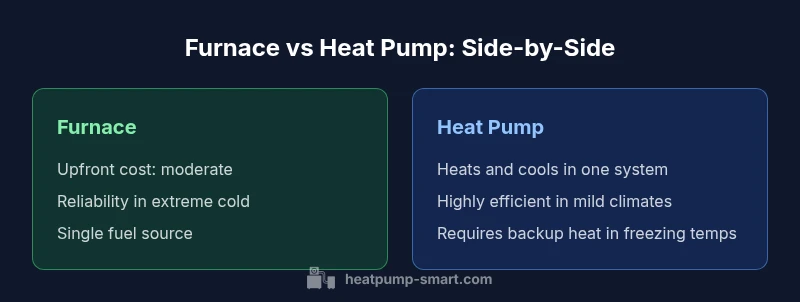
Choose based on climate and envelope; heat pumps excel in moderate climates with year-round cooling, while furnaces provide robust heating in harsh winters.
In milder regions, a heat pump often wins on total cost of ownership due to cooling functionality and efficiency. In very cold climates, a furnace (or dual-fuel setup) tends to deliver steadier warmth. A professional assessment is essential to confirm the best fit.
Your Questions Answered
What is the main difference between a furnace and a heat pump?
A furnace produces heat by burning fuel, delivering warm air through ducts, while a heat pump transfers heat using a refrigeration cycle and can also cool in summer. The choice hinges on climate, energy costs, and existing home infrastructure.
A furnace makes heat by burning fuel; a heat pump moves heat and can cool your home.
Can a heat pump replace a furnace in cold climates?
In very cold climates, a heat pump may still work well but often requires a supplementary heat source or a dual-fuel setup to maintain comfort during peak cold snaps.
Heat pumps can work in cold climates, but you may need backup heat.
What determines installation cost differences between these options?
Costs depend on existing ductwork, outdoor unit installation, electrical capacity, and whether retrofits are needed. Heat pumps may require outdoor space and electrical upgrades, while furnaces revolve around venting and duct sealing.
Duct work, outdoor unit setup, and electrical upgrades drive installation costs.
Do heat pumps require backup heating?
Many heat pumps operate with auxiliary heat when temperatures drop, using electric resistance or a secondary heater to maintain comfort.
Yes, backup heat is common in very cold weather.
How long do these systems typically last?
Furnaces usually last 15–25 years with proper maintenance; heat pumps often last 12–20 years. Regular service extends life for both types.
Furnaces: 15–25 years; Heat pumps: 12–20 years with upkeep.
Top Takeaways
- Assess climate and insulation to guide choice
- Compare upfront costs against long-term energy savings
- Check for rebates and financing options
- Ensure proper sizing and professional installation
- Plan for maintenance to preserve system value