Affordable Heat Pump Installation: A Practical Guide
Learn how to plan, budget, and install an affordable heat pump system without sacrificing reliability. This expert guide covers sizing, incentives, quotes, and maintenance to maximize long-term savings for homeowners, builders, and property managers.


By following a structured plan, you can achieve affordable heat pump installation without compromising comfort or reliability. The key is accurate sizing, informed quotes, and leveraging incentives. This quick guide outlines essential steps, cost factors, and practical financing options to fit most budgets while delivering steady energy savings for your home.
What affordable heat pump installation means for homeowners
Affording a heat pump system doesn't mean compromising on quality or comfort. Affordable heat pump installation means planning for total lifecycle costs: upfront price, energy savings, maintenance, and potential incentives. According to Heatpump Smart, many households can reduce upfront costs by choosing the right system, sizing correctly, and leveraging rebates. The goal is to balance initial expenditure with long-term performance to achieve meaningful savings without sacrificing reliability. This guide helps homeowners, builders, and property managers navigate options, recognize hidden costs, and make informed decisions that fit budgets while preserving home comfort.
In practice, affordability comes from three levers: selecting a model with dependable performance, ensuring proper sizing and controls, and choosing an installation plan that minimizes unnecessary work. That means avoiding oversize, since oversized equipment increases upfront cost and can degrade comfort due to short cycling. It also means prioritizing high-efficiency components, smart thermostats, and simple, transparent pricing from installers. The Heatpump Smart Team emphasizes that a well-planned installation often yields greater energy savings and fewer callbacks. By focusing on value—equipment quality, correct wiring, leak-free refrigerant lines, and reliable service—you can achieve dependable warmth in winter and comfortable cooling in summer without breaking the budget. This section sets the stage for practical, budget-conscious decisions tailored to your climate and home design.
Cost factors that influence affordability
Several cost factors determine how affordable a heat pump installation will be in practice. Upfront equipment costs vary by system type, capacity, and brand, but the goal is to choose a model that meets your needs without paying for excess capacity. Installation labor can shift based on existing ductwork, electrical upgrades, or the need for indoor fan coil replacements. Ducted systems may require more work than ductless mini-splits, but they can be cheaper to retrofit in homes with existing ductwork. Permits, inspections, and code compliance add another layer of expense, and these costs vary widely by jurisdiction.
Beyond upfront costs, consider operating costs and long-term savings. A properly sized, high-efficiency heat pump can reduce energy use compared with older heating systems, increasing value over time. Rebates, incentives, and financing options can substantially lower effective price, especially when combined with utility programs. The Heatpump Smart Analysis, 2026, emphasizes that the total cost of ownership matters more than the sticker price, because savings accrue over years of use. In practice, work with a licensed installer who can provide transparent quotes, explain any added costs, and help you maximize incentives without compromising safety or performance.
System types and how to choose for affordability
Air-source heat pumps are the most common option for affordability, with ducted and ductless variants to fit different house layouts. When there is existing ductwork, a central air-source system can be cost-effective if the ducts are in good condition and properly sized. For homes without ducts, a ductless mini-split or multi-split setup can provide targeted heating and cooling for individual rooms or zones at a lower installation cost. Geothermal heat pumps offer exceptional efficiency but usually involve higher upfront costs due to ground loops and specialty equipment; they are often less affordable for retrofit projects unless incentives are substantial. Your climate, insulation level, and occupancy patterns should guide your choice; an efficient control system and good zoning can often yield more savings than selecting the cheapest model. In all cases, prioritize components rated by Energy Star and favor installers who provide performance data and post-installation support.
Planning, permits, and timing
Successful affordable installations start with a solid plan. Begin by performing a home energy assessment to determine actual heating and cooling needs and identify potential energy losses due to insulation, air leakage, or windows. Check local codes and permit requirements early; some jurisdictions require permits for refrigerant work or electrical upgrades, and delays can erode any price advantage. Schedule the project for a shoulder season if possible; contractors are typically more available and may offer better rates than peak winter or summer periods. Ask potential installers to outline all lines of work, including electrical, refrigerant handling, and indoor air quality considerations, to avoid surprise charges. Finally, prepare the space by clearing access routes, protecting floors, and coordinating with other trades to minimize delays.
Financing, incentives, and rebates
Financing options and government or utility incentives can dramatically improve affordability. Look for rebates on equipment efficiency, tax credits where available, and utility-sponsored programs that offer discounted rates or bill credits for installing high-efficiency heat pumps. In addition to rebates, many installers offer financing plans with reasonable terms, allowing you to budget payments alongside energy savings. To maximize value, compare offers from multiple lenders and ensure the quotes include the same scope of work and warranty coverage. Heatpump Smart Analysis, 2026, recommends documenting expected energy savings and ensuring any incentives are stacked before signing contracts. Always read the fine print on warranties and maintenance requirements to avoid coverage gaps.
Efficiency, maintenance, and long-term savings
Efficiency determines long-term affordability as much as the upfront price. A higher seasonal energy efficiency ratio (SEER) and heating coefficient of performance (HSPF) translate into lower operating costs, especially in extreme climates. Regular maintenance is essential to keep this performance: replace filters, check refrigerant levels, and schedule annual professional inspections. Small maintenance tasks can prevent expensive breakdowns and preserve efficiency. The best value comes from a system that remains within its design performance over time, with smart controls and favorable operating patterns (e.g., consistent setpoints, avoiding overcooling). The Heatpump Smart team notes that sustainable savings come from a holistic approach: efficient equipment, proper installation, routine service, and mindful usage.
Authority sources and further learning
To learn more about affordable heat pump installation in practice, consult authoritative sources. The U.S. Department of Energy’s Energy Efficiency and Renewable Energy program provides guidelines on heat pumps and residential efficiency. The Environmental Protection Agency’s Green Homes initiative explains how heat pumps contribute to low-emission homes. Energy Star pages offer product guidance and efficiency criteria. These sources help homeowners, builders, and managers understand performance expectations, maintenance needs, and incentives. If you want a deeper dive, seek case studies and utility programs in your area to tailor a plan to your climate and budget. The Heatpump Smart team also encourages reviewing local utility data and regional incentives to fine-tune affordability.
Tools & Materials
- Tape measure(at least 25 ft (8 m))
- Voltage tester(verify circuits before work)
- Safety gloves and eye protection(PPE for installers)
- Wire strippers and pliers(electrical connections)
- Level and stud finder(for mounting brackets)
- Duct tape and sealant(seal ducts and connections)
- Insulation for refrigerant lines(prevent energy loss)
- Temporary power supply and cords(for testing)
Steps
Estimated time: 3-6 hours
- 1
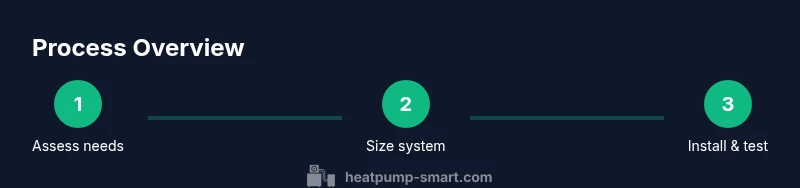
Assess needs and permits
Conduct a home energy assessment to identify true heating and cooling loads and potential air leaks. Check local codes and permit requirements early to avoid delays and added costs. Gather baseline measurements and a simple plan for where equipment will be installed.
Tip: Start with a written scope of work and confirm permit requirements with the local building department. - 2
Size the system accurately
Use a proper sizing method (manual J or equivalent) and consider occupancy, insulation, and climate conditions. Don’t rely on rough guesses or old equipment ratings; incorrect sizing drives up costs and reduces comfort.
Tip: Ask for a printed load calculation and ensure the installer explains how size affects efficiency and comfort. - 3
Compare system types and quotes
Evaluate ducted versus ductless options, and compare energy performance data, warranties, and after-sales service. Obtain at least three written quotes to identify scope differences and avoid price gouging.
Tip: Request performance curves, seasonal efficiencies, and a breakdown of all included work. - 4
Prepare the installation site
Clear access to the outdoor unit and indoor air handler; protect floors and walls; ensure adequate space for service and maintenance. Confirm electrical panel capacity and any required upgrades.
Tip: Take photos for reference and confirm that refrigerant lines are appropriately sized for the chosen system. - 5
Coordinate with utilities and schedule
Arrange for any required inspections and coordinate refrigerant charging if applicable. Ensure the installer coordinates with your utility for possible incentives and any on-bill credits.
Tip: Request a written inspection plan with timelines and contact information for all parties. - 6
Install and test the system
Have the installer complete electrical connections, refrigerant piping, and outdoor/indoor unit installation. Verify proper refrigerant charge, airflow, and system controls in cooling and heating modes.
Tip: Test multiple fan speeds and thermostat setpoints to confirm consistent comfort across zones. - 7
Plan for maintenance and future upgrades
Set up a maintenance schedule; replace filters regularly; schedule annual professional inspections. Consider future zoning or smart controls that can enhance efficiency and reduce operating costs.
Tip: Document warranty terms and keep a digital record of maintenance visits.
Your Questions Answered
What does 'affordable' mean in heat pump installation?
Affordability means balancing upfront costs with long-term energy savings and incentives. It depends on climate, home design, and chosen system.
Affordable is about balancing upfront price with future energy savings and available incentives.
Do I need permits to install a heat pump?
Permits are often required for electrical work and refrigerant handling, depending on your locality. Check with your local building department before starting.
Yes, permits are typically required for electrical and refrigerant work; verify with your local authority.
Which system is best for small spaces?
Ductless mini-splits are commonly the best fit for small or retrofit spaces due to compact indoor units and simple installation.
For small spaces, ductless mini-splits are often the best choice.
How long does installation take?
Installation time varies with scope but typically ranges from a few hours to a full day depending on ductwork and electrical upgrades.
Most installations take a few hours to a day.
What maintenance is required after installation?
Plan for annual professional inspections and regular home maintenance like filter changes to keep the system efficient.
Annual check-ups and simple home maintenance keep it running well.
Watch Video
Top Takeaways
- Define your budget before shopping
- Size accurately to avoid waste
- Leverage rebates and incentives
- Choose reputable installers
- Plan for long-term maintenance