Heat Pump Cold Air in Heat Mode: Troubleshooting Guide
Diagnose and fix a heat pump blowing cold air in heat mode with practical checks, a diagnostic flow, step-by-step fixes, safety tips, and professional guidance from Heatpump Smart.


Most likely, a heat pump blowing cold air in heat mode stems from a refrigerant issue, a faulty reversing valve, or a frozen outdoor coil. Start by checking the air filter and outdoor unit clearance, then verify thermostat settings and mode. If the issue persists, shut the system down and call a professional promptly. This guidance helps prevent further damage.
Why heat pump blowing cold air in heat mode happens
When a heat pump blows cold air in heat mode, it often signals an issue the system cannot overcome with a simple thermostat adjustment. According to Heatpump Smart Analysis, the most common causes include restricted airflow, a frozen outdoor coil, a malfunctioning reversing valve, or a control misconfiguration. Each scenario changes how refrigerant moves or how the outdoor defrost cycle operates, producing cold or tepid air instead of warm. Understanding these root causes helps homeowners and property managers act quickly and safely, protecting equipment and energy efficiency. In practice, you’ll want to distinguish between temporary defrost behavior and a true fault that requires intervention. The rest of this article walks you through practical checks you can perform now, how to interpret diagnostic signs, and when it’s time to call a professional. By following a structured approach, you can minimize wasted energy and potential damage while maintaining comfort in colder months.
Quick safety-first checks you can perform now
Start with safety and low-effort checks before delving into components. First, switch off power to the outdoor unit if you notice buzzing, burning smells, or frost formation around the condenser. Inspect indoor air filters; a dirty filter restricts airflow and triggers the system to run longer without sufficient heat. Ensure exterior clearance is clean—remove debris, trim vegetation, and provide at least 2–3 feet of space around the condenser fins. Verify the thermostat is set to heat mode and that the fan is not locked on a single speed. Confirm the system is not in emergency heat (or auxiliary heat) mode unless needed. If routine checks don’t restore warmth after a few minutes, proceed to the more detailed component checks described in the next section.
In-depth component checks and tests
Several components can cause a heat pump to deliver cold air in heating mode. The reversing valve is critical: if it sticks in cooling position, the indoor unit will push cold air outward. Listen for a change when you switch between heating and cooling on the thermostat, and inspect the valve wiring for loose connections. The outdoor coil can freeze if airflow is reduced or refrigerant is low; ice acts as an insulator and prevents heat transfer. The indoor air filter, ducts, and blower must supply steady airflow; a blocked path reduces output and causes the unit to “combat” restricted flow with longer run times. Finally, verify sensors and the control board, as faulty readings can put the system into the wrong mode. When in doubt, treat any refrigerant issue as a professional concern.
How to read the diagnostic signs
Read the system’s behaviors against the expectations for heating mode. If you see frost on the outdoor coil in operation, that points to airflow issues or a possible refrigerant problem. Tepid air lasting beyond several minutes signals restricted airflow or a lengthy defrost cycle. Audible rattles, hissing, or rapid cycling can indicate electrical faults or a dying compressor. Track how long the heat comes on before it feels warm, and note whether the inside temperature stabilizes around the setpoint. Tag unusual readings with times of day and outdoor temperatures. Seasonal changes can influence performance; the goal is to identify persistent faults rather than brief deviations.
Step-by-step fixes for the most common cause (frozen coil or airflow restriction)
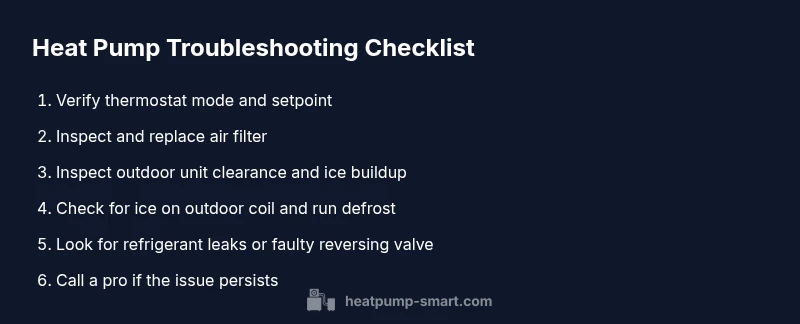
- Turn off power and carefully inspect the outdoor unit; remove leaves, snow, or ice that blocks airflow. 2) Replace or clean the indoor air filter and vacuum ducts to remove debris that hampers airflow. 3) If frost remains, gently melt it with a hair dryer from a safe distance or switch to a defrost cycle, ensuring the outdoor fan runs; do not use metal tools. 4) Recheck the condenser fins for damage; straighten bent fins with a soft brush. 5) If the air warms after these steps but then cools again, the issue likely involves the refrigerant charge or reversing valve and requires a licensed technician.
Prevention and maintenance tips
Routine maintenance is the best defense. Schedule seasonal checks that include filter replacement, coil cleaning, and a quick refrigerant inspection if not performed by a pro in the last year. Keep the outdoor unit clear of debris and ensure soils, plants, and snow do not accumulate around the unit. Use a smart thermostat to monitor cycle patterns and prevent extended run times during mild days, which can stress the compressor. Document any frost events and the outdoor temperature during those events to help a technician diagnose recurring issues in future seasons.
When to call Heatpump Smart or a pro
If basic checks don’t restore warmth after the steps above, or you hear unusual noises, smell burning, or see recurring ice formation, schedule service with Heatpump Smart or a licensed HVAC professional. A qualified technician can verify refrigerant levels, test the reversing valve, and diagnose electrical controls. In the meantime, ensure safety by turning off the system during any inspection and keeping children and pets away from components and electrical panels. Regular seasonal maintenance, including filter changes and outdoor-unit inspections, helps prevent cold-air events and keeps your system efficient.
Steps
Estimated time: 60-90 minutes
- 1
Verify thermostat and power
Check that the thermostat is in heat mode with a reasonable setpoint above room temperature. Confirm the system has power at the breaker and the outdoor unit switch is on. If using a smart thermostat, confirm connectivity and recent mode changes.
Tip: If the thermostat is wireless, re-pair or replace batteries to rule out control errors. - 2
Inspect indoor air path
Inspect and replace the indoor air filter if dirty. Vacuum accessible ducts and ensure the blower is operating normally without unusual noises. Poor indoor airflow is a frequent culprit of cold air symptoms.
Tip: Replace filters every 1–3 months during heavy use or dusty environments. - 3
Check outdoor unit and airflow
Clear leaves, snow, and other debris from around the outdoor condenser. Ensure there is at least 2–3 feet of clearance and that the fan can spin freely without obstruction.
Tip: Never insert objects into the condenser fins; use a soft brush for cleaning. - 4
Assess ice and defrost behavior
Look for frost on the outdoor coil. If ice is present, switch to defrost or let the system thaw with the outdoor fan running on heating. Do not manually chip ice.
Tip: Persistent icing may indicate airflow or refrigerant issues that require a tech. - 5
Test refrigerant and valve condition
If available, check pressure readings with professional equipment or request a diagnostics check for refrigerant leaks and reversing valve operation.
Tip: Refrigerant work must be performed by a licensed technician. - 6
Call a professional if unresolved
If warm air still does not return after these steps, schedule service promptly. Provide the technician notes on symptoms, cycle times, and outdoor conditions to accelerate diagnosis.
Tip: Document the issue with times and temperatures to help the tech.
Diagnosis: Heat pump runs but outputs cold or tepid air in heating mode
Possible Causes
- highThermostat or controls misconfigured or in cooling mode
- highReversing valve stuck or failing
- highFrozen outdoor coil due to restricted airflow or refrigerant issues
- highDirty air filter or blocked ducts reducing airflow
- mediumRefrigerant leak or low charge
- mediumDefrost cycle malfunction or timing issues
Fixes
- easyVerify thermostat is set to heat and not cooling; ensure mode and setpoint are appropriate
- easyInspect and clear outdoor unit clearance; remove debris and ice buildup
- easyReplace dirty indoor air filter and verify ducts are unobstructed
- easyThaw outdoor coil if iced and ensure defrost cycle operates correctly
- hardIf frost returns or suspect refrigerant issues, contact a licensed technician for pressures and recharge
- hardInspect reversing valve wiring and operation; replace valve if stuck or faulty
Your Questions Answered
Why is my heat pump blowing cold air in heating mode?
Cold air in heating mode is usually caused by airflow issues, a frozen outdoor coil, or a faulty reversing valve. Start with basic checks like filters and outdoor clearance, then test the thermostat settings. If unresolved, schedule professional diagnostics.
Cold air in heat mode is usually due to airflow, a frozen coil, or a faulty valve. Start with simple checks, and call a pro if it persists.
Can a dirty air filter cause cold air when heating?
Yes. A clogged filter restricts airflow and makes the system work harder, often delivering cooler air even when heating. Replace the filter and check for improved airflow.
A dirty filter can block airflow and make heating seem weak; replace it and retest.
What should I check first if the outdoor unit is iced?
Ice on the outdoor coil usually means blocked airflow or low refrigerant. Turn off power if you see ice forming, thaw the coil, ensure clearance, and have a technician inspect refrigerant and controls.
If you see ice, turn off power and thaw, then have the system checked for airflow or refrigerant issues.
Is a refrigerant leak common in heat pumps?
Leaks can occur but require a professional. If you suspect a leak, don’t attempt to recharge—call a licensed HVAC technician to locate and repair the leak and restore proper charge.
Refrigerant leaks need a professional to locate and fix; don’t try to recharge yourself.
Can a thermostat problem cause this issue?
Yes. A faulty sensor or miscalibrated thermostat can command cooling or under-heat. Replacing or recalibrating the thermostat often resolves the problem.
A bad thermostat can misread temperatures and cause cooling instead of heating.
When should I call a professional for heat pump issues?
If basic checks don’t restore warm air, or if you notice ice buildup, unusual noises, or refrigerant signs, contact Heatpump Smart or a licensed technician for a full diagnostic.
Call a pro if basic checks don’t fix the issue or if you see signs of refrigerant problems.
Watch Video
Top Takeaways
- Rule out airflow issues first with filters and clearance
- Ice on the outdoor coil signals a real fault that needs attention
- Reversing valve and refrigerant problems require professional service
- Defrost cycle behavior matters—mis-timed defrost can mask a leak
- Regular maintenance lowers the risk of cold air in heating mode