Why Is My Heat Pump Iced Over? Troubleshooting Guide
A practical, urgent troubleshooting guide to diagnose and fix iced-over heat pumps. Learn common causes, safe quick checks, and when to call a pro for reliable winter comfort and energy savings.


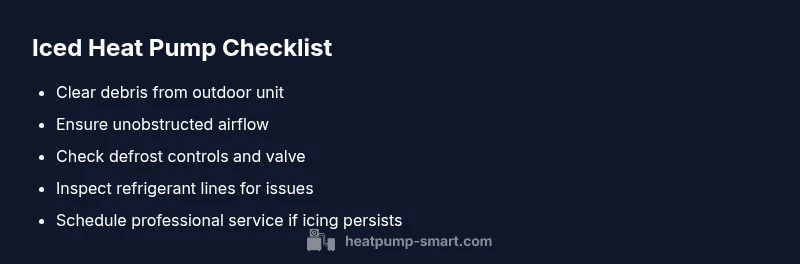
Why is my heat pump iced over? The most common cause is a defrost cycle problem or restricted airflow. If your heat pump is iced over, start by clearing debris from the outdoor unit, ensuring unobstructed airflow, and confirming thermostat modes. In cold, humid conditions, defrost controls and reversing valves can fail, leaving ice buildup until repairs are done. Heatpump Smart notes iced-over symptoms are frequent in winter climates.
Understanding why iced-over heat pumps happen
If you’re asking, "why is my heat pump iced over?", you’re not alone. Ice on the outdoor coil disrupts heat transfer, reduces efficiency, and can trigger longer running times. In many cases the icing is a symptom of a mismatch between humidity, outdoor temperature, and airflow. The defrost cycle is meant to melt that ice, but when it fails or runs too infrequently, ice persists. According to Heatpump Smart, iced-over conditions are most common in winter climates with high humidity and freezing temperatures. Recognizing the signs—a clear ice sheet on the outdoor coil, frost around the fan housing, and a noticeable drop in heating output—helps you act quickly without risking equipment damage. This block lays the groundwork for safe, practical troubleshooting you can perform before calling a technician.
Quick checks you can perform safely
Before you touch any electrical components, switch off power to the outdoor unit at the disconnect or breaker. Inspect the outdoor coil for debris, snow, or ice buildup and remove with a soft brush—never metal tools. Ensure the airflow path to the unit is clear; shrubs, furniture, or snow piles can choke heat exchange and promote icing. Verify the thermostat is set to heating, not cooling, and that the outdoor temperature is within expected operating range for your system. If you notice ice forming during normal operation, this often points to blocked airflow or a defrost-control issue rather than a refrigerant problem. These initial checks are low-risk and address the most common root causes.
Common causes in order of likelihood
Ice buildup typically happens due to three main factors: restricted airflow, defrost-cycle problems, and refrigerant issues. 1) Restricted airflow from dirty filters, blocked louvers, or outdoor obstructions is the leading cause. 2) A defrost-control fault or a stuck defrost thermostat can prevent melting. 3) Refrigerant undercharge or a leak lowers pressure, promoting evaporator icing. 4) Prolonged moisture exposure from wet, freezing rain or heavy snow can overwhelm the coil. 5) A malfunctioning reversing valve during heating mode may hinder heat transfer and cause icing. Understanding these causes helps prioritize fixes and avoids chasing symptoms.
Diagnostic flow overview
This diagnostic path helps you decide whether to fix it yourself or call a pro. Symptom: ice on the outdoor coil. Step 1: confirm heating mode and thermostat settings. Step 2: inspect for obvious airflow blockages. Step 3: observe the defrost cycle (how ice melts during a defrost window). Step 4: check outdoor coil cleanliness. Step 5: if icing persists after basic checks, proceed to professional inspection for refrigerant and control issues.
Step-by-step fix for the most common cause
Most iced-over heat pumps stem from restricted airflow. Step 1 – Safety first: turn off power at the disconnect and breaker. Step 2 – Clear the area: remove leaves, snow, and debris from around the outdoor unit, and ensure at least 24 inches of clearance. Step 3 – Clean the coil: gently brush the outdoor coil to remove dirt and debris; avoid pressure washing directly into joints. Step 4 – Check indoor filtration: a clogged filter can reduce airflow and contribute to icing; replace if dirty. Step 5 – Test defrost: after re-energizing, observe for a defrost cycle; if ice remains or keeps reforming, the defrost control or reversing valve may need professional service. Helpful hint: document times and outcomes to guide a technician. Heatpump Smart recommends a thorough check after a defrost cycle to confirm complete melt and normal operation.
Safety considerations and when to call a professional
Icing can indicate endangerment of electrical components or refrigerant issues. Never chip ice from moving parts or work inside the electrical panel without turning off power and wearing proper PPE. If ice persists after basic cleaning and the defrost cycle runs without melting ice, or you notice refrigerant signs (hissing, oil residues, oily fingers on joints), contact a licensed HVAC technician promptly. Calls for professional help are especially important if you hear unusual noises, smell refrigerant, or see ongoing ice formation after several defrost cycles.
Prevention and winter maintenance
Preventing icing starts with proactive routine maintenance. Replace or clean filters every 1–3 months in heating season, ensure outdoor clearance from vegetation and snow, and keep the outdoor unit free of debris. Schedule a seasonal service before the coldest months to verify defrost controls, reversing valve operation, and refrigerant integrity. Keep humidity under control by sealing and insulating indoor spaces; improved indoor sealing reduces humidity load on outdoor coils, lowering icing risk. Regular checks reduce downtime and extend the life of your heat pump.
How icing affects efficiency and comfort
Ice acts as an insulator, forcing the system to run longer and work harder to meet desired temperatures. This leads to higher energy costs and reduced comfort, especially during cold snaps. Persistent icing can accelerate wear on outdoor coils, fan motors, and reversing valves. Addressing icing quickly preserves efficiency and reduces the chance of compressor damage. Heatpump Smart emphasizes that proactive maintenance and timely defrost-control checks are the most effective ways to minimize icing risk and maintain steady home comfort.
Steps
Estimated time: 45-60 minutes
- 1
Power off at the disconnect
Switch off power to the outdoor unit at the dedicated disconnect or the main breaker. This ensures you won’t accidentally energize moving parts while inspecting and cleaning. Use a flashlight and avoid touching electrical components with wet hands.
Tip: Always verify power is off with a non-contact tester before touching wires. - 2
Clear and inspect the outdoor area
Remove snow, leaves, and other debris from around the unit. Ensure at least 24 inches of clearance on all sides for proper airflow. Inspect the coil with a bright light to spot dirt buildup or corrosion that needs cleaning.
Tip: Work from top to bottom to avoid dislodging debris onto clean areas. - 3
Clean the outdoor coil and vents
Gently brush the coil with a soft-bristle brush to remove dirt. Rinse lightly with water if needed, but avoid high-pressure sprays that can bend fins. Ensure the fan blades rotate freely once power is restored.
Tip: Never use metal tools; fins are delicate and can be bent easily. - 4
Check indoor filtration and thermostat
Replace the indoor air filter if dirty and ensure the thermostat is set to heating with the correct mode. Poor indoor airflow can contribute to icing by restricting heat transfer at the evaporator.
Tip: Record current settings and any observed changes after adjustments. - 5
Test the defrost cycle and observe
Restore power and run the system in heating mode while monitoring the outdoor unit. Watch for ice melting during a defrost cycle; if ice persists after several cycles, this indicates a defrost-control or valve issue requiring professional service.
Tip: If safe, time and document the defrost cycle duration for your technician.
Diagnosis: Ice buildup on outdoor unit or frost around the outdoor coil
Possible Causes
- highRestricted airflow due to debris, snow, or blocked louvers
- highMalfunctioning defrost cycle or failed defrost thermostat
- mediumLow refrigerant or refrigerant leak
- lowContinuous high humidity and freezing conditions
Fixes
- easyClear debris and ensure unobstructed airflow to the outdoor unit
- mediumInspect and test defrost controls; verify defrost timer and reversing valve operation
- hardHave a licensed tech check refrigerant levels and inspect for leaks
- easyConfirm thermostat is in heating mode and outdoor sensors are reading correctly
Your Questions Answered
Why is my heat pump iced over even when it's not freezing outside?
Icing can occur with high humidity or airflow issues, even if the air temperature isn’t extremely cold. Blocked airflow or a defrost-control fault often causes unexpected icing. Inspect airflow paths and defrost function first, then call a pro if icing continues.
Ice can form oddly when humidity is high or airflow is blocked. Start with airflow checks and defrost function, and get a professional if it keeps recurring.
How long does a typical defrost cycle take?
Defrost cycles are designed to melt ice quickly, usually within a few minutes. If ice persists beyond one cycle, the defrost control or valve may be faulty and require inspection.
Defrost cycles typically melt ice in minutes; if icing lasts beyond a cycle, contact a technician.
Can icing damage my heat pump?
Prolonged icing can reduce efficiency and put stress on components like the outdoor fan and compressor. Prompt diagnosis and fixing iced-over conditions helps prevent damage.
Extended ice can stress components; quick diagnosis protects your system.
Should I run the heat pump in defrost mode all the time during winter?
No. Defrost is a built-in control that should engage only when needed. Constant defrost use can indicate a control fault or sensor problem requiring professional service.
No, defrost should run as needed. Persistent defrost indicates a fault.
When should I call a professional for icing?
Call a professional if icing recurs after basic checks, if you suspect refrigerant issues, refrigerant leaks, or faulty defrost/valve components. A licensed technician can diagnose refrigerant, electrical, and control problems safely.
Call a pro if icing returns after basic checks or if refrigerant concerns exist.
Watch Video
Top Takeaways
- Clear airflow is essential to prevent icing
- Defrost-cycle problems are a common root cause
- Call a professional if icing persists after basic checks
- Prevent icing with regular winter maintenance