Heat Pump Iced Up: Quick Troubleshooting Guide
Urgent guide to diagnose and fix a heat pump iced up. Includes quick checks, defrost tips, and when to call a pro. Heatpump Smart delivers practical steps for homeowners, builders, and managers.


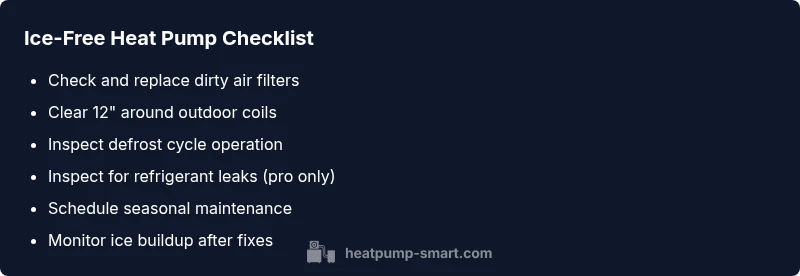
Quick fix: 1) Check the air filter and replace if dirty. 2) Ensure the outdoor coil has at least 12 inches of clearance and remove debris. 3) If ice remains, switch to defrost mode and run until the ice melts. If unresolved after defrost, contact a licensed technician. Also check for airflow around the indoor unit and listen for unusual noises.
Why Heat Pump Iced Up Happens
Ice buildup on a heat pump is a clear warning sign that the system can’t operate efficiently in cold weather. In many cases, the root cause is simple and addressable, but left unchecked it can lead to higher energy costs and degraded comfort. According to Heatpump Smart, iced-up heat pumps are commonly caused by airflow restrictions or a malfunctioning defrost cycle. When air can’t move freely across the outdoor coil, moisture freezes on contact and creates a frost layer that traps more cold air inside the unit. Dirty indoor air filters, blocked return vents, and low outdoor temperatures that linger for several hours also contribute to ice formation. Another factor is debris around the outdoor unit, which blocks heat exchange and triggers longer defrost cycles. Finally, refrigerant leaks or improper charge can cause icing too, but those issues require a licensed technician. Recognizing the signs early—audible chattering, reduced heating output, and visible frost—lets you act before the problem escalates. The Heatpump Smart team emphasizes that prompt checks can prevent ice from spreading and protect the system’s efficiency over the season.
Quick Visual Cues
- Frost on the outdoor coil, especially along the edges
- Reduced warmth indoors after several defrost cycles
- Ice forming in the cabinet or around the fan housing
- Condensation pooling near the outdoor unit
If you notice any of these cues, begin with the simplest fixes and move toward more involved checks. The goal is to restore proper airflow and ensure the defrost cycle operates as designed. Remember, safety first: never poke into electrical components or the refrigerant system. When in doubt, contact a licensed professional for a thorough inspection.
Airflow and Filter Hygiene
Airflow is the lifeblood of a heat pump. A clogged filter or blocked return air path reduces the system’s ability to extract heat from the indoor air, causing the outdoor coil to frost over. Start with the indoor air path: replace or clean filters, vacuum supply and return vents, and ensure furniture or drapes aren’t blocking air outlets. On the outdoor side, clear debris, leaves, snow, and ice from around the unit, and ensure a clear radius of at least 12 inches. Check that the outdoor fan can spin freely without rubbing or unusual resistance. Poor airflow is the most common, easiest-to-fix cause of icing and can dramatically improve performance when corrected.
Defrost Cycles: How They Work and When They Fail
Most air-source heat pumps use an automatic defrost cycle during cold weather to melt frost from the outdoor coil. The cycle reverses the refrigerant flow briefly, warming the outdoor coil. If ice persists after a defrost pass, it may indicate a faulty defrost thermostat, timer, or sensor, or a refrigerant charge issue. Short cycling or very frequent defrosts can also signal a problem. If the defrost controller isn’t engaging properly, you’ll see recurring ice buildup and diminished heating output. In such cases, a professional service is often required to diagnose control components or refrigerant-related problems.
Diagnostic Checklist: Simple Tests to Identify the Cause
Start with the simplest checks, then escalate. Confirm the thermostat is set to the correct heating mode and not to a energy-saver setting that reduces HVAC duty in cold weather. Inspect indoor filters, return air pathways, and the outdoor unit’s clearance. Listen for unusual noises from the outdoor fan during the defrost cycle. If ice reappears after a defrost cycle, take note of outdoor temperature, humidity, and how long the cycle runs. These observations help a technician pinpoint whether the issue is airflow, frost handling, or a leak in the refrigerant loop. Regular maintenance plays a big role in preventing recurring icing.
Prevention: Keeping Your Heat Pump Ice-Free Through Winter
Prevention is more effective than repair. Schedule seasonal maintenance before peak cold months to ensure the defrost controls and sensors operate correctly. Replace filters every 1–3 months during heavy use and keep outdoor coils clean and unobstructed. Consider improving insulation around the area where the indoor unit sits to minimize rapid indoor temperature swings. If you live in a particularly cold climate, a well-sealed duct system, appropriate thermostat programming, and occasional professional checkups can dramatically reduce icing incidents. Heatpump Smart’s guidance emphasizes proactive care to maintain efficiency and comfort year-round.
Steps
Estimated time: 15-45 minutes
- 1
Check indoor air filters
Power off the unit and locate the air filter. Remove and inspect for visible dirt or staining. Replace with the correct filter size if dirty, and vacuum the housing to remove dust. Reinstall securely and resume operation to observe changes.
Tip: Regular maintenance reduces icing; set a monthly reminder for filter checks. - 2
Improve outdoor airflow and clearance
Inspect the outdoor unit; remove leaves, snow, and debris around the coils. Ensure at least 12 inches of clearance on all sides and verify the fan can spin freely. Do not obstruct the coils with fencing or storage.
Tip: Keep a winter debris sweep routine during heavy snow months. - 3
Initiate defrost cycle and monitor
If you observe frost buildup, manually initiate defrost if your model supports it or let the automatic cycle run. Listen for a hum and watch the outdoor coil for melting ice. After several minutes, check whether the ice reduces and the indoor temperature rises.
Tip: Do not force defrost if ice is extensive; call a technician if unsure. - 4
Check thermostat and mode settings
Verify the thermostat is in heat mode and not on emergency heat or a energy-saving setting that reduces system response. Adjust setpoint gradually, giving the system time to react. If the indoor temperature feels inadequate, continue steps to diagnose airflow or defrost issues.
Tip: A misconfigured thermostat can masquerade as a refrigeration problem. - 5
Observe for recurring icing patterns
Note the outside temperature, humidity, and how quickly ice forms or re-forms after defrost. If icing becomes a frequent winter event, this indicates a persistent issue requiring professional inspection.
Tip: Keep a simple weather log to share with your technician. - 6
Call a licensed technician when needed
If icing persists after testing airflow and defrost, or you detect refrigerant signs (hissing, oily residue, steady cooling loss), contact a pro. Refrigerant work requires certification and equipment handling by trained personnel.
Tip: Safety first: do not attempt refrigerant repairs yourself.
Diagnosis: Outdoor unit iced over during winter operation
Possible Causes
- highRestricted airflow due to dirty filter or blocked return air path
- highOutdoor unit obstruction or debris near coils
- mediumMalfunctioning defrost control or timer
- lowLow refrigerant levels from a leak
Fixes
- easyClean or replace air filters; clear any obstructions around the outdoor unit
- easyImprove airflow around the outdoor unit and ensure at least 12 inches of clearance
- mediumSwitch to defrost mode and monitor until the ice melts; if ice returns, call a pro for refrigerant check
- hardSchedule a professional refrigerant test and leak repair if needed
Your Questions Answered
What causes a heat pump to ice up?
Ice up is usually caused by restricted airflow or a malfunctioning defrost cycle. A dirty filter, blocked vents, or debris around the outdoor unit can reduce heat exchange and cause frost. A faulty defrost control or refrigerant issue may also contribute and requires professional assessment.
Ice buildup is mostly due to blocked airflow or a bad defrost cycle. If the problem keeps recurring, contact a pro for a refrigerant check.
Can I fix icing myself?
You can tackle simple causes like dirty filters and outdoor debris. Do not attempt refrigerant work or tamper with electrical components. If icing persists after basic fixes, schedule a professional inspection.
You can handle basic airflow and filter checks, but avoid refrigerant or electrical issues—call a pro if it persists.
Is iced heat pump dangerous to operate?
Running a unit with ice can reduce efficiency and increase energy usage. It can also damage blower motors and coils over time. If you observe persistent icing, shut the system down and consult a technician.
It’s not immediately dangerous, but iced operation wastes energy and can cause damage; get it checked.
How long should defrost take?
Defrost cycles typically melt frost within a few minutes, but heavy icing may take longer. If defrost runs repeatedly without clearing ice, a professional assessment is advised.
Defrost usually melts ice in minutes, but if it keeps cycling, get a tech to inspect.
When should I call a professional?
Call a professional if icing recurs after basic fixes, if you suspect a refrigerant leak, or if you notice unusual noises or reduced heating. Complex issues require specialized tools and certification.
If icing keeps coming back or you suspect refrigerant issues, call a pro.
How can I prevent icing in winter?
Regular maintenance, clean filters, and keeping the outdoor unit clear are the best prevention. Use a programmable thermostat to avoid overworking the system in extreme cold, and schedule pre-season service.
Prevention is maintenance: keep filters clean, unit clear, and get annual service.
Watch Video
Top Takeaways
- Inspect airflow first to stop icing quickly.
- Defrost function is crucial; ensure it operates correctly.
- Keep outdoor unit clear and filters clean to prevent recurring ice.
- Call a pro for refrigerant or defrost control failures.
- Regular maintenance reduces ice formation and extends equipment life.