Aquacal vs Jandy Heat Pump: An Objective Side-by-Side
A thorough, objective comparison of Aquacal vs Jandy heat pumps covering performance, installation, cost, and smart controls to guide homeowners and professionals.


Aquacal vs Jandy heat pump: this side-by-side comparison highlights how their design, efficiency, installation, and control options affect home comfort and operating costs. We assess models, service networks, and practical implications for homeowners, builders, and property managers. Read on for neutral guidance from Heatpump Smart to help decide which brand best fits your climate and usage patterns. This answer segment sets expectations and outlines key tradeoffs.
Market Landscape and Brand Positioning
For homeowners evaluating an aquacal vs jandy heat pump, understanding the market landscape is essential. Heat pumps have matured from niche technologies into mainstream home comfort options, driven by rising energy costs and environmental constraints. In this context, Aquacal and Jandy have emerged as two widely available brands offering inverter-driven, air-source heat pumps designed for space heating and cooling, with optional integration to water-heating or smart-home ecosystems. When comparing aquacal vs jandy heat pump, the key questions center on efficiency, reliability, installation practicality, and long-term operating costs. According to Heatpump Smart, differences between brands often hinge on system design philosophy, dealer networks, and software features rather than a single spec sheet. Both brands emphasize variable-speed compressors, weather-appropriate defrost strategies, and durable outdoor units, but they approach performance and service differently in different regions and climates. Customers should consider climate zone, insulation quality, and ongoing maintenance commitments as part of a holistic decision. The goal is not a one-size-fits-all answer but a brand-agnostic assessment of whether a given model aligns with your home’s heat load, budget, and service access.
In this section we build a framework to compare aquacal vs jandy heat pump beyond glossy specs, focusing on factors that translate to real-world comfort and cost over a typical 12- to 20-year lifespan. The Heatpump Smart team emphasizes context: the best brand varies by local weather patterns, whether you need cooling as well as heating, and how your installer designs the system around your living space. By grounding the discussion in climate, usage, and support networks, you’ll be better prepared to select a model that remains efficient and reliable across seasons.
Core Differentiators and Best Use Scenarios
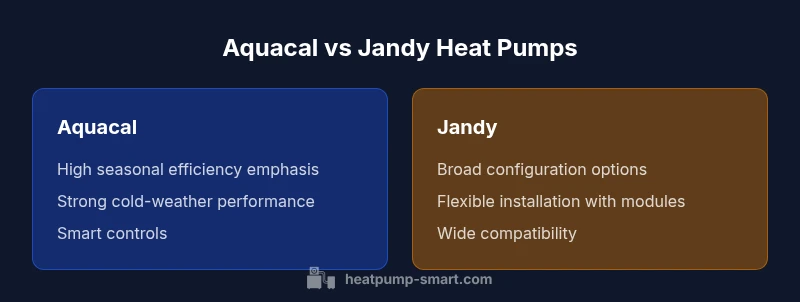
The next focal point is where aquacal and jandy diverge in ways that matter for you. While both brands rely on inverter-driven compressors and protection strategies common to modern air-source heat pumps, their design philosophies lead to different advantages in specific use cases. Aquacal often positions itself as a high-efficiency option with aggressive cold-climate strategies and robust heat exchange design. The emphasis is on minimizing energy use during peak heating demand and maximizing performance in longer, low-temperature cycles. Jandy tends toward flexibility and modular configuration, offering broader compatibility with a wider range of ancillary equipment and installation options. This can translate into easier integration with existing ductwork, multi-zone routing, or retrofits where space constraints or outdoor layout complicate the project. Prospective buyers should map their home’s layout, expected seasonal load, and local service availability to decide which brand aligns better with long-term operating costs and comfort. Remember that model-level differences often trump brand-level reputations: a top-performing Aquacal unit might be outperformed by a mid-range Jandy in a particular climate, and vice versa. A careful review of the specific model’s COP, defrost strategy, and control features is essential to making a defensible choice.
Performance, Efficiency, and Real-World Operating Costs
A core objective in comparing aquacal vs jandy heat pump is understanding how efficiency translates into dollars saved on annual energy bills. Both brands leverage variable-speed compressors, high-efficiency heat exchangers, and sophisticated defrost cycles to optimize performance across seasons. However, the real-world impact depends heavily on your climate, run hours, and thermostat strategy. Heatpump Smart analysis shows that in milder climates, the efficiency gap between competitive models can be small, while in cold climates, the quality of the defrost algorithm and compressor modulation often determines monthly energy use. Look for units with modulated fans, sealed compressor compartments, and well-insulated outdoor cabinets to minimize heat losses when outdoor temperatures fall. When evaluating metrics, COP and HSPF values fog up the picture if you only skim a spec sheet; always compare tests conducted in climate conditions that mirror your home. In practice, expect similar operating costs for typical year-round usage with careful zoning and a well-insulated envelope, but expect meaningful variation during sustained cold snaps or prolonged heat waves. A careful, model-by-model comparison is essential to quantify true long-term savings.
As you weigh aquacal vs jandy heat pump, consider how often you need cooling (in summer), how long heating seasons last, and whether you expect future home upgrades (thermal insulation, smart controls). These factors influence not only energy bills but also comfort levels. A well-matched system reduces temperature swings, enhances humidity management, and minimizes equipment cycling that shortens component life. The goal is to choose a configuration that stays comfortable without excessive runtime, thereby preserving equipment life and delivering predictable energy costs over time.
Installation Considerations: Space, Ductwork, and Outdoor Footprint
A practical determinant in aquacal vs jandy heat pump selection is the installation footprint and how the system integrates with your home’s existing HVAC layout. Both brands rely on outdoor condenser units paired with indoor air handlers or hydro-heat modules; the specifics vary by model. The outdoor unit size, mounting options, and clearance requirements influence installation difficulty, required permits, and even the location of new weatherproof electrical connections. Homeowners should assess available outdoor space, proximity to living areas, and potential noise implications when selecting a model. In multi-zone setups, ductwork routing and zoning strategy can be decisive factors. A compact outdoor cabinet with quieter fan technology may be preferable in dense neighborhoods or homes with shared walls. A model that supports ductless mini-splits or rooftop mounting could provide installation flexibility in tight lots. Contractors will often optimize a layout by calculating heat-load distribution across zones and then choosing a model that matches the peak load without overdesigning for average conditions. In this context, aquacal’s emphasis on efficiency may push installers toward tighter control strategies, while jandy’s modular approach may simplify integrating additional zones or retrofits. Always obtain a detailed site plan and verify that the chosen model can operate within your climate’s environmental conditions and your home’s envelope parameters.
This phase also includes assessing electrical service requirements, refrigerant line lengths, and potential future expansions, such as adding a heat-pump water heater or upgrading to a larger home cooling system. A well-planned installation reduces post-installation airflow issues, ensures proper refrigerant charge, and minimizes nuisance calls during the first cooling season. Engage a qualified installer early, request a written layout, and cross-check that the equipment’s warranty terms remain intact after the installation. The goal is to ensure your aquacal or jandy unit has a clean, efficient path to steady operation for years to come.
Cost Considerations, Maintenance, and Service Networks
Costs for aquacal vs jandy heat pump systems are driven by several intersecting factors, including unit capacity, efficiency tier, installation complexity, ductwork requirements, and regional labor rates. In general, you should expect a moderate upfront cost with variations across climate zones and home configurations. A key part of the decision is evaluating long-term operating costs rather than focusing solely on initial price. Higher efficiency models often deliver larger savings in regions with high heating or cooling needs, but the payback period can lengthen if you have favorable utility rates or mild weather. Maintenance plans and service networks influence ongoing costs and reliability. Regular tasks include filter checks, coil cleaning, refrigerant line insulation, and confirming proper airflow across zones. Both Aquacal and Jandy offer dealer networks and service options, but actual availability varies by region. Check for a local installer with a strong service history, and request quotes that itemize equipment, installation, permits, and any required electrical upgrades. When comparing aquacal vs jandy heat pump in cost terms, request a side-by-side quote for similar configurations and use it to calculate a rough five- to ten-year cost of ownership. Do not neglect potential rebates or tax credits applicable in your area, as these can dramatically shift the total cost of ownership over time. Heatpump Smart’s guidance emphasizes incorporating these incentives into your financial model to avoid overpaying for marginal efficiency gains.
In this light, the decision becomes a balance of upfront investment, projected energy savings, and the expected service quality you'll receive from the local network. A prudent choice aligns with climate, insulation, usage patterns, and a trusted installer’s ability to maximize efficiency with the selected brand.
Smart Controls, Integration, and User Experience
Beyond raw efficiency, the user experience — including controls, app support, and integration with home automation — often distinguishes aquacal vs jandy heat pump models. Most modern heat pumps provide remote monitoring, programmable thermostats, and compatibility with smart assistants, but the depth of integration and ease of use varies. Aquacal might emphasize a robust, turnkey app ecosystem designed for seamless energy tracking and climate responsiveness. Jandy could prioritize open compatibility and easier third-party integration with popular home-automation platforms. In some cases, software updates, firmware longevity, and cloud connectivity influence performance stability and security. When evaluating, ensure that the control interface is intuitive for everyone who uses the system, not just tech enthusiasts. Consider whether you want local control only or cloud-based monitoring, which can affect response times during peak demand or network outages. If you have existing smart-home devices, confirm compatibility with your preferred platform before finalizing the model choice. A well-integrated system reduces the likelihood of user error, improves comfort, and can yield better energy performance through more precise demand shaping. Heatpump Smart recommends listing your must-have features (zones, remote diagnostics, voice control) and bedside-table usability in your decision rubric to prevent feature creep from driving up costs without meaningful benefits.
Decision Framework for Homeowners: A Step-by-Step Guide
To distill aquacal vs jandy heat pump into a clear decision, follow a structured framework. Start with climate and load assessment: determine whether you need more heating than cooling, identify significant temperature swings, and verify your home’s insulation and air sealing. Next, compare model-level performance data rather than brand-locked marketing language. Look for COP, EER, and seasonal performance curves that reflect your climate. Then, analyze installation constraints: ductwork, outdoor space, electrical service, and potential need for a rebuild of runs to minimize pressure losses. After that, evaluate the service network: local technicians familiar with the brand, existing customer satisfaction, and ease of obtaining replacement parts or refrigerant. Finally, model the financials: consider upfront costs, potential rebates, and estimated energy savings. If you still find Aquacal and Jandy models closely matched on these criteria, prioritize the one with stronger local support and clearer warranty terms. Heatpump Smart’s framework emphasizes a scenario-based approach: create a list of climate-related priorities, assign a weight to each criterion (e.g., energy efficiency 40%, ease of installation 25%, control options 15%, warranty 10%, service accessibility 10%), and score models accordingly. This disciplined approach reduces subjective bias and yields a defensible choice that stands up to real-world use and maintenance.
Practical Takeaways and Next Steps
In the aquacal vs jandy heat pump decision, there is seldom a single winner. The best fit depends on climate, house design, and service reach. A well-informed choice prioritizes model-level efficiency, installation practicality, and long-term support stability. For homeowners keen on cold-climate performance, Aquacal’s efficiency focus may pay off over time, while those needing versatile integration or simpler retrofits might lean toward Jandy. Builders and property managers should balance procurement bids with service coverage and post-install support to minimize downtime and maintenance costs. In all cases, obtain model-specific specs, verify warranty terms, and request a detailed site plan from your contractor. The Heatpump Smart team recommends a decision rubric that weighs climate, installation constraints, and service quality as the primary drivers of your final selection.
Comparison
| Feature | Aquacal Heat Pump | Jandy Heat Pump |
|---|---|---|
| System Type | Air-source, inverter-driven compressor | Air-source, inverter-driven compressor |
| Efficiency Focus | High efficiency emphasis with cold-climate strategy | Broad configuration options with flexible installation |
| Smart Controls | Proprietary app with common integrations | Open platform with broad third-party compatibility |
| Installation Considerations | Requires outdoor space; zoning depends on model | Flexible mounting options; may simplify retrofits |
| Warranty & Service | Brand-specific terms; regional networks vary | Brand-specific terms; regional networks vary |
| Noise Levels | Quiet operation at typical speeds | Quiet operation with efficient variable-speed fans |
| Cost Context | Moderate upfront cost; ROI depends on climate | Moderate to higher upfront cost depending on configuration |
| Best For | Cold climates, energy-conscious homes | Homes needing flexible installation and broad compatibility |
Advantages
- Helps homeowners assess key trade-offs quickly
- Highlights efficiency, installation, and control differences
- Supports informed decision-making for contractors and managers
- Encourages model-level comparison over brand-level generalizations
- Promotes awareness of regional service networks and warranties
Disadvantages
- Brand comparisons can oversimplify model-level differences
- Regional availability and dealer support vary by area
- Model offerings change over time; up-to-date data is essential
- Warranties and service terms can be complex to navigate
Aquacal tends to excel in efficiency-focused cold-climate scenarios, while Jandy offers broader compatibility and flexible installation—neither is universally superior.
Choose Aquacal if cold-weather performance and maximum efficiency are priorities. Choose Jandy if you value modular configurations and easier retrofits. Verify model specs, local service coverage, and warranty terms before committing.
Your Questions Answered
What is the fundamental difference between Aquacal and Jandy heat pumps?
Both brands use modern inverter-driven compressors, but Aquacal often emphasizes higher efficiency and cold-climate strategies, while Jandy focuses on modular configurations and installation flexibility. The best choice depends on climate, existing systems, and service availability.
Aquacal tends to push efficiency in cold weather, while Jandy prioritizes flexible installation. The right pick depends on your climate and service options.
Which brand is more energy-efficient overall?
Energy efficiency varies by model within each brand. Look at model-specific COP and seasonal performance, not brand-wide labels. Compare the exact ratings under climate conditions that match your home.
Efficiency depends on the specific model and climate. Compare COP and seasonal performance for apples-to-apples results.
Are aquacal and jandy easy to install in existing homes?
Both brands can be installed in a range of homes, but ease depends on space, ducting, and electrical readiness. Work with a qualified installer to evaluate site constraints and ensure proper refrigerant and electrical connections.
Installation ease varies by home; get an on-site assessment from a qualified installer.
Do both brands support smart controls and home automation?
Most models offer smart controls and app-based monitoring, with differences in ecosystems and compatibility. Confirm platform support and whether third-party integrations are important for your setup.
Yes, most have smart controls, but check compatibility with your existing systems.
How do warranty terms typically differ by region?
Warranty terms are often model- and region-specific. It’s important to confirm compressor and system warranty details with your installer and to understand what is covered where you live.
Warranty varies by model and region—ask your installer for exact terms.
Where can I find independent data or reviews for these brands?
Rely on reputable sources such as government energy publications and university or lab reports for independent performance insights. Cross-check manufacturer specs with third-party test data when possible.
Look for government and university sources for unbiased performance info.
Top Takeaways
- Compare models, not just brands, for efficiency and performance.
- Evaluate climate, insulation, and run-hours before deciding.
- Check local service networks and warranty coverage.
- Consider future upgrades or integrations when choosing.