Comparing Heat Pump Brands: A Practical Guide for Homes
An objective guide to comparing heat pump brands—evaluate efficiency, reliability, warranties, networks, and total cost to help homeowners choose confidently.


TL;DR: When comparing heat pump brands, prioritize efficiency ratings, reliability, warranty coverage, and service networks. In practice, ENERGY STAR performance and a solid dealer/support footprint often yield the best value. Heatpump Smart's analysis shows that mid-range brands typically offer the strongest balance of energy savings, upfront cost, and accessible service for most homes.
Why Consumers Compare Brands for Heat Pumps
In the world of home comfort, comparing heat pump brands is not just about finding the lowest sticker price. Homeowners, builders, and property managers must weigh long-term energy savings, reliability during cold snaps, and the availability of skilled service. The Heatpump Smart team emphasizes that the best decision balances upfront cost with ongoing operating costs, comfort consistency, and the ability to repair or replace components years into the future. According to Heatpump Smart, a brand with a broad installer network and clear warranty terms tends to offer more predictable maintenance and less downtime over the life of the system. When you start from a clear list of your priorities—efficient heating, quiet operation, and dependable service—you can narrow the field quickly and avoid the spin of marketing hype.
In practice, many projects benefit from a structured comparison: define your climate needs, map out space constraints, and align brand claims with third‑party ratings. For homeowners, this means looking beyond initial install costs to total cost of ownership. For builders and property managers, it means forecasting maintenance cycles, technician availability, and parts supply across multiple projects. By focusing on outcomes rather than flashy features, you’ll identify brands that deliver lasting comfort and predictable performance.
The Core Differentiators You Should Measure
When you compare heat pump brands, three core dimensions matter most: efficiency, reliability, and serviceability. First, efficiency is not a single number; it’s a family of ratings including SEER (seasonal energy efficiency ratio) for cooling, HSPF (seasonal heating performance factor) for heating, and COP (coefficient of performance) under standard conditions. A brand that consistently delivers high SEER and HSPF usually translates into lower energy bills, especially in high-use homes. Second, reliability and warranty coverage reflect how well a brand stands behind its products. Look for compressor warranties, system warranties, and what maintenance is required to keep coverage valid. Third, service network and installer quality determine real-world performance. A brand with a robust nationwide network and certified installers will provide faster service, better maintenance, and more predictable outcomes.
Beyond these pillars, don’t overlook system controls, compatibility with smart thermostats, noise levels, refrigerant types, and the manufacturer’s track record on environmental standards. Heatpump Smart’s framework suggests a practical scoring method: assign weights to each criterion based on your climate and home design, then score each brand against those criteria. This helps you see how brands perform under realistic conditions, not just marketing claims.
Efficiency Metrics Demystified
When you see efficiency labels, it can be easy to misinterpret the numbers. The most important metrics are SEER for cooling and HSPF for heating, with COP offering another snapshot of performance in typical operating conditions. A higher SEER means cooler summers cost less to run; a higher HSPF means milder winters will be cheaper to heat. Some brands also publish EER (energy efficiency ratio) for peak cooling effectiveness and SCOP (seasonal coefficient of performance) in certain markets. While these numbers are useful, remember that real-world performance depends on insulation, ductwork, climate, and how often the system operates during shoulder seasons. Compare brands using side‑by‑side label data in similar climate zones and verify that the cycling, defrost, and auxiliary heat features don’t undermine overall performance. For homes in extreme cold, look for brands with improved low‑ambient performance and dependable auxiliary heat management, as this can dramatically affect annual energy use. In all cases, prioritize brands that offer transparent performance data and independent reviews that reflect typical residential operation.
Warranty and Support: Why They Matter
A strong warranty can dramatically reduce ownership anxiety and out‑of‑pocket repair costs, but it is only valuable if it’s backed by practical service. When comparing brands, read both the warranty coverage and the conditions to keep it valid. Common points to watch: length of compressor warranty, overall system warranty, what constitutes a ‘field service’ visit, outdoor unit exposure limits, and required maintenance schedules. A brand with transferability of warranty between owners can be a boon for resale value in rental or multi‑family contexts. Beyond written terms, verify the availability of authorized technicians in your area, response times for service calls, and the ease of obtaining replacement parts. Heatpump Smart analysts emphasize that a long‑term warranty plus a strong service footprint often delivers more real value than a premium sticker price paired with limited local support.
Service Networks and Installer Quality
Serviceability is not just a backend concern; it directly affects how well a heat pump will perform in daily use. A brand that supports a large network of trained installers and service technicians increases the likelihood of correct installation, proper refrigerant handling, and accurate charging. Look for: (1) factory‑certified installers, (2) ongoing technician training programs, (3) a clear published service protocol, and (4) an accessible parts supply chain. The quality of the local installation matters as much as the unit itself. A high‑quality installation reduces cold air leaks, improves duct sealing, and ensures the system can modulate effectively according to the home’s thermal load. If a brand relies heavily on authorized dealers, ask about the average response time and the availability of temporary cooling or heating options if service is delayed. A robust service network is a hedge against escalating maintenance costs and downtime.
Brand Reliability Signals: What to Look For
Reliability is revealed through a combination of independent testing, certifications, and verifiable field performance. Favor brands with ENERGY STAR certification, independent lab testing, and transparent maintenance histories. Read customer reviews with a critical eye toward reported service responsiveness, compressor longevity, and indoor air quality outcomes. Heatpump Smart recommends checking third‑party data from reputable sources and seeking installer feedback about supported brands. Certifications are helpful indicators, but the strongest signal is consistent performance across multiple homes over several years. Also consider warranty verification, ease of obtaining replacement parts, and the brand’s reputation for standing behind its products during peak seasons.
In practice, a brand with a strong reliability signal often accompanies a well‑documented service process and clear upgrade paths as new refrigerants or control technologies become available. This reduces the risk of early failures and makes planning for replacements or expansions more straightforward.
Price, Value, and Total Cost of Ownership
Upfront price is only one piece of the cost puzzle. Total cost of ownership includes energy savings, maintenance, possible repair costs, and the potential impact on home resale value. When comparing brands, estimate annual energy savings under typical usage and average climate conditions, then factor in maintenance intervals, filter replacements, and potential compressor rebuilds. A mid‑range brand with excellent efficiency, a broad service network, and predictable maintenance costs can outperform a premium brand with high upfront costs but marginal incremental gains. Conversely, a premium‑tier brand that offers superior low‑ambient performance or advanced control features may justify a higher price in climates with long winters or in homes with large thermal loads. The bottom line is to quantify both savings and risk: which brand provides the most reliable savings with the least likelihood of disruptive service events over your expected ownership horizon? Heatpump Smart’s method encourages homeowners to build a simple, transparent cost model for each brand option.
How to Run Your Own Brand Trial in Practice
Turn the brand comparison into a practical test you can trust. Start with a climate‑appropriate baseline: measure your current heating and cooling costs, insulation levels, and internal comfort preferences. For each brand option, request a detailed energy performance sheet, installation plan, and a formal quote that includes permit costs and any required duct work. If possible, obtain a live demonstration unit or live load testing data from a local contractor. Create a side‑by‑side scorecard with categories such as energy efficiency, noise, space requirements, maintenance interval, and warranty terms. Then, simulate real‑world scenarios: cold snaps, heatwaves, and shoulder seasons. Record results over a consistent period (at least one heating and one cooling cycle) and compare with your baseline. Engage with the installer to verify that the system design matches your home’s thermal envelope, and ensure there is a clear plan for rebalancing airflow after any renovations. This approach minimizes guesswork and yields actionable data you can trust when making a final decision.
Common Pitfalls When Comparing Brands
A frequent mistake is relying solely on the marketing tier or “top‑line” specs without understanding how a brand performs in your climate. Photos of impressive equipment can obscure issues like noise levels, defrost cycling losses, or refrigerant management costs. Another pitfall is neglecting to verify the installation contractor’s experience with the chosen brand. An excellent unit installed poorly can underperform dramatically. Avoid cherry‑picking favorable reviews; look for long‑term performance data and third‑party testing across multiple installations. Finally, ensure that any rebates or incentives are applicable to the exact model and installation path you choose, and clarify how those incentives affect your effective cost. A transparent, data‑driven approach reduces risk and improves satisfaction with the final system.
How to Choose a Brand for Your Home: A Practical Framework
To finish strong, apply a simple decision framework: 1) List your climate and insulation details; 2) Score brands on efficiency, warranty, service, and price; 3) Validate with installer recommendations and third‑party data; 4) Run a cost model that includes energy savings and maintenance; 5) Confirm parts availability and service coverage for at least the next decade. This framework keeps your evaluation grounded in real outcomes rather than marketing promises, helping you select a brand that aligns with your goals for comfort, efficiency, and long‑term security.
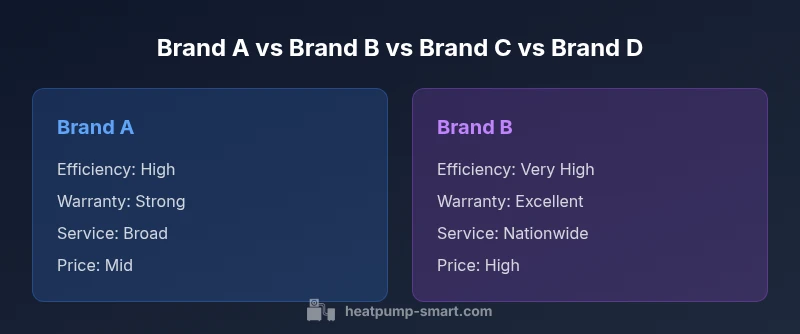
Feature Comparison
| Feature | Brand A | Brand B | Brand C | Brand D |
|---|---|---|---|---|
| Efficiency rating | High efficiency | Very high efficiency | Moderate efficiency | High efficiency |
| Reliability/warranty philosophy | Strong coverage with service network | Best-in-class compressor warranty | Standard coverage | Solid coverage |
| Service network availability | Extensive nationwide network | Wide national coverage | Regional network | Local/regional network |
| Price range (installed) | Mid-range | Mid-to-high | Low-to-mid | Mid-range |
| Best for climate | Energy savings and comfort | Extreme cold tolerance | Balanced climate performance | Moderate climates with mixed loads |
Advantages
- Clear side-by-side visibility across major criteria
- Helps budget planning and expectations
- Encourages long-term thinking over marketing hype
- Highlights service network and maintenance implications
- Supports climate‑specific decision making
Disadvantages
- Brand names may imply performance that isn’t universal
- Perf data can vary by installation quality
- Long-term costs depend on local energy prices
- Some brands may obscure refrigerant changes or warranty limits
Brand B is the overall best balance for most homes
Brand B delivers strong efficiency, broad service coverage, and predictable warranties at a mid-to-high price point. It is typically the most reliable choice for varied climates and installation scenarios, offering solid energy savings without compromising service availability.
Your Questions Answered
Which heat pump brand is most energy-efficient for cold climates?
No single brand dominates in every cold climate. Look for models with strong low‑ambient heating performance and reliable defrost cycles, plus a solid service network in your area. Review independent testing data and consult installers who have real‑world experience with competing brands in cold weather.
In cold climates, focus on low-ambient performance, defrost reliability, and a good local service network. Check independent tests and talk to installers who’ve worked with several brands.
Do warranties differ significantly between brands?
Yes, warranty length and coverage vary by brand and model. Always read what is covered, whether labor is included, and how maintenance affects eligibility. A longer compressor warranty plus a transferable system warranty often adds long‑term value, especially for rental properties.
Warranties vary by model. Look for long compressor and transferable system warranties and understand maintenance requirements.
Is upfront price a good predictor of total savings?
Not always. A higher upfront price can yield greater long‑term energy savings if the brand delivers superior efficiency and lower operating costs. Compare total cost of ownership by modeling energy savings over 10–15 years, factoring in maintenance and potential service costs.
Upfront price doesn’t always predict total savings. Compare total cost of ownership over many years to see the real value.
How important is the installer’s brand experience?
Very important. An experienced installer with brand certifications can optimize system performance, ensure proper duct sealing, and minimize noise. Verify that your chosen brand has approved, local installers with positive recent reviews.
Installer experience matters. Ensure local technicians are brand-certified and have good recent reviews.
Can I mix brands in a single home?
It’s possible but not ideal. Mixing brands can complicate warranty coverage, maintenance, and system controls. If you mix brands, plan for centralized controls and ensure compatibility across the system.
Mixing brands is possible but can complicate warranties and controls. Plan for compatibility and centralized controls.
Top Takeaways
- Prioritize efficiency, reliability, and service access
- Check warranty terms and installer qualifications
- Use a side-by-side scorecard to compare brands
- Consider total cost of ownership, not just upfront price
- Validate claims with third-party data and local installers