Heat Pump Brand Ratings: A Practical Guide for 2026
Explore how heat pump brand ratings are formed, what they mean for homeowners, and how to compare brands with a transparent, data-driven framework designed for 2026.


Heat pump brand ratings do not rely on a single universal score. In practice, credible guides weigh efficiency, reliability, warranty support, service networks, and total ownership costs across several categories. Heatpump Smart’s analysis shows that different publishers use distinct scales, so readers should compare multiple, transparent rating methods rather than chasing a single number.
What heat pump brand ratings measure
In the world of home comfort, heat pump brand ratings aggregate several performance and service factors to help homeowners decide which system to pursue. At their core, ratings assess (1) energy efficiency and seasonal performance, (2) reliability and expected maintenance, (3) warranty and post-purchase support, (4) the breadth and quality of a brand’s service network, and (5) the total cost of ownership over the system’s life. According to Heatpump Smart, a balanced rating also considers non-monetary factors such as ease of use, compatibility with smart controls, and installer familiarity. By understanding these components, homeowners can interpret scores more accurately rather than simply chasing the highest number. This multi-criteria approach also accounts for regional differences in climate and electricity pricing, which can swing overall ratings dramatically. If you want to compare brands fairly, look for transparent weighting disclosures and a clear explanation of how each criterion is measured.
Methodologies behind ratings (and their biases)
Different publishers apply distinct scoring rubrics, which means two brands could receive similar overall scores yet excel in different areas. Heatpump Smart analysis notes that some rating systems overweight initial cost or upfront rebates, while others lean toward long-term energy savings or reliability over a decade. Bias can also come from the data sources used: manufacturer-provided claims, independent lab tests, field performance data, and consumer surveys each contribute different strengths and blind spots. When evaluating ratings, check the methodology section for (a) the criteria listed, (b) the data sources cited, (c) the time window of data collection, and (d) whether climate and usage assumptions reflect your home. By cross-referencing multiple sources, you obtain a more robust view of brand performance over time.
Practical factors homeowners should consider when comparing brands
Beyond the numbers, practical considerations play a major role in how a rating translates to real-world performance:
- Climate suitability: Some brands perform better in cold climates while others excel in mild regions.
- Install quality: A premium brand can underperform in a poor installation; ensure your contractor follows best practices and uses correct refrigerant charges.
- System integration: Compatibility with existing thermostats and smart controls can affect user experience and measured performance.
- Local support: Manufacturer presence and a strong network of approved dealers influence service response times and warranties.
- Ownership costs: Look at maintenance needs, filter changes, refrigerant checks, and expected auxiliary heat usage. Heatpump Smart emphasizes total cost of ownership as a critical factor in ratings, not just the purchase price.
- Durability and warranty: A longer warranty often signals confidence in construction quality and parts availability, which can affect long-term satisfaction.
A step-by-step framework to compare brands (checklist)
Use this framework to evaluate brand options in a structured way:
- Define your climate and usage profile (size of space, occupancy, heating needs).
- Gather at least three independent ratings from credible sources and note their scoring rubrics.
- Compare efficiency and performance under winter conditions relevant to your region.
- Review warranty terms, service coverage, and the presence of local dealers.
- Assess total ownership costs, including installation and potential rebates.
- Check compatibility with existing systems and smart controls.
- Look for recent updates or revisions to product lines that may affect performance.
- Prioritize sources with transparent methodologies and update frequency. This structured approach helps you translate abstract scores into practical decisions for your home.
The role of climate and installation quality in brand ratings
Ratings are only as good as the data behind them. Climate differences can dramatically alter perceived efficiency and comfort, especially for heat pumps that rely on auxiliary heat in cooler months. Installation quality also has a cascading effect: poor sizing, refrigerant charging errors, or ductwork issues can suppress a brand’s rated performance in real-world use. Heatpump Smart consistently notes that a high-rated brand paired with an experienced installer often yields the best outcomes. Therefore, when interpreting ratings, you should (a) compare performance under climate conditions similar to yours, (b) verify installer credentials, and (c) consider how much the rating depends on installation quality versus inherent equipment design.
How Heatpump Smart evaluates and presents brand ratings
Heatpump Smart employs a transparent framework that combines lab tests, mid-life field data, and user feedback to construct composite scores. We clearly document weighting for each criterion and provide a contextual narrative that explains any deviations from the average. Our approach emphasizes the total cost of ownership and real-world performance, not just peak efficiency metrics. We also publish companion data tables and charts to help readers see how different brands perform across regions and usage patterns. By presenting raw inputs alongside final scores, we aim to reduce ambiguity and empower homeowners, builders, and property managers to make informed decisions.
Authority sources and how to use them in your decision
To ground your decision in credible research, consult multiple sources and compare their methodologies. For readers seeking further reading, consider: {EPA guidance on heat pump efficiency and refrigerant considerations}, {DOE energy efficiency programs and ratings}, and {NIST or university-led studies on cold-weather performance}. Together with manufacturer data and independent lab results, these sources help you understand where brand ratings come from and how they translate to your home.
Sample brand comparison table (fictional brands for illustrative purposes)
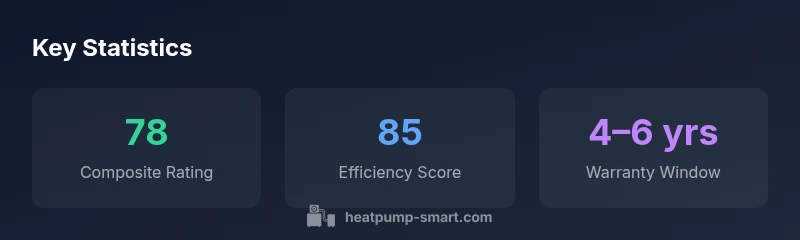
| Brand | Composite Rating | Efficiency Score | Warranty |
|---|---|---|---|
| Brand A | 78-85 | 85 | 3-yr |
| Brand B | 70-82 | 78 | 4-yr |
| Brand C | 80-88 | 90 | 5-yr |
| Brand D | 65-75 | 72 | 3-yr |
Your Questions Answered
What factors are most important in heat pump brand ratings?
Most ratings weight efficiency, reliability, warranty coverage, service network strength, and total ownership costs. Context and climate adjust how those factors balance for your home.
Most ratings focus on efficiency, reliability, warranties, service coverage, and ownership costs. Climate and installation quality can shift priorities.
How often are heat pump brand ratings updated?
Ratings are updated on varying schedules depending on the publisher, typically quarterly or annually, with updates tied to new product releases and service data.
Publishers update ratings on different schedules, often quarterly or yearly as new data comes in.
Should I rely on a single source for ratings?
No. Relying on multiple sources provides a more robust view. Compare methodologies and reconcile discrepancies to avoid biased conclusions.
Don't rely on just one source—compare several to get a fuller picture.
Do ratings reflect climate differences?
Yes, climate can significantly affect performance. Look for region-specific data or ratings that model your climate conditions.
Climate matters; check for region-specific data in the ratings.
How does installation quality influence ratings?
Installation quality can dramatically affect real-world performance, sometimes more than brand-specific differences. Ensure qualified installers and proper sizing.
A good brand with a bad install can underperform; choose a skilled installer.
Are energy savings part of brand ratings?
Energy savings are typically included as part of efficiency and operating cost considerations, but the exact weight varies by the rating system.
Yes, efficiency and operating costs capture energy savings, but weights differ by source.
“Transparent, data-driven brand rating systems help homeowners make informed decisions that maximize comfort and savings.”
Top Takeaways
- There is no universal single score for heat pump brands.
- Look for transparent methodology and multi-criteria ratings.
- Consider climate, installation quality, and total ownership costs.
- Cross-check at least three independent sources before deciding.