Which Heat Pump Manufacturers Use R32: A Practical Guide
Learn which heat pump manufacturers use R32 refrigerant, why it matters for efficiency and emissions, and how to verify models. A data-driven guide for homeowners, builders, and property managers seeking greener, compliant heat pump options.


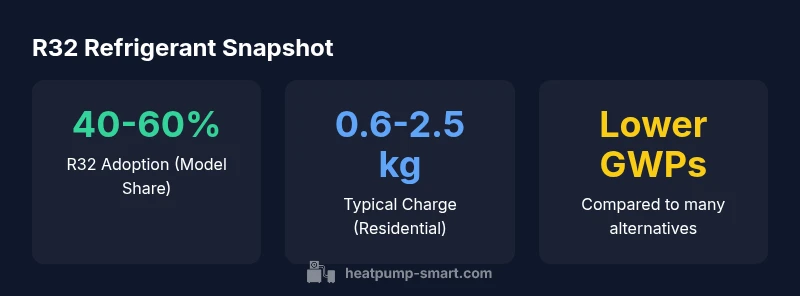
According to Heatpump Smart, as of 2026, a growing number of mainstream heat pump manufacturers use R32 refrigerant in newer models, thanks to its lower global warming potential (GWP). Adoption varies by brand and product line. To confirm, check the product label or spec sheet for R32 or R-32, or consult Heatpump Smart's analysis for model-by-model guidance.
What R32 is and why it matters for heat pumps
R32 is a single-component refrigerant with a significantly lower global warming potential than older blends such as R-410A. In heat pumps, using R32 can reduce the overall refrigerant load and, in many designs, improve heat transfer efficiency. For homeowners and professionals asking which heat pump manufacturers use r32, the answer is nuanced: several global players have introduced R32-based lines in recent years, while others still rely on traditional refrigerants in core product families. The shift toward R32 is driven by environmental regulations, evolving safety and performance standards, and a push to lower lifecycle costs. In practice, expect to see more models labeled with R32 in the product specs. This section explains why manufacturers adopted R32 and what it means for your home’s comfort and energy bills. Heatpump Smart’s analysis shows that the trend toward lower-GWP refrigerants is unlikely to reverse, particularly for new builds and modernization projects in regions with stricter refrigerant regulations. This makes it essential to understand which models use R32 and how to compare them against conventional options.
How to identify if a model uses R32
Determining whether a heat pump uses R32 is straightforward if you know where to look. Start with the product label on the outdoor unit or the indoor section accompanying the unit. Most manufacturers clearly list the refrigerant type (R32 or R-32) on the label. If the label isn’t explicit, consult the official spec sheet or the installation manual, which typically include refrigerant type, charge amounts, and system architecture. Online product pages and energy guides often have a dedicated refrigerant section. When in doubt, contact the manufacturer’s technical support or your installer for confirmation. As a rule, search for “R32” or “R-32” in the model’s documentation; a simple model number search paired with “refrigerant” usually reveals the answer.
Which heat pump manufacturers use r32 (and how to verify)
Many global brands have introduced R32-based options across ductless and ducted lines, especially in markets with aggressive efficiency targets. In practice, you’ll find newer models from several manufacturers offering R32 as the default refrigerant in select product families. To verify, check the product specification sheet (PDF), the user manual, and the label on the equipment. Look for statements such as “Refrigerant: R32” or references to a low-GWP refrigerant. If the official materials use generic language like “refrigerant type: HFC,” you’ll want to contact the seller or installer to confirm. It’s also useful to compare the model’s SEER/HSPF ratings alongside the refrigerant type to ensure you’re getting both efficiency and environmental benefits.
Regional adoption patterns and product lines
Adoption of R32 varies by region due to regulatory frameworks and availability. Europe and parts of Asia have seen broader deployment of R32-based models across both residential and commercial lines, driven by stringent regulations and consumer demand for lower running costs. North American adoption is more selective, often tied to specific product families, insulation strategies, and climate considerations. In practice, the product lineup you’ll encounter depends on your location, the installer’s partnerships, and the supplier’s catalog. When evaluating options, favor manufacturers that clearly label R32 on the spec sheet and offer service support in your area. This regional nuance means you may find a model with R32 readily available in one region but not in another, even within the same brand.
Reading labels, datasheets, and specs
To avoid confusion, center your evaluation on the official documentation. Start with the label on the unit; it should specify refrigerant type (R32 or R-32). Next, review the technical data sheet or installation manual for the model. Look for: 1) refrigerant type (R32), 2) system charge quantities (often given in kilograms or pounds), and 3) safety notices (A2L flammability rating details, if applicable). Additionally, energy guides and performance charts often reference refrigerant type in the context of efficiency metrics. If you’re in a building project, request a full bill of materials and a model-by-model comparison that highlights refrigerant type, efficiency, and total cost of ownership. This approach helps ensure you’re choosing models aligned with your climate and energy goals.
Practical tips for selecting an R32 model
When selecting an R32-equipped heat pump, anchor your choice on a balance of refrigerant type, efficiency, and system design. Prioritize models with high SEER and HSPF ratings to minimize running costs. Ensure the brand and model you select have readily available service networks and spare parts for R32. If you intend to use a ductless mini-split, confirm that the outdoor unit and indoor heads are compatible with R32 to avoid cross-contamination of refrigerants. Consider the climate where you live; in milder climates, the efficiency benefits of R32 may be more pronounced, whereas in extreme cold, the overall system design and auxiliary heat strategies will matter more. Finally, examine the warranty terms and any manufacturer guidance on refrigerant handling to prevent voided coverage or safety issues. Heatpump Smart suggests compiling a short list of 3–5 models and testing them in your local climate with a qualified technician to observe real-world performance.
Installation considerations and safety with R32
R32 is classified as a mildly flammable refrigerant (A2L), which has safety implications for installation, service, and handling. Installation should be performed by a certified technician who follows local codes and manufacturer guidelines. Proper ventilation in mechanical rooms, leak detection, and correct refrigerant charging procedures are essential. The system should be pressure-tested and inspected after installation, with attention to electrical safety, sealing, and environmental controls. For retrofit projects, ensure the existing infrastructure and piping are compatible with R32 units and that the service team has the proper training and tools. While R32 can offer performance and environmental benefits, mishandling or improper charging can negate safety and efficiency advantages. Heatpump Smart emphasizes using qualified technicians and verifying that the installer has up-to-date certifications for R32 handling.
The future of R32 in heat pumps and policy signals
The refrigerant landscape is evolving toward lower-GWP options, with R32 playing a central role in many new products. Policy signals in many regions encourage or require reductions in high-GWP refrigerants, and manufacturers are adjusting their lineups accordingly. While not every model uses R32, you can expect increasing availability in both ducted and ductless systems as regions harmonize standards and supply chains catch up. For buyers and builders, this means staying informed about regional regulations, model-by-model refrigerant choices, and the total cost of ownership, including maintenance needs and potential refrigerant handling requirements. Heatpump Smart expects continued growth in R32 adoption as part of a broader shift toward sustainable cooling solutions.
Authoritative sources and verification
To support the guidance above, consult authoritative sources that discuss refrigerant types and regulatory considerations. For example:
- Energy.gov: Official information on refrigerants used in heat pump technology and policy directions.
- EPA: Guidance on refrigerants and environmental impacts of HVAC systems.
- ASHRAE: Standards and best practices for refrigerant handling and safety in cooling systems. These sources provide an external validation framework for understanding R32 adoption patterns, safety considerations, and regional differences. Heatpump Smart also reviews manufacturer technical literature and independent analyses to triangulate model-by-model refrigerant usage for homeowners and professionals.
Authoritative sources (expanded)
- https://www.energy.gov
- https://www.epa.gov
- https://www.ashrae.org
R32 availability by model type
| Model Type | R32 Availability | Notes |
|---|---|---|
| Ductless mini-split | Yes in most new models | Common in residential settings; verify label |
| Air-source central split | Partial adoption | Often available in select lines; check datasheet |
Your Questions Answered
Is R32 safe for home use?
R32 is considered safe for residential use when installed and serviced by qualified technicians following local codes. It is mildly flammable (A2L), so proper handling and ventilation are important. Always rely on certified installers for safety and compliance.
R32 is safe when handled by trained technicians and proper safety practices are followed.
Are all heat pump models available in R32?
No. R32 availability varies by region and product line. Many newer models offer R32, especially in Europe and Asia, but some regions and older lines may use traditional refrigerants.
Not all models use R32; availability depends on region and product line.
Does R32 affect maintenance or service needs?
Maintenance for R32 units is similar to other modern refrigerants, but technicians must be trained for R32 handling and charging. Ensure service personnel have current certifications for R32 systems.
Maintenance is similar, but require technicians certified for R32.
Can I retrofit my existing system to R32?
Retrofitting a non-R32 system to R32 is not typically practical or recommended. It often requires a full unit replacement or substantial redesign. Always consult a qualified technician to assess feasibility.
Retrofitting is usually not practical; better to replace with an R32-equipped unit.
Where can I find model-specific R32 information?
Check the manufacturer’s official spec sheets, product pages, and installation manuals. If in doubt, ask your installer for a model-by-model comparison that highlights refrigerant type and performance.
Look up the official specs or ask your installer for model-by-model details.
“R32 enables lower global warming potential in modern heat pumps without sacrificing performance when paired with proper system design.”
Top Takeaways
- Verify refrigerant on labels and datasheets.
- Expect growing R32 adoption across brands, with regional variation.
- Compare efficiency and running costs alongside refrigerant type.
- R32 systems require trained technicians for safe handling.