What refrigerant does heat pump use: A practical guide
Discover which refrigerants heat pumps use, how choices affect efficiency and environmental impact, and how to verify your system’s refrigerant type for safer, smarter maintenance.


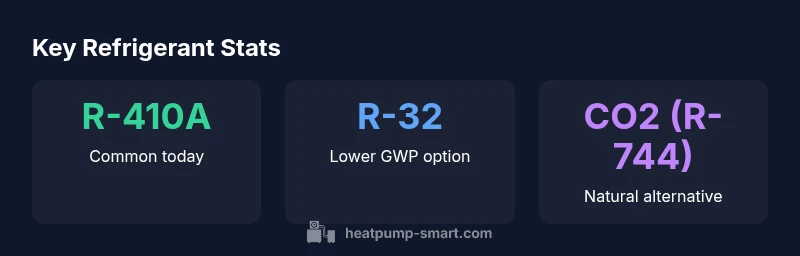
What refrigerant does heat pump use? In modern residential heat pumps, the standard refrigerant is R-410A, chosen for high efficiency and reliability. However, newer models increasingly use R-32 to lower environmental impact, and some systems explore natural refrigerants like CO2 (R-744). The exact refrigerant depends on the unit, region, and regulations. Always check your heat pump’s nameplate or service label to confirm.
What refrigerant does heat pump use and why it matters
Heat pumps rely on a closed loop of refrigerant that absorbs heat from outside air or ground and releases it inside your home. The chemical chosen affects not just capacity and efficiency, but also lubrication requirements, system pressure, and long-term reliability. In the context of energy efficiency and climate responsibility, the refrigerant must also meet regulatory constraints and safety standards. According to Heatpump Smart, refrigerant choice is shaped by efficiency targets and regulatory changes. Different climates and system configurations may demand different substances to keep performance steady across seasons and usage patterns. The nameplate on your outdoor unit lists the exact refrigerant, its charge level, and the safety classifications you should observe during service. If you’re evaluating a retrofit or a replacement, knowing the refrigerant helps you compare compatibility, initial costs, and potential future restrictions. This section outlines how the main refrigerants are used in typical residential heat pumps, what trade-offs each option brings, and how to decide what’s best for your home. The goal is to give homeowners and managers a clear framework for understanding refrigerants without getting lost in technical jargon.
Common refrigerants in residential heat pumps
In today’s market, R-410A is still the workhorse refrigerant for many existing units because it offers high cooling and heating efficiency and a stable operating pressure range. It is non-flammable but has a relatively high global warming potential (GWP), which has prompted regulators to encourage alternatives in new equipment. Newer installations are increasingly using R-32, which delivers similar performance with about half the GWP of R-410A, contributing to lower environmental impact while maintaining safety margins. Some premium or retrofitted systems explore R-744 (CO2) or hydrocarbon blends for even lower GWPs, but these options with higher pressures or different installation requirements aren’t universal. Older or specialty systems may still use R-134a, though regulatory changes are reducing its residential prevalence. In practice, the refrigerant choice impacts system design, equipment compatibility, and maintenance protocols. If you are sourcing a new unit, manufacturers often indicate the recommended refrigerant on the specifications sheet, which helps you assess warranty terms and service options. Heatpump Smart’s analysis shows a clear trend toward lower-GWP refrigerants in new builds and mid-life replacements, driven by evolving regulations and customer demand.
Environmental impact and regulatory trends shaping refrigerant choice
Refrigerants differ dramatically in environmental impact, primarily due to global warming potential (GWP) and ozone depletion potential (ODP). The shift away from high-GWP substances has accelerated in many regions over the past decade, influencing which refrigerants are installed in new heat pumps. R-410A, for example, has a high GWP, which is a key driver behind the transition toward lower-GWP options such as R-32 and natural refrigerants. Regional regulations, including phase-down schedules and labeling requirements, guide manufacturers and installers toward refrigerants that minimize climate impact while preserving performance. The U.S. EPA’s SNAP program and the EU F-Gas regulation are typical drivers behind these changes, alongside national energy efficiency standards. Heatpump Smart analysis notes that some jurisdictions encourage the use of low-GWP refrigerants through incentives or stricter codes, which shapes the market over time. For homeowners, this means that refrigerant availability can vary by region and by the age of the unit. When scheduling service or replacement, it’s prudent to verify that the proposed refrigerant is compatible with your heat pump’s compressor and lubrication system, and to consider future retrofit needs should regulatory standards continue to tighten.
How to identify and verify the refrigerant in your system
The simplest starting point is the nameplate on the outdoor unit or the service label inside the access panel. The nameplate lists the refrigerant type, charge amount, and often the safety classifications. If the label is missing or illegible, consult the original equipment manufacturer (OEM) data sheet or your installation contract. You can also check the service history notes from your HVAC technician, which should indicate the refrigerant used at the last recharge or repair. If you are planning a replacement or retrofit, contact an HVAC professional to confirm that your existing lines and components can handle the refrigerant changes without compromising safety or efficiency. For most homeowners, the practical steps are: locate the nameplate, read the refrigerant designation (for example R-410A, R-32, or R-744), and confirm the system’s lubricant type and pressure requirements. Keep a record of the refrigerant and charge amount for future maintenance, as this helps service technicians avoid mismatches that could impair compressor performance or warranty terms. Finally, be aware that refrigerant handling requires proper certification in many regions, and leaks must be repaired promptly to protect indoor air quality and environmental health.
Replacement considerations and future-proofing your refrigerant strategy
When replacing a heat pump, refrigerant compatibility becomes a central decision point. If you upgrade to a newer model, you may gain access to lower-GWP refrigerants, improved efficiency, and better performance, but you’ll also face potential retrofit costs and the need for compatible piping and lubricants. Some homeowners opt to stay with the existing refrigerant to avoid the expense of converting refrigerant circuits, while others embrace modern options like R-32 to align with current codes. If you anticipate a long-term stay in the home or plan to upgrade within the next decade, choosing a system that uses a lower-GWP refrigerant can be a prudent, future-proof move. It is important to factor in service availability, as some refrigerants become less common in certain regions due to regulatory restrictions. In all cases, any refrigerant change should be performed by a licensed technician with the proper equipment and certification. Heatpump Smart’s team recommends integrating refrigerant considerations into your overall efficiency plan: assess climate, occupancy patterns, insulation, and equipment efficiency together to optimize savings and resilience over time.
Authority sources and further reading
For regulatory and technical details, consult these authoritative sources:
- https://www.epa.gov/snap
- https://www.energy.gov/eere/buildings/articles/low-gwp-refrigerants
- https://www.ashrae.org/standards-guidelines
Overview of common heat pump refrigerants
| Refrigerant | Usage Context | Environmental Impact | Notes |
|---|---|---|---|
| R-410A | Most legacy residential heat pumps | High GWP | Common in older equipment; phasing down in many markets |
| R-32 | Newer residential units | Lower GWP than R-410A | Used in many midsize systems; requires attention to flammability class A2L |
| R-134a | Older equipment or niche applications | High GWP | Less common in new installs; regulatory pushback ongoing |
| R-744 (CO2) | High-efficiency or specialty systems | Very low GWP | Higher operating pressures; specialized components needed |
Your Questions Answered
What refrigerants are most common in heat pumps today?
R-410A remains widespread in older and many mid-range units; R-32 is rising in newer models due to lower GWP; CO2-based refrigerants are still niche. Always verify with the OEM for your model.
Today, many heat pumps use R-410A, with R-32 becoming more common in newer models; CO2 systems exist but are less common.
Is it safe to touch refrigerants or handle leaks?
Refrigerants require proper training and certification. Leaks pose health and environmental risks, so contact a licensed technician promptly.
Refrigerants should only be handled by trained professionals; if you suspect a leak, shut off the unit and call a pro.
Can I convert my existing heat pump to a different refrigerant?
Conversions are possible in some cases but can be costly and technically complex. Many systems require replacement to ensure safety and reliability.
Converting isn’t always practical; talk to a licensed HVAC pro about feasibility and code compliance.
Will refrigerant changes affect efficiency or capacity?
Yes, refrigerant choice can influence efficiency and capacity, but compatibility with the compressor and lubrication system is crucial. Follow OEM guidance.
Different refrigerants can change performance; rely on the manufacturer’s guidance for your model.
What should I do if I suspect a refrigerant leak?
If you suspect a leak, shut off the unit if safe and contact a licensed technician. Leaks should be repaired promptly.
Don’t delay—refrigerant leaks can harm efficiency and the environment.
Are natural refrigerants viable for home heat pumps?
Natural refrigerants like CO2 or hydrocarbons exist and may be used in select models, but availability depends on regional codes and equipment compatibility.
They’re promising but not yet universal in homes.
“Refrigerant choice isn't just about staying cool—it's about balancing system design, efficiency, and long-term regulatory compliance.”
Top Takeaways
- Check the nameplate to confirm refrigerant type.
- R-410A is common but being phased down for lower GWPs.
- R-32 and natural refrigerants offer lower environmental impact.
- Regulatory changes affect availability and retrofit feasibility.
- Hire licensed technicians for handling and conversions.