Who Makes Heat Pumps? A Practical Manufacturer Guide
Learn who makes heat pumps—from global manufacturers to regional players. This guide covers brands, warranties, service networks, and buying tips for energy-efficient home heating.


Most residential heat pumps are produced by a handful of global manufacturers, with major players including Daikin, Mitsubishi Electric, LG, Carrier, and Fujitsu. These companies often use regional affiliates or contract manufacturers while offering broad product lines and robust service ecosystems. When choosing, prioritize supply networks, warranty terms, and after-sales support.
Who makes heat pumps
The question who makes heat pumps touches on the core of how residential heating technology is sourced and supported. In practice, a handful of global manufacturers drive most of the market. These companies design, test, and certify heat-pump platforms that span air-source, water-source, and geothermal variants, then distribute through a mix of direct sales, distributors, and OEM partnerships. The same manufacturers also develop controls, compatibility standards, and after-sales ecosystems that power long-term comfort for homes and multifamily buildings. For homeowners and property managers, understanding who makes heat pumps matters because it influences product availability, spare parts, warranty coverage, and access to local service technicians. According to Heatpump Smart analysis, the leading players maintain broad regional footprints, invest heavily in R&D for efficiency, and balance cost with reliability across climates.
In other words, who makes heat pumps is as much about distribution and service as it is about hardware. A brand's manufacturing footprint often determines how quickly you can get repairs, find parts, and align future upgrades with the same equipment family. Buyers should also consider white-label arrangements and contract manufacturing, which can affect product naming, warranties, and the consistency of performance across markets. The takeaway: the heat pump you install is typically sourced from one of a few major manufacturers, but your experience will depend on the local network that supports that equipment.
Major Manufacturers and Market Segments
The heat pump market is led by a few large, multinational manufacturers that sell across continents and climate zones. Brands such as Daikin, Mitsubishi Electric, LG, Carrier, Panasonic, and Fujitsu dominate many residential and small commercial segments. These companies invest heavily in R&D to improve inverter-driven compressors, low-GWP refrigerants, and hybrid controls that optimize efficiency in both heating and cooling modes.
Manufacturers often operate through regional subsidiaries or licensed distributors, allowing them to tailor product lineups to local electrical standards, climate conditions, and building codes. In some regions, contract manufacturing or private-label arrangements mean that a single platform may appear under different names. The result is a broad family of models that share core components, but differ in sensors, controls, and service ecosystems.
Market segmentation is partly geography-driven: some brands are stronger in North America, others in Europe or Asia-Pacific. For homeowners, this means that product availability and service quality can vary by region even for similar performance specs. Another factor is certification and testing: AHRI, Eurovent, and Energy Star ratings influence the perceived quality and energy performance of models.
For new construction and large properties, building owners may prefer equipment from brands with proven track records in reliability and scalable installation. For renovations, compatibility with existing thermostats and smart-home platforms can be a differentiator. In sum, the major manufacturers set the baseline for heat-pump performance, but regional networks and aftermarket support determine the actual experience.
How to evaluate manufacturers
Start with reliability and service footprint. A manufacturer that ships quickly and has an extensive network of certified technicians will minimize downtime during maintenance. Check warranty terms: not just length, but what is covered (compressor, parts, labor), and whether exclusions apply. Availability of spare parts is critical for long-term operation; verify that replacement parts are stocked in your region and that authorized dealers can source them quickly.
Energy efficiency certifications matter. Look for models with AHRI rating, Energy Star certification, and Climate Zone compatibility. These ratings give a basis for comparing performance across brands and models. Consider the thermostat and controls ecosystem: does the manufacturer support common smart-home platforms, mobile apps, and remote monitoring? Finally, consider the total cost of ownership: purchase price, installation complexity, potential rebates, and maintenance needs.
Another practical approach is to talk to local HVAC contractors about which brands they trust and support in your climate. Ask about parts availability, typical service response times, and warranty claim experiences. While price is important, a slightly higher upfront cost can pay off through fewer service calls and longer-term energy savings.
Regional dynamics and contract manufacturing
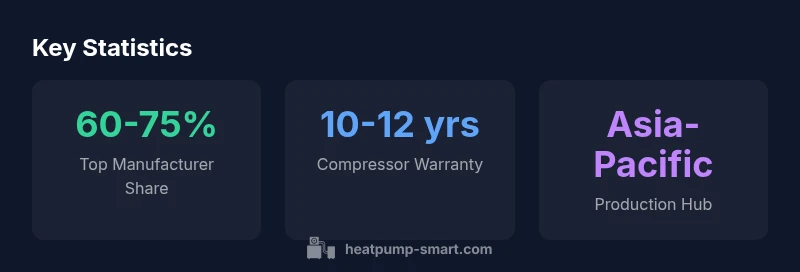
Most large manufacturers rely on regional factories and contract manufacturing partners to scale production and manage lead times. In Asia-Pacific and Europe, contract manufacturing has become commonplace, enabling brands to balance supply, cost, and capacity. ODM (original design manufacturer) arrangements may produce equipment that wears the brand name but shares underlying platforms with other lines. This model can affect warranty terms and service expectations, so read the fine print when evaluating a model.
Trade dynamics, tariffs, and supply-chain disruptions in recent years have highlighted the value of a robust domestic or near-source manufacturing footprint. A manufacturer with multiple production sites and diverse suppliers can better weather disruptions and parts shortages. For installers, this can translate into shorter lead times, fewer backorders, and easier scheduling for large-scale jobs.
In short, while the brand you recognize drives performance expectations, the geographic footprint and supplier diversity behind that brand determine how smoothly installation and future upgrades proceed.
After-sales support and maintenance considerations
Post-purchase support is often overlooked during shopping but determines satisfaction years after installation. Ensure your chosen manufacturer provides a clearly defined service ladder: warranty period, authorized service networks, and access to trained technicians with up-to-date certification. Confirm the availability of replacement parts for at least a decade after purchase, as heat pumps typically remain in service for many years.
Consider the support tools offered by the brand: remote diagnostics, online manuals, and user-friendly apps for monitoring efficiency and fault codes. A strong dealer network can reduce downtime and help with seasonal maintenance tasks that keep efficiency high. Finally, verify that your contractor has experience with the specific model family and climate you face. Investing in a brand with comprehensive support reduces the risk of costly downtime and ensures consistent performance across seasons.
Common myths about heat pump manufacturers
Myth: All brands perform the same in your climate. Reality: Local climate and system design matter, and some brands optimize for cold-weather performance more effectively. Myth: The cheapest unit is the best choice. Reality: Total cost of ownership, including maintenance and energy use, often favors mid-range models with strong service networks. Myth: Private-label models are inherently inferior. Reality: Private-label platforms can be identical in core technology but may differ in warranties or dealer support. Myth: Bigger brands always offer better service. Reality: Regional coverage and local authorized technicians can be more important than brand size. Myth: Warranties guarantee you will never pay for service. Reality: Warranties have limitations; read what is covered and for how long, and plan for routine maintenance to avoid problems.
Overview of manufacturer considerations
| Aspect | Manufacturer approach | Notes |
|---|---|---|
| Warranty terms | 5-12 years | Most brands offer 5-12-year coverage for components or overall systems |
| Service network | Extensive regional dealers | Authorized technicians improve maintenance access |
| Efficiency certifications | AHRI/Energy Star | Certifications guide model comparisons |
Your Questions Answered
Who makes heat pumps?
Heat pumps are produced by several large multinational brands that design core platforms, with regional subsidiaries and distributors handling sales and service. The market also features contract manufacturers that supply equipment under different brand names.
Heat pumps come from several large brands, with regional networks handling sales and service. Some units may also come from contract manufacturers under private labels.
Are there differences in reliability between brands?
Reliability varies by model, climate, and installation quality. Brand reputation often correlates with service networks and availability of replacement parts, but proper sizing and professional installation are equally important.
Reliability depends on the model and how well it’s installed, plus service and parts availability.
Do all manufacturers offer similar warranties?
Most major brands offer multi-year warranties, but terms vary by component and region. Always read the warranty details to understand what is covered and for how long, including any exclusions.
Warranties differ; read the terms to know coverage and exclusions.
How can I verify service availability in my area?
Ask for local authorized dealers and technicians, check response times, and confirm access to spare parts in your region. A strong local network reduces downtime and simplifies maintenance.
Check for local authorized dealers and parts availability to reduce downtime.
Branded vs. private-label models—what should I know?
Private-label or ODM models can share core technology with branded lines but may differ in warranty or dealer support. Always verify the exact terms and what the local service network covers.
Private-labels can be similar but check terms and local service support.
What certifications should I look for when evaluating manufacturers?
Look for AHRI certification, Energy Star rating, and climate-zone performance data. These help you compare efficiency and ensure the unit is appropriate for your environment.
Seek AHRI, Energy Star, and climate-zone data to compare models.
“Choosing a heat pump should go beyond initial price. A manufacturer with a robust service network and readily available parts reduces risk and ensures dependable comfort.”
Top Takeaways
- Identify major manufacturers first to ensure parts availability.
- Prioritize brands with wide service networks in your area.
- Check warranty length and coverage details for long-term protection.
- Consider regional production and supply-chain reliability.
- Compare models using official efficiency ratings across brands.