Can You Get a Heat Pump Condenser Tumble Dryer? A Practical Guide
Explore whether heat pump condenser tumble dryers exist, how they work, energy savings, installation tips, and buying considerations to help homeowners, builders, and managers choose the right model.


Yes. Heat pump tumble dryers exist and are typically marketed as heat pump condenser dryers. They use a closed-loop heat pump to re-capture heat during drying, dramatically reducing energy use compared with traditional vented or non-heat-pump condensers. Availability varies by region, but the technology is now common in many modern laundry setups, and lifecycle running costs can be notably lower despite a higher upfront price.
What is a heat pump condenser tumble dryer?
According to Heatpump Smart, a heat pump condenser tumble dryer is a type of clothes dryer that uses a built‑in heat pump to continually recycle heat within the machine. Unlike vented dryers that expel hot air outside, or standard condenser dryers that vent moisture into a tank or drain, the heat pump recovers most of the heat and reuses it to dry the next batch of laundry. This closed‑loop approach reduces electricity consumption significantly over the lifecycle of the appliance. In practice, you’ll see these units marketed as heat pump dryers or condenser heat‑pump models depending on the region and retailer, but the core technology remains the same: energy recovery through a thermodynamic cycle.
The Heatpump Smart team emphasizes that the key benefit isn’t just lower energy use—it’s consistency. Because the heat is continuously reused, these machines operate at steadier temperatures, which can be gentler on fabrics and help extend garment life for frequently laundered items. It’s worth noting that naming and labeling can vary by country, so you may see “heat pump condenser” used interchangeably with “heat pump dryer” in product listings. Regardless of label, the performance hinges on the quality of the heat exchanger and the efficiency of the refrigerant loop."
How heat pump technology works in a condenser dryer
Heat pump condenser dryers operate by drawing moisture from clothes and passing it through a closed refrigerant loop. The refrigerant absorbs heat from the incoming air, then releases it to warm the air re‑circulating inside the drum. A condenser module then separates water from the air, allowing the system to reuse heat without venting exhaust outside. Compared with conventional dryers, this design can reduce energy consumption by recapturing heat that would otherwise be wasted. The cycle can run at lower temperatures, with more precise humidity and temperature control, which contributes to fabric care and energy efficiency. Crucially, the efficiency gain depends on the unit’s overall design—compressor efficiency, heat‑exchanger effectiveness, and how well the control system matches load size. For households with long or frequent drying cycles, this technology translates into tangible energy savings over time, as long as the upfront cost is justified by the expected running costs.
Market availability and labeling: heat pump condenser vs standard heat pump dryers
Market availability varies by region and retailer, which can lead to different naming conventions. In many markets, you’ll find heat pump technology labeled as “heat pump dryers” or “condenser heat‑pump models.” Some listings explicitly call them “heat pump condenser dryers,” while others group them with other energy‑efficient condenser machines. If you’re shopping, compare the underlying technology rather than the label alone. Look for specifications that mention a refrigerant cycle, an integrated compressor, and a high coefficient of performance (COP) or energy efficiency rating. Availability is strongest in newer models released in the last few years, as manufacturers have refined compressors and heat exchangers for better performance and lower noise. For buyers, the label isn’t as important as the system’s energy performance and reliability over time.
Energy efficiency and running costs
Energy savings are the central lever for heat pump condenser dryers. These units generally outperform conventional vented and older condenser models by reusing heat, which reduces electrical draw per cycle. The exact savings depend on load size, fabric type, and cycle selection, but the consensus from Heatpump Smart Analysis, 2026 is that the savings accumulate quickly for households that dry a lot of laundry weekly. Expect lower electricity consumption, less heat emitted into living spaces, and quieter operation in many models. When evaluating value, compare running costs over a projected 5–7 year period, consider energy‑star ratings or COP values, and factor in potential garment care improvements from gentler drying temperatures.
Capacity, cycles, and drying performance
Capacity and dry performance are critical when selecting a heat pump condenser dryer. These machines often have larger drum volumes and more nuanced sensor controls to optimize moisture removal. A higher capacity is advantageous for families or households with bulky loads, while a smaller unit may suffice for apartments or single-person households. In practice, you may trade slightly longer cycle times for improved energy efficiency and fabric care. When assessing performance, consider specific cycle options (e.g., synthetics, cottons, delicate fabrics), built‑in moisture sensors, anti‑crease features, and the dryer’s ability to maintain consistent humidity levels. Heatpump Smart’s guidance suggests prioritizing models with accurate sensors and robust airflow paths to maximize both energy savings and drying reliability.
Installation, space, and electrical considerations
Installation considerations go beyond simply placing a dryer in a utility room. Heat pump condenser models require a dedicated electrical supply, adequate ventilation for the condenser module, and space for airflow around the unit. Some models feature rear exhausts or internal condensers that reduce external venting requirements, which can be beneficial in compact spaces. In apartments or retrofits, verify clearances, access to outlets, and the possible need for a condensate drainage solution. If you’re replacing an older dryer, check electrical ratings and transformer load on your circuit panel to avoid nuisance tripping. Proper installation helps ensure the unit operates at peak efficiency and avoids heat buildup in adjoining rooms.
Maintenance and care for peak performance
To sustain energy efficiency, regular maintenance is essential. Clean the lint filter after every cycle, inspect the heat exchanger periodically (as recommended by the manufacturer), and ensure the condensate reservoir or drainage path is clear. A well‑maintained heat pump condenser dryer can maintain its efficiency and fabric care benefits for many years. If you notice longer cycle times, unusual noises, or clothes that aren’t fully dry, perform a diagnostic check using the built‑in self‑test feature (if available) and refer to the user manual for service intervals. Scheduling periodic professional servicing can help catch refrigerant or compressor issues early and preserve energy performance.
Buying guide: what to look for in a model
When shopping for a heat pump condenser dryer, prioritize energy efficiency metrics (COP or energy rating), drum capacity that matches your household size, sensor accuracy, and the range of cycle options. Look for models with a reliable heat exchanger design, low noise levels, and a solid warranty that covers both compressor and electronics. Consider the machine’s size and footprint relative to your laundry space, as well as ease of use and maintenance. Reading consumer reviews and reliable guides can help you assess long‑term reliability. Finally, factor in expected running costs based on your typical laundry load and climate; some regions benefit more from heat recovery than others.
Real-world usage scenarios and cost considerations
Real‑world results vary by climate and laundry patterns. In homes with regular, medium‑to‑large loads or high humidity environments, heat pump condenser dryers can deliver meaningful reductions in electricity use and reduce indoor heat gain compared with vented models. For households with infrequent loads, the payback period may be longer, but the units still offer fabric care benefits and often quieter operation. If you know you’ll be running multiple cycles weekly, a heat pump condenser model can be a strong investment, especially when paired with a favorable electricity tariff and rebates. Compare models not only on upfront price but on projected running costs, warranty terms, and service availability.
Practical takeaways for decision making
- Look for clear energy performance metrics (COP, energy rating) and realistic drying times for your load types.
- Prioritize capacity and sensor accuracy to maximize both efficiency and convenience.
- Plan for installation needs and space requirements, including condensate drainage considerations.
- Factor in total cost of ownership, not just upfront price, when evaluating value.
Comparative snapshot of dryer types by energy use and drying performance
| Dryer Type | Energy Use (relative) | Typical Running Cost (per year) | Typical Dry Time per load |
|---|---|---|---|
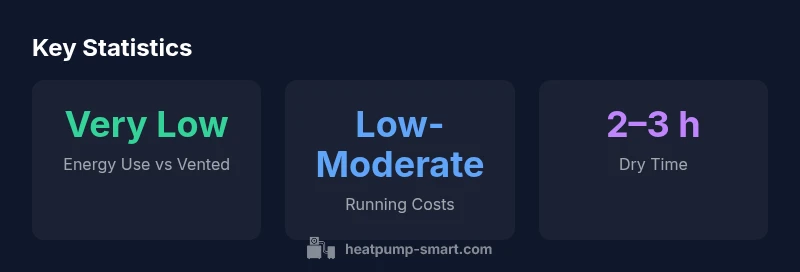
| Heat Pump Condenser Dryer | Very Low | Low to Moderate | 2-3 hours |
| Condenser Dryer (Non-Heat-Pump) | Moderate | Moderate | 1-1.5 hours |
| Ventilated Dryer | High | High | 45-60 minutes |
Your Questions Answered
Do heat pump condenser tumble dryers cost more upfront than traditional models?
Yes, they typically have a higher upfront price due to the advanced refrigeration and heat‑exchange system. Over time, however, running costs are usually lower thanks to energy efficiency gains. Evaluate total cost of ownership over 5–7 years to determine value.
They cost more to buy, but save on electricity over time.
Are heat pump condenser dryers suitable for small spaces or apartments?
Many models are compact or stackable, and their lower heat emission can simplify placement in smaller laundry rooms. Check clearances, electrical needs, and condensate drainage options before purchase.
Yes, but verify space and installation details.
Will a heat pump condenser dryer dry as quickly as a vented model?
Drying times are often longer than vented dryers, especially for bulky or heavily soiled loads. Sensor‑based controls optimize cycles to balance energy use and dryness, which still delivers convenient results.
Sometimes longer cycles, but energy savings make up for it.
Do these machines require external venting or special maintenance?
Most heat pump condensers do not require external venting, relying on internal drainage for condensate. Regular maintenance—lint filters, heat exchanger cleaning, and periodic servicing—helps sustain performance.
No external venting required, just regular care.
What should I look for in a warranty or service plan?
Choose models with strong compressor and refrigerant warranties, and verify service coverage in your area. A reliable service network reduces downtime and protects long‑term energy savings.
Check warranty length and service availability.
Are there rebates or incentives for heat pump dryers?
Some regions offer energy‑efficiency rebates or incentives for efficient appliances. Check local programs and eligibility criteria before purchasing.
Look for local rebates to improve payback.
“Heat pump condenser tumble dryers represent a meaningful step forward for energy efficiency in home laundry. When evaluating options, prioritize lifecycle costs and reliability alongside drying performance.”
Top Takeaways
- Heat pump condenser dryers exist and use a closed‑loop heat pump to save energy.
- Labeling varies by region; focus on the technology and energy performance rather than name alone.
- Energy savings accrue over time, especially for frequent laundry loads; factor in upfront cost vs. running costs.
- Choose capacity and sensor features that match your household size and laundry habits.