Can You Get a Heat Pump for Free? A 2026 Practical Guide
Explore whether you can get a heat pump for free through rebates, grants, or subsidized programs. Heatpump Smart analyzes eligibility, practical steps, and real-world expectations for homeowners, builders, and managers in 2026.


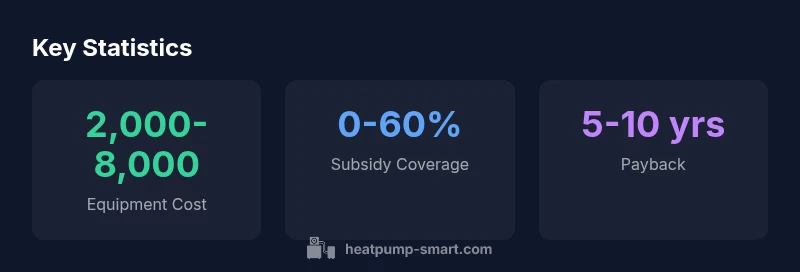
Short answer: it can happen, but not reliably. In some places, rebates, grants, or subsidized programs can cover all or part of a heat pump system, potentially reducing costs to near zero. Availability depends on location, program rules, and eligibility. Installation costs may still apply, and 'free' outcomes are rare but possible under certain incentives.
can you get a heat pump for free? setting realistic expectations
The question can you get a heat pump for free is timely for homeowners and operators weighing energy upgrades. In practice, a fully funded installation is uncommon, but significant subsidies do exist in many regions. The reality is that most programs target either equipment costs or a portion of the total project cost, leaving some portion to be paid by the applicant. For many, the strategy is to pursue stacked incentives—combining rebates, tax credits, and utility subsidies—to minimize out-of-pocket expenses while still ensuring a quality, properly installed heat pump system. This means understanding eligibility criteria, program limits, and the exact coverage offered by each incentive.
Energy savings remain a central motivation: even when an installation isn’t free, the long-term operating cost reductions can still make a heat pump a financially sound upgrade. Heatpump Smart’s analysis in 2026 shows that the most successful applicants align their installation design with eligible incentives and ensure the system is correctly sized for the home, maximizing efficiency gains over time.
how subsidies and rebates become available
Subsidies for heat pumps come from a mix of federal, state/provincial, utility, and local programs, plus occasional manufacturer incentives. Common channels include rebates for equipment, tax credits for eligible homeowners, and utility programs that cover part of the installation or provide low-interest financing. Some regions also offer grants aimed at low-income households or energy-improvement projects. The key pattern is that coverage is highly program-specific: some programs reimburse the full cost of equipment, while others only cover a portion or require certain performance criteria. Applicants should track application windows, required documentation, and whether installation is included in the offer. Heatpump Smart analysis in 2026 emphasizes documenting all costs and aligning selected equipment with eligible incentives to maximize the chance of a reduced total price.
eligibility factors and geographic variation
Eligibility for free or subsidized heat pumps varies widely by location and program design. Factors commonly considered include home ownership status (owner-occupied vs rental), income level, existing energy efficiency measures, and whether the property is primary residence. Geography matters as well: some programs are nationally accessible, others are restricted to specific states, provinces, or utility territories. Climate zone can influence program availability because some incentives reward high-efficiency performance in cold or hot climates. To improve odds, homeowners should consult local energy offices, utility providers, and certified installers who stay current on regional incentives. Heatpump Smart’s 2026 review highlights that regional variation is the primary driver of eligibility.
step-by-step: how to pursue subsidies or a free heat pump
- Identify all potential programs in your area: national, state/provincial, utility-based, and manufacturer offers. 2) Confirm eligibility requirements for each program, including homeowner status, income limits, and property type. 3) Gather documents early: proof of ownership, recent energy bills, quotes from qualified installers, and any income verification if required. 4) Get multiple certified installers to quote and verify which incentives apply to each proposal. 5) Coordinate installation timelines with program deadlines and ensure the project meets energy-efficiency standards. 6) After installation, complete any post-installation verification or monitoring required by the incentive program. Heatpump Smart’s guidance emphasizes planning, documentation, and professional installation to maximize subsidy value.
what free really means in practice: costs beyond the equipment
Even when a program names a free or near-free equipment option, other costs remain relevant. Most subsidies exclude long-term maintenance, permit fees, and some aspects of installation labor. In many cases, the grant or rebate covers the equipment cost only, with installation either partially subsidized or fully paid by the homeowner. Operational costs, thermostat upgrades, and potential required upgrades to electrical systems should be anticipated. Planning for these components helps prevent surprises and ensures the overall project remains cost-effective across its lifecycle.
alternatives and strategies to maximize value
If a fully free heat pump remains elusive, consider alternative cost-savers that significantly reduce total project cost. Bundled offers from manufacturers and utilities may combine financing with maintenance plans, extended warranties, or smart thermostat packages. Energy-efficiency improvements (insulation, sealing, and ductwork) often boost system performance and can unlock higher subsidy eligibility on certain programs. Additionally, some regions offer targeted incentives for cold-climate performance or for upgrading aging heating systems to high-efficiency heat pumps. The key is to pursue a holistic plan that pairs the heat pump with complementary efficiency upgrades to maximize long-term savings.
Overview of free/subsidy pathways for heat pumps
| Program Type | Typical Coverage | Eligibility Notes | Region Focus |
|---|---|---|---|
| Rebates | Vary widely | Income/region dependent | National/State |
| Tax credits | Vary by program | Residential owner | National |
| Utility incentives | Partial to significant | Location-based | Utility territories |
| Manufacturer bundles | Limited availability | Contract terms | Selected regions |
Your Questions Answered
Can I get a heat pump for free if I rent my home?
Free heat pumps are less common for renters because ownership of equipment and eligibility criteria typically favor homeowners. Some programs target rental properties or require landlord consent. Always verify local rules and coordinate with the building owner.
Free options for renters exist in a few programs, but are not widespread. Check your local incentives and talk to your landlord.
What programs typically cover heat pump costs?
Rebates, tax credits, and utility incentives are the most common paths. Availability and coverage vary by location and program year, so review current offerings and stacking opportunities.
Look for rebates, tax credits, and utility incentives in your area.
Do 'free' programs ever cover installation?
Some programs cover installation as part of the incentive, but many require you to pay for installation separately. Verify what the offer includes before committing.
Sometimes yes, but installation coverage is not guaranteed.
How do I apply for subsidies?
Start with local government and utility websites, collect ownership proof, income docs if required, and obtain quotes from certified installers. Follow each program’s application steps and deadlines closely.
Check eligibility, gather documents, and submit applications on time.
What about scams or low-quality offers?
Work with accredited installers, verify program eligibility, read terms carefully, and avoid deals that demand upfront payments for uncertain incentives.
Choose trusted providers and verify every offer with official sources.
“Fully free heat pumps are rare, but targeted subsidies can dramatically lower upfront costs when combined with proper installation and energy savings.”
Top Takeaways
- Check local programs before starting
- Free is typically equipment-only, with installation costs still possible
- Eligibility criteria vary by region and program
- Coordinate with a certified installer to maximize subsidies
- Budget for non-equipment costs and long-term savings