Cost of a 4-Ton Heat Pump: A Comprehensive Guide for 2026
Explore the full cost of a 4-ton heat pump, including equipment, installation, rebates, and payback. Heatpump Smart provides data-driven guidance to help homeowners and builders budget accurately for long-term savings.


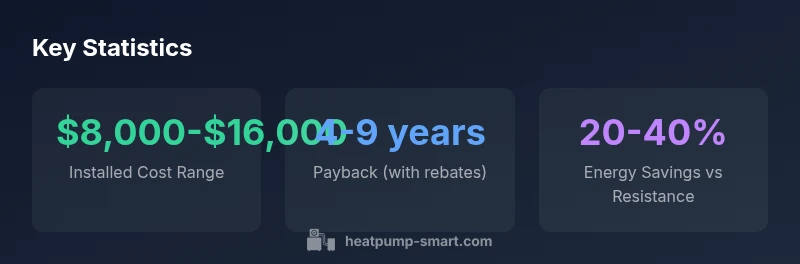
Estimated cost for a new 4-ton heat pump installed typically ranges from $8,000-$16,000, depending on climate, existing ductwork, and electrical upgrades. This guide breaks down components, regional price differences, and potential rebates to help homeowners and builders budget accurately. Heatpump Smart explains how to comparative shop and plan for long-term savings beyond the sticker price.
Why a 4-Ton Unit Is a Common Benchmark
When homeowners start planning a heating upgrade, the size of the system matters. A 4-ton heat pump is a common benchmark for many mid-sized homes in moderate climates, balancing capacity with efficiency. The cost 4 ton heat pump is driven by load calculations, climate, insulation, and existing ductwork. According to Heatpump Smart, upfront budgeting hinges on correctly sizing the system to meet peak demand; oversizing or undersizing can erase potential savings and raise operating costs. In practice, the total cost depends not only on the equipment but also on installation complexity and regional labor rates. For a typical house, a 4-ton unit can provide reliable heating and cooling with high SEER and COP ratings, but the decision should be grounded in a formal load calculation rather than assumptions. Homeowners and builders should think of the cost 4 ton heat pump as a combination of equipment price, installation, and long-term energy bills. This section outlines how size, climate, and existing infrastructure shape the total investment.
In many projects, the first step is a professional load calculation using Manual J and local climate data. That ensures the 4-ton size matches the home's heat loss and heat gain, reducing the risk of oversized equipment that wastes energy and increases upfront costs. Heatpump Smart’s analysis emphasizes the value of precise sizing, better controls, and properly configured ductwork to maximize comfort and minimize wasted energy over the system's life. This perspective helps homeowners translate a single number—4 tons—into a complete cost picture that includes equipment, installation, and ongoing energy bills.
Understanding the Cost Components
Breaking down the total price helps you negotiate confidently and avoid sticker shock. The main cost components for a cost 4 ton heat pump project typically include:
- Equipment price: $3,000-$7,000
- Installation labor: $2,000-$6,000
- Electrical upgrades: $800-$3,000
- Ductwork changes or retrofit: $1,000-$5,000
- Permits and inspections: $100-$1,000
- Thermostats and controls: $200-$600
Note that the ranges reflect regional differences, system features (smart vs. basic controls), and the need for any ancillary work (electrical panel upgrades, new breakers, or zoning). In addition, some contractors bundle refrigerant line sets and condenser coil work into the equipment price, while others itemize them separately. When you estimate a cost 4 ton heat pump project, it's wise to request a written scope of work that clearly lists each line item and its associated labor. Finally, don’t forget to budget for post-install checks and a start-up service, which ensure the system is tuned for efficiency and comfort from day one.
Regional Variations and Climate Impacts
Where you live can dramatically shift total installed costs and long-term savings. Labor rates vary widely between states and metro areas, and building codes or permit requirements can add time and expense to a project. Climate also matters: in milder regions, the cooling portion may dominate the load, while in harsh winter zones the heating burden drives equipment sizing and electrical demand. These factors influence both price and performance for a cost 4 ton heat pump. Heatpump Smart analysis shows that urban areas with higher labor costs often see the installed price trend higher, while rural communities may benefit from lower overhead. Conversely, regions with aggressive utility rebates or state incentives can reduce net cost substantially. When planning, compare installed costs in your climate zone and include potential ductwork or insulation improvements that may be required to achieve the rated efficiency. The goal is to align upfront investment with anticipated energy savings and comfort gains over the system’s life.
Running Costs and Efficiency
A key part of evaluating a 4-ton heat pump is understanding running costs and how efficiency translates to savings. Modern heat pumps achieve high SEER (seasonal energy efficiency ratio) and COP (coefficient of performance) ratings, typically range from mid-teens to well above twenty in the SEER metric and COPs above 3 in heating mode. Higher efficiency units cost more upfront but reduce annual energy bills enough to improve total ownership value over time. In practice, the cost 4 ton heat pump project with a highly efficient model can deliver meaningful savings, especially in climates with high electricity prices or significant heating demand. Heatpump Smart analysis shows that the actual energy cost savings depend on usage patterns, setback temperatures, and the efficiency tier chosen. For many homeowners, the combination of a high-efficiency unit with proper zoning, smart controls, and good insulation yields the best return on investment over the life of the system. Also consider the longer-term maintenance costs, as a well-maintained system maintains efficiency and avoids expensive repairs.
Financing, Rebates, and Payback
Upfront cost is only part of the story. Financing options, manufacturer rebates, and local utility incentives can substantially improve the economics of a cost 4 ton heat pump. Many programs provide credits or rebates that reduce the installed price by a portion of the cost, and some utilities offer time-of-use rates that favor heat pumps during certain periods. Because incentives vary by location and year, it’s essential to verify current programs before purchasing. The typical payback period—how long it takes for energy savings to cover the extra upfront cost—depends on climate, usage, electricity prices, and the size of incentives. In many cases, payback falls within a multi-year window, and rebates can shorten that period further. Heatpump Smart notes that buyers who plan for incentives, and who select a system with a robust warranty and service plan, can achieve a favorable total cost of ownership even if the upfront price is higher. Always obtain a formal written proposal that itemizes rebates and total costs so you can compare offers on a like-for-like basis.
Installation Tips to Manage Cost
To keep the cost of a cost 4 ton heat pump project under control and maximize value, follow a disciplined procurement process. Start with multiple bids from licensed installers who are familiar with heat pump systems and energy codes in your area. Ask for a single, comprehensive scope of work that includes equipment, ductwork, electrical upgrades, permits, start-up, and a maintenance plan. Verify that the contractor performs load calculations (Manual J) to confirm the chosen size and checks the refrigerant charge, airflow, and thermostat controls during startup. Consider phased implementation if your budget is tight, such as installing the outdoor unit now and postponing a full duct upgrade until a future renovation. Compare offerings for air-source vs. geothermal options if you are exploring alternatives, and ensure the selected model has high efficiency ratings and a strong warranty. Finally, factor in long-term service costs and the availability of local technicians who can service the system for many years.
Quick-start Checklist for Your 4-Ton Project
- Confirm load calculation and confirm that a 4-ton unit is appropriate for your home.
- Get at least three written proposals with itemized scopes and pricing.
- Check permits, electrical upgrades, and ductwork requirements before signing.
- Choose a high-efficiency model with a solid warranty and a reputable installer.
- Plan for incentives, rebates, and tax credits; estimate the net installed price after savings.
- Schedule professional startup, airflow check, and seasonal maintenance.
Comparison of installation scenarios for a 4-ton heat pump
| Scenario | Estimated Cost Range | Notes |
|---|---|---|
| New installation (air-source) | $8,000-$14,000 | Typical range excluding ductwork and upgrades |
| Replacement (fossil to heat pump) | $9,000-$16,000 | Includes unit swap and potential efficiency gains |
| Retrofit with existing ductwork | $6,500-$12,000 | Lower end if ducts fit without major work |
Your Questions Answered
What factors influence the cost of a 4-ton heat pump?
Equipment price, installation complexity, ductwork, electrical upgrades, permits, and regional labor rates all affect the total. Site specifics and existing infrastructure often push costs higher or lower.
Cost is driven by equipment, installation, and regional factors; expect variations based on your home and location.
Are rebates or tax credits available for 4-ton heat pumps?
Yes, programs exist but vary by location and year. Check federal, state, and utility incentives to reduce upfront costs.
There are incentives, but they depend on where you live and when you purchase.
How long is the typical payback period?
Payback commonly ranges from several years to a decade, depending on climate, usage, and rebates.
Payback varies with climate, usage, and rebates.
What maintenance does a 4-ton heat pump require?
Annual inspections, filter checks, coil cleaning, and thermostat calibration help sustain efficiency.
Keep up with annual service and simple maintenance.
Should I upgrade ductwork or just install the unit?
Duct upgrades improve performance and efficiency. If ducts are leaky or undersized, upgrading can yield meaningful gains.
Ducts matter—upgrades can boost efficiency and comfort.
“A 4-ton heat pump can deliver substantial energy savings, but the upfront cost requires careful budgeting with incentives and financing.”
Top Takeaways
- Compare total installed cost before committing
- Account for ductwork, electrical upgrades, and local rebates
- Incentives can shorten payback and improve ROI
- Choose high-efficiency models for long-term savings