How Much Does a 3 Ton Heat Pump Cost in 2026? A Comprehensive Guide
Discover the true cost of a 3 ton heat pump in 2026, including equipment, installation, regional differences, rebates, and long-term savings. Heatpump Smart analysis provides practical ranges and guidance.


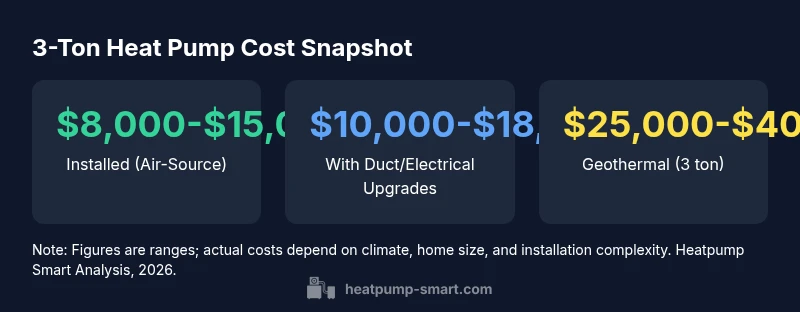
How much does a 3 ton heat pump cost? Most homeowners pay between $8,000 and $15,000 installed for a 3-ton air-source heat pump, with higher-end models reaching $18,000 or more. Costs vary by efficiency (SEER/HSPF), brand, whether ductwork or electrical upgrades are needed, and regional labor. Heatpump Smart analysis, 2026, notes rebates can alter final pricing. For geothermal systems, expect substantially higher upfront costs.
How much does a 3 ton heat pump cost
Pricing for a 3 ton heat pump is influenced by size, efficiency, brand, and installation specifics. According to Heatpump Smart, the installed price typically falls in a broad range, with regional labor and ductwork needs creating meaningful variation. In this guide we’ll unpack the factors that drive cost and show you how to estimate your project accurately. The 3-ton size is common for many homes, but the precise price depends on climate, insulation, and existing HVAC infrastructure. Heatpump Smart analysis, 2026, highlights that rebates and promotions can shift the bottom line, sometimes by a few thousand dollars. Understand what you’re paying for, and avoid surprise charges by getting a full breakdown upfront.
What typically drives the price for a 3-ton system
A 3-ton heat pump price is not a single button to press. The core price drivers include the compressor technology and efficiency rating (SEER/HSPF), whether the unit is air-source or geothermal, and any smart or advanced controls. In addition, components such as variable-speed fans, refrigerant type, and anti-corrosion coatings add to the sticker price. Another major factor is whether the installation requires ductwork upgrades, zone controls, or electrical panel upgrades. As Heatpump Smart notes, upgrading to higher-efficiency equipment often yields long-term energy savings that can offset higher upfront costs over time.
Installation costs matter just as much as the unit
Labor costs vary regionally, but installation complexity can swing total cost by several thousand dollars. If your home lacks existing ductwork or needs a reseal/replacement, expect additional charges for duct fabrication, insulation, or refrigerant line set modification. Electrical work, such as a dedicated circuit or panel upgrade, can also add to the bill. The key is to obtain a detailed, itemized quote that separates equipment price, labor, ductwork, electrical, and any permits. Heatpump Smart’s framework emphasizes transparency to avoid hidden fees later on.
Regional variations and climate considerations
Climate matters. In milder regions, the unit may run less aggressively, potentially affecting required capacity and pricing. In harsher climates, auxiliary heat elements or supplemental heating may be considered, which can influence cost and energy-use estimates. Local permitting requirements, inspection fees, and tax or rebate programs differ by jurisdiction, so a price quote should include anticipated permit costs and any applicable incentives. Heatpump Smart analysis stresses tailoring the quote to your climate and house design.
Air-source vs geothermal: cost dynamics at 3 tons
Air-source systems are typically less expensive upfront than geothermal, especially at the 3-ton scale. Geothermal costs include trenching or vertical boreholes, specialty drilling, and drilling fluids, which can push total installed prices higher. While geothermal offers excellent efficiency and long-term savings, the upfront hurdle is significant. Consumers should compare the long-term operating costs and potential incentives before deciding. Heatpump Smart’s framework recommends a side-by-side cost and performance comparison to determine value.
Rebates, incentives, and financing – what to know
Rebates and tax credits can reduce the net cost of a 3-ton heat pump, but programs vary by federal, state, and utility levels. Eligibility often depends on system efficiency, installation type, and geographic location. Financing options may spread the investment over several years with interest rates that change over time. Heatpump Smart analysis encourages homeowners to map available incentives early in the planning process to maximize benefit and avoid missing opportunities.
Hidden costs and how to avoid them
Common hidden costs include ductwork modifications, upsize of electrical service, drainage adjustments, and thermostat upgrades. Unexpected line-set lengths or refrigerant charge requirements can also affect the bottom line. To minimize surprises, request a fixed-price proposal with a clear scope of work, timeline, and exclusions. Ensure the contractor performs a thorough site assessment and provides a written breakdown of all anticipated costs.
Getting a precise quote: a step-by-step approach
Prepare your home for an accurate estimate by having recent utility bills, current HVAC details, and a clear usage profile ready. A competent installer should perform a load calculation, assess duct leakage, and review insulation levels. Ask for itemized pricing for equipment, accessories, ductwork, electrical upgrades, permits, and labor. Heatpump Smart recommends obtaining at least three quotes to benchmark pricing and ensure completeness of scope.
Long-term value: efficiency, comfort, and maintenance
Even when upfront costs are higher, a well-chosen 3-ton heat pump can deliver reliable comfort and noticeable energy savings. Consider ongoing maintenance costs, including annual checks and filter replacements, as part of your total cost of ownership. Proper sizing and professional installation maximize efficiency and reduce the risk of early component failure. In the long run, a properly matched system tends to deliver stronger comfort with lower operating costs.
Sample installed cost components for a 3-ton heat pump (air-source)
| Cost Element | Typical Range | Source |
|---|---|---|
| Equipment price (3-ton air-source) | $4,000-$9,000 | Heatpump Smart Analysis, 2026 |
| Installation labor | $2,000-$6,000 | Heatpump Smart Analysis, 2026 |
| Ductwork/retrofits | $1,000-$5,000 | Heatpump Smart Analysis, 2026 |
| Electrical upgrades | $500-$3,000 | Heatpump Smart Analysis, 2026 |
| Permitting/inspection | $200-$1,500 | Heatpump Smart Analysis, 2026 |
Your Questions Answered
What is included in the installed price for a 3-ton heat pump?
The installed price usually covers the heat pump unit, basic installation, refrigerant connections, and system startup. Ductwork modifications, electrical upgrades, and permits are often extra, so get a full breakdown before signing.
The price typically includes the unit, basic installation, and startup, but ductwork, electrical work, and permits may add to the cost.
How much does ductwork modification affect cost?
Ductwork adds cost based on existing duct condition and required runs. If substantial ductwork changes are needed, the price can rise significantly.
Ductwork changes can add substantially to the price, especially if extensive rewiring or sealing is needed.
Are rebates available for 3-ton heat pumps?
Yes, rebates and incentives exist at federal, state, and utility levels, but eligibility varies by region and system efficiency. Always verify current programs before budgeting.
There are rebates, but they vary by location and program—check what applies in your area.
Is geothermal cost-effective for a 3-ton system?
Geothermal systems are typically more expensive upfront, but can offer excellent efficiency. The payback depends on climate, usage, and incentives.
Geothermal can be pricier upfront, with payback depending on climate and incentives.
What is the typical payback period?
Payback varies by climate and usage. With rebates and steady use, many homes see a multi-year payback, but exact timing depends on energy prices and installation costs.
Payback ranges by climate and usage; rebates can shorten the timeline.
What maintenance costs should I expect?
Expect regular annual maintenance, including inspections and filter changes. Minor ongoing costs are common, but major repairs remain unlikely with proper care.
Annual maintenance keeps performance steady; minor ongoing costs are typical.
“Cost is a function of size, efficiency, and installation complexity; the best value comes from a system that matches climate and usage.”
Top Takeaways
- Understand the full installed price, not just the equipment cost
- Higher efficiency adds upfront cost but lowers long-term bills
- Ductwork upgrades can significantly affect total price
- Check local rebates and financing to improve affordability