Daikin Heat Pump Price List: Costs, Quotes, and Value
Learn how to read the daikin heat pump price list, what drives costs, and how to compare quotes to maximize value with rebates and expert guidance from Heatpump Smart.


Daikin heat pump price list refers to the official price sheet used by Daikin's network of authorized distributors and dealers to quote equipment and installations. Prices vary by model and efficiency, installation requirements, and regional taxes. When evaluating a daikin heat pump price list, separate equipment costs from installation charges, and consider add-ons such as electrical work, permits, or extended warranties. Remember that regional freight, taxes, and incentives can shift the final out-the-door price significantly. According to Heatpump Smart, price lists reflect model families, system types (air-source vs geothermal), and installation context. The key is to compare like-for-like configurations and total installed costs, not just sticker price.
What a 'daikin heat pump price list' includes
The phrase daikin heat pump price list refers to the published price sheet used by Daikin's network of authorized distributors and dealers to quote equipment and installations. It is not a single fixed price; it represents a matrix of options across model families, efficiency tiers, and installation scenarios. According to Heatpump Smart, price lists reflect choices such as air-source vs. geothermal configurations, ducted vs. ductless setups, single-zone vs. multi-zone layouts, and regional add-ons like freight or local taxes. When you review a Daikin price list, you should separate equipment costs from installation charges, and also separate core components from optional add-ons like electrical upgrades, smart thermostats, or extended warranties. Be mindful that regional taxes, freight charges, and local incentives can shift the final out-the-door price significantly.
In this article, we’ll unpack how to read the daikin heat pump price list, what drivers typically affect the numbers, and how to translate those figures into a realistic project budget. The Heatpump Smart team has analyzed hundreds of quotes to identify common price structure patterns and warning signs of under- or over-promising. This knowledge helps homeowners, builders, and property managers compare apples to apples and avoid sticker shock when facing installation day.
How Daikin prices are structured by system type
Daikin price lists distinguish costs by system type rather than a single catalog entry. In general, ducted vs. ductless configurations, single-zone vs. multi-zone layouts, and indoor-air-handling options drive meaningful price differentials. A Daikin outdoor unit and the accompanying indoor units may seem like a single package, but the price list treats them as a bundle with sub-variants. For example, air-source heat pumps typically present lower equipment costs than geothermal systems, and ductless mini-splits often require less invasive installation than full ducted packages. The daikin heat pump price list thus rewards higher efficiency and zoning flexibility, but the upfront equipment premium can be higher. When you compare quotes, be sure you’re comparing the same system type and the same comfort goals so you aren’t chasing price alone. Heatpump Smart's analysis suggests focusing on SEER ratings, HSPF, and compatibility with existing thermostats to evaluate value, not just sticker price.
Regional variation and installation complexity
Regional prices reflect labor costs, permitting requirements, freight, and sales taxes. A Daikin price list may show similar equipment costs across regions, but installation charges can swing widely based on job complexity. If your home requires new wiring, upgraded electrical panels, or additional ductwork, the total installed cost will increase markedly. Climate considerations also play a role: higher heating loads in colder areas can push equipment into higher price brackets for similar capacity. In addition, some regions offer rebates or tax credits that reduce the net cost, though these incentives vary by state or province and change over time. Heatpump Smart analysis notes that the most reliable quotes separate material costs from labor and clearly show any incentives that apply to the project.
Reading a price list: equipment, installation, and incentives
Start with the equipment line items: Daikin models, compressor type, refrigerant charge, and included warranty. Then review the installation section: labor hours, electrical work, ductwork, permits, and any required site preparation. Some price lists include an extended service plan or optional maintenance contract—these can dramatically affect long-term costs. Don’t overlook incentives: rebates, tax credits, and utility programs can reduce the total price by a meaningful amount, sometimes 10–40% of the installed cost depending on your location. When you run the numbers, use a price list as a starting point, then anchor your decisions with a realistic total installed cost estimate.
Concrete price ranges and how to interpret them
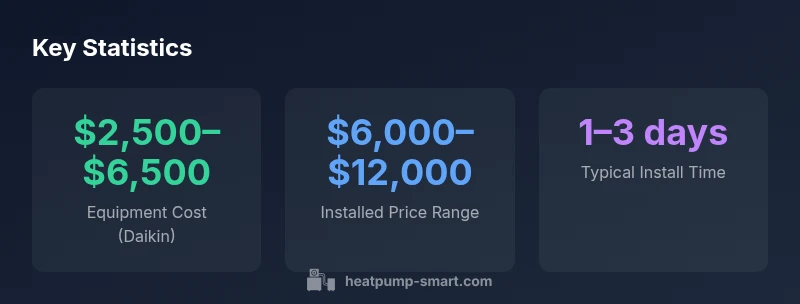
Equipment price ranges for Daikin air-source systems commonly fall in the mid single digits, while high-efficiency or multi-zone configurations can push equipment cost higher. The installed price range, including labor, typically broadens to reflect regional differences and installation complexity. A widely seen rough guide is equipment costs of about $2,500–$6,500 and installed costs around $6,000–$12,000 for many standard residential projects, though fluctuations occur. Always note what is included in the quoted price: some dealers bundle electrical work or duct modifications, while others itemize them separately. Use the price list to estimate total cost, but verify with a formal, itemized quote that includes all necessary steps and potential incentives. Heatpump Smart emphasizes that regional factors and incentives meaningfully shape the final price.
Step-by-step guide to getting quotes that reflect true cost
- Define your project scope in clear terms (single-zone vs multi-zone, ducted vs ductless, indoor air quality needs).
- Request itemized quotes from at least three installers, asking the seller to separate equipment, installation, and extras.
- Compare the energy efficiency metrics (SEER, HSPF) and compatibility with your existing thermostat.
- Check warranty terms and the availability of extended service plans.
- Inquire about rebates and tax credits and whether they are applied at purchase or installation.
- Review financing options and any seasonal promotions.
- When you receive quotes, calculate the total installed cost and expected energy savings to judge true value. This approach helps you avoid surprises on installation day and aligns expectations with the daikin heat pump price list reality.
How Heatpump Smart analyzes price lists for homeowners
At Heatpump Smart, we apply a consistent methodology to interpret price lists and translate them into actionable budgets. We start by isolating equipment costs, installation charges, and incentives, then adjust for regional factors and home size. We cross-check quotes against typical performance targets (SEER/HSPF, warranty terms) and estimate potential energy savings. Our approach uses price-list data as a baseline while emphasizing total cost of ownership and long-term value. The Heatpump Smart team recommends using price lists as a benchmark, but always verify with in-person, itemized quotes that reflect your home's specific needs and local incentives. Heatpump Smart Analysis, 2026
Typical price components for Daikin heat pump installations
| Component | Typical price range (USD) | Notes |
|---|---|---|
| Equipment (Daikin single-zone) | $2,500–$6,500 | Prices vary by model and efficiency |
| Installation labor | $1,500–$5,000 | Includes basic labor; permits extra |
| Total installed (base case) | $6,000–$11,000 | Assumes standard install |
| Regional taxes/permits | $0–$2,000 | Region dependent |
Your Questions Answered
What is included in a Daikin price list?
A Daikin price list typically includes equipment costs, installation charges, and sometimes permits or add-ons. Rebates or tax credits may apply and vary by location. Always check whether the quote separates equipment from labor and includes any required extras.
Daikin price lists usually show equipment and installation costs; rebates may apply depending on your location.
Why do prices vary by region?
Prices vary due to labor rates, permitting requirements, taxes, and incentives. Regional freight and availability of certain models can also affect the final quote. Ensure your quotes account for these regional differences.
Regional labor costs and incentives cause price differences; ask for region-specific quotes.
Should I base my decision on the list price alone?
No. Focus on the total installed cost, including labor and incentives, and the expected energy savings. A low list price may come with higher installation or maintenance costs later.
Don’t rely on list price alone; total installed cost and savings matter most.
How can I maximize value from price quotes?
Request itemized quotes, compare SEER/HSP ratings, check warranty terms, and ask about rebates or financing options. A clear, apples-to-apples comparison helps identify real value.
Get itemized quotes and compare efficiency, warranties, and rebates.
Are rebates or tax credits available for Daikin heat pumps?
Rebates and tax credits exist in many regions, but eligibility varies. Verify current programs with local utilities or government pages and ensure the installer helps document eligible work.
Rebates and credits exist in many areas; check local programs before deciding.
“Prices on a price list are a starting point; true value comes from total installed cost, warranty terms, and available incentives.”
Top Takeaways
- Get itemized quotes from multiple dealers
- Distinguish equipment price from installation charges
- Factor in rebates and tax credits
- Compare total installed costs, not just list price
- Plan for regional variations in price