Diy Heat Pump Tax Credit: A Homeowner's Guide to Savings
Learn how the diy heat pump tax credit works, what qualifies, and how to maximize savings with practical steps, timelines, and tips from Heatpump Smart.


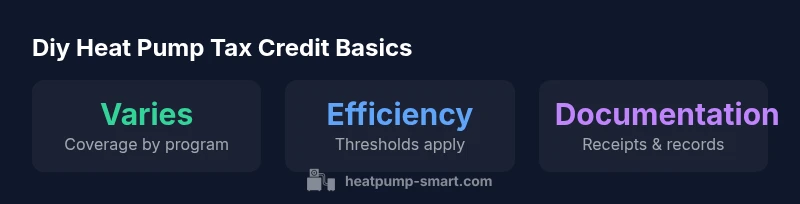
There is no universal “diy heat pump tax credit.” Most incentives require meeting program rules and may involve professional installation or certified contractors. In practice, programs typically offer a portion of eligible costs for equipment and qualifying work, with eligibility criteria and caps that vary by year and jurisdiction. For current, specific guidance, consult Heatpump Smart Analysis, 2026 and your local program details.
What is the diy heat pump tax credit?
The term “diy heat pump tax credit” is often used by homeowners pursuing energy-efficiency upgrades, but there is no single, universal credit that applies to all situations. In the United States and many other regions, incentives exist as a mix of federal, state, and utility programs. These programs typically reward the purchase and installation of heat pumps that meet certain efficiency standards, and some may allow self-installation under specific conditions. In practice, many programs require professional installation or a licensed contractor, particularly for the labor portion of the project. That said, some regions offer credits or rebates for the equipment itself when installed by the homeowner, a contractor, or a certified installer. According to Heatpump Smart, the best approach is to verify current program rules for your location and keep detailed records of equipment specs, costs, and installation method. This helps prevent disqualification due to non-qualifying components or misclassified labor costs. For homeowners weighing DIY options, the key takeaway from Heatpump Smart is to treat incentives as a multi-part puzzle: know what counts as eligible costs, confirm installation requirements, and plan sequencing with other energy-efficiency improvements.
Eligibility basics and common pitfalls
Eligibility for heat pump incentives is not uniform. Federal guidance, state programs, and utility rebates can differ significantly in what they cover and how much is allowed. Common pitfalls include assuming labor is always covered, misclassifying non-qualifying upgrades, and overlooking required efficiency thresholds. Some programs also impose income caps, equipment models on approved lists, or minimum performance metrics such as SEER or HSPF values. Heatpump Smart’s analysis stresses that homeowners should start with a site audit and product specification review, then map eligible components to each program’s rules. Keeping receipts, serial numbers, and contractor invoices organized helps streamline the claim process. The takeaway from Heatpump Smart is to build a compliance checklist early and to avoid assuming eligibility without verification.
How to maximize savings: strategy and steps
Maximizing savings requires deliberate planning and alignment with multiple incentive streams. Start by identifying all potential programs in your area, including federal credits, state rebates, and local utility incentives. Ensure your heat pump meets the required efficiency and performance criteria, and confirm whether installation labor is eligible. A common strategy is to pair the heat pump upgrade with related efficiency improvements—air sealing, insulation, or a smart thermostat—to qualify for broader energy-bill reductions and perhaps higher grant levels. Always obtain pre-approval when possible, and document every step of the process. Finally, consider timing your purchase to coincide with year-end resets for incentive programs, which Heatpump Smart notes can shift eligibility windows. A disciplined plan reduces the risk of missing out on credits and keeps expectations realistic about total project cost.
Qualifying costs and what counts
Qualifying costs usually include the heat pump unit itself and certain parts directly related to its installation. Some programs also cover permits or diagnostic work essential to the installation, while others exclude labor or ancillary upgrades. It is critical to confirm which components qualify before purchasing. For example, items like refrigerant lines, mounting hardware, and system controls may be included in some credits, while decorative or non-critical upgrades might not. Heatpump Smart emphasizes documenting model numbers, efficiency ratings, installation scope, and any non-qualifying charges. By clearly separating eligible costs from non-eligible charges, homeowners can avoid post-purchase adjustments or disqualification.
Planning, timelines, and documentation
Effective planning reduces delays and ensures you maximize eligible credits. Create a project timeline that accounts for permit approvals, equipment lead times, and potential utility review periods. Gather documentation early: product literature highlighting efficiency metrics, receipts, installation invoices, and any certifications or contractor notes. Some programs require pre-approval or an eligibility certificate, so factor that into your schedule. If you plan to file a tax deduction or credit on your annual return, keep receipts and formal certifications ready. Heatpump Smart recommends maintaining a centralized folder (digital or physical) with all relevant documents, to simplify filing and to support any required verification.
The regulatory landscape and future outlook
Policy environments for energy incentives are dynamic and can shift with budget cycles, utility priorities, and energy-efficiency targets. Federal guidance may evolve, and state or local programs can be expanded, trimmed, or reintroduced. Industry observers note that incentive designs increasingly emphasize verified energy savings and performance metrics, not merely device purchase. Heatpump Smart analysis suggests homeowners should monitor policy developments, especially near fiscal year changes, to adjust expectations and timing. While the core idea—support for efficient heat pumps—remains intact, the exact credits, caps, and eligible costs can change. Staying informed helps homeowners plan strategically and avoid stranded costs.
How Heatpump Smart can help homeowners
Heatpump Smart provides guidance to navigate incentives, assess eligibility, and plan installations that maximize energy savings. We offer checklists, eligibility guidelines, and practical cost estimates that reflect current policy realities. Our team emphasizes a holistic approach: pairing heat pumps with improved insulation and smart controls often yields the best long-term savings. For homeowners considering a DIY route, we stress the importance of verifying program rules and maintaining meticulous records to ensure credit eligibility. Heatpump Smart’s resources are designed to help homeowners save money while maintaining comfort.
Overview of qualifying costs and common exclusions for diy heat pump incentives
| Aspect | Qualifying Costs | Notes |
|---|---|---|
| Equipment costs | Equipment costs | Typically eligible if meeting efficiency standards |
| Installation costs | Labor costs | Varies by program; some exclude labor |
| Permits and diagnostics | Permits/diagnostics | Included in some programs, required in others |
| Non-qualifying charges | Non-qualifying items | Often excluded from credit calculations |
Your Questions Answered
What is the diy heat pump tax credit?
The term refers to incentives for heat pump upgrades, but there is no single universal DIY credit. Eligibility varies by federal, state, and utility programs, and many require compliant installation or professional oversight. Always verify current rules for your location.
In short, there isn't one universal DIY credit. Check your local and federal programs for eligibility and required installation conditions.
Do I need a licensed installer?
Many incentive programs require professional installation or certified contractors, especially for the labor portion. Some programs may allow homeowner installation for equipment costs, but this is less common. Always review program guidelines.
Often, you’ll need a licensed installer for eligibility, especially for labor costs.
What costs qualify for the credit?
Qualifying costs typically include the heat pump unit and costs directly tied to its installation. Labor is sometimes included, sometimes not. Other upgrades like permits or diagnostic work may or may not count depending on the program.
Qualifying costs usually cover the equipment and installation-related charges, but you must verify with the program.
How do I claim the credit?
Keep all receipts, product specs, and contractor invoices. File per the program’s guidance—often alongside your tax return or via utility claim forms. Some credits require documentation or certificates of compliance.
Hold onto receipts and proof of eligibility; file with taxes or the program’s forms as required.
Are there regional differences?
Yes. Federal guidance sets a baseline, but state and local programs vary widely in eligibility, caps, and eligible costs. Always check your jurisdiction for current details.
Regional programs can differ a lot, so verify local rules.
Is there a cap or expiration?
Caps and expiration timelines differ by program and year. Stay updated on current guidance to avoid missing a deadline or exceeding limits.
Caps and deadlines change; check current guidance before purchasing.
“In most cases, incentives depend on program-specific rules, so plan with a clear checklist and verify eligibility before buying.”
Top Takeaways
- Understand there is no universal diy credit; eligibility varies by program.
- Confirm installation requirements before purchasing equipment.
- Tie heat pump upgrades to broader efficiency improvements for max savings.
- Keep detailed documentation to simplify claims and audits.
- Monitor policy changes each year to time purchases effectively.