Heat Pump Incentives: A Practical Guide to Saving on Your System
Explore heat pump incentives like federal credits, state rebates, and utility programs. Learn eligibility, stacking strategies, and timelines to maximize savings on installation costs in 2026.


Heat pump incentives are programs designed to offset the upfront costs of installing a heat pump. They include federal tax credits, state and local rebates, and utility-based rebates. Availability varies by location and year, so homeowners should verify current offers in their area (via DSIRE or their utility) today and onward.
What qualifies as heat pump incentives and why they matter
Heat pump incentives encompass a range of programs designed to reduce the upfront cost of heat pump projects. Understanding what counts as an incentive helps homeowners target the right mix for their home. Common forms include federal tax credits, state rebates, and utility-based incentives. Eligibility often hinges on equipment efficiency, installation quality, and geographic location. For homeowners, this means a well-planned process—reviewing available offers early, confirming contractor eligibility, and keeping copies of all documentation to maximize recovery on project costs. Throughout the journey, it’s important to track program deadlines and any caps that may limit total incentives for a given project. Heat pump incentives also extend to related equipment such as heat pump water heaters in some programs, broadening the potential savings.
Federal incentives: credits, rules, and timelines
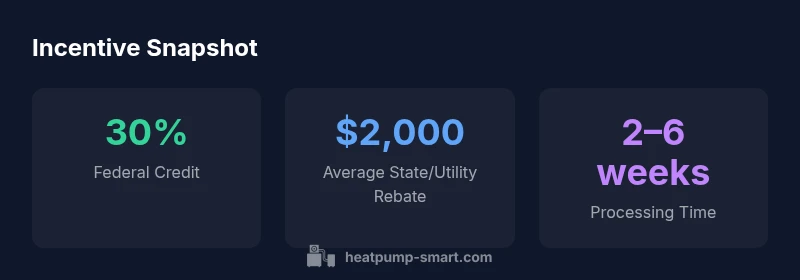
Federal incentives for heat pumps are designed to lower the cost of energy-efficient upgrades. The federal tax credit for energy-efficient home improvements has historically supported heat pumps among eligible technologies. The exact percentage and eligible costs can change with federal policy, so it’s essential to verify current rules before purchasing. In 2026, policy discussions emphasize maintaining a solid baseline for efficiency upgrades, with credits often tied to meeting minimum efficiency standards and using qualified equipment. The Heatpump Smart team recommends consulting IRS guidance and DOE resources to ensure you claim the credit correctly, and to avoid missing deadlines that can affect eligibility.
State and local rebates: regional variation and how to find them
State rebates and local incentives vary widely. The best way to identify opportunities is through DSIRE and your local utility or state energy office. Programs can cover a portion of equipment costs, installation, or even add-on upgrades that improve efficiency. Regional differences mean that a project in one state might qualify for a different rebate amount than a neighboring state, making early planning essential. The Heatpump Smart analysis shows that homeowners who start by mapping eligible programs for their ZIP code are likelier to maximize savings and reduce payback periods.
Utility programs and demand-side incentives
Utilities often offer incentives tied to specific programs, such as peak-demand reductions or time-of-use rate plans. These programs can deliver rebates, performance-based incentives, or bill credits that complement federal or state offers. Utility incentives are especially valuable when a utility has a well-structured program for heat pumps and when customers participate in demand-response events. The key is to coordinate with the installer and the utility so that incentives stack effectively rather than conflict with one another.
How to qualify: eligibility, documentation, and timing
Qualifying for heat pump incentives generally requires choosing ENERGY STAR–rated equipment, a licensed installer, and a home that meets program standards. Documentation often includes purchase receipts, installation invoices, efficiency ratings, and proof of occupancy or property type. Some programs require pre-approval or an on-site energy assessment. Start by confirming eligibility of your equipment, obtain quotes that specify performance metrics, and work with a contractor who understands how to optimize incentive stacking. Planning ahead helps ensure you don’t miss windows of opportunity or discount deadlines.
Stacking incentives: best practices for maximizing savings
Stacking—combining federal credits, state rebates, and utility incentives—can dramatically reduce the total cost of a heat pump project. The key is to verify that each incentive allows stacking and to document how every incentive applies to the same project. Keep a running checklist of required forms, deadlines, and supporting documentation. Working with an experienced contractor who understands the current incentive landscape can help ensure you claim every eligible benefit and comply with program rules.
Timing considerations and a 2026 planning checklist
Incentives evolve with policy changes, so timing matters. Start early by researching available programs for your ZIP code, obtain pre-approval when possible, and align your project timeline with application deadlines. Create a simple checklist: verify equipment qualifies, gather documentation, obtain multiple quotes, and assign responsibility for submitting applications. This proactive approach reduces the risk of missing out on incentives and helps you realize the full financial benefit over the life of the heat pump system.
Overview of incentive types and typical coverage
| Program Type | Typical Coverage | Eligibility | Example Programs |
|---|---|---|---|
| Federal tax credit | 10%–30% | Owner-occupied homes meeting efficiency criteria | IRA/DOE credits (2026) |
| State rebates | $500–$2,500 | Residents in participating states | State energy offices |
| Utility incentives | $200–$1,500 | Customers of participating utilities | Local utility programs |
Your Questions Answered
What are the main types of heat pump incentives?
The primary incentives are federal tax credits, state rebates, and utility programs. Regional and program-specific offers may also apply. Always check for current opportunities in your area.
The main incentives include federal tax credits, state rebates, and utility programs. Check your area for current offers.
How do I know if I qualify?
Eligibility typically depends on meeting energy-efficiency criteria, using approved equipment, and completing installation with a licensed contractor. Use DSIRE and your utility’s guidance to confirm.
Check the program rules, energy efficiency requirements, and use DSIRE to confirm eligibility.
Can incentives be stacked?
In many cases, federal credits can be stacked with state rebates and utility incentives, but each program has its own stacking rules and caps. Verify before applying.
Yes, but stacking depends on program rules; verify before applying.
How long does it take to receive incentives?
Processing times vary by program and region, ranging from a few weeks to several months. Start early and maintain copies of all documents.
Processing times vary a lot; start early and stay organized.
Are incentives available for heat pump water heaters too?
Many programs extend to heat pump water heaters and related equipment, but coverage differs by program. Check local guidelines and apply accordingly.
Some programs cover heat pump water heaters as well; verify local details.
“Incentives are most valuable when homeowners plan ahead. A disciplined, research-driven approach to stacking federal, state, and utility programs often yields the greatest long-term payoff.”
Top Takeaways
- Check eligibility early using DSIRE or your utility
- Combine federal, state, and utility incentives for maximum impact
- Verify equipment meets efficiency standards before purchase
- Keep documentation organized for tax credits and rebates
- Plan ahead to lock in incentives before policy changes