Geothermal Heating Cost in 2026: A Comprehensive Guide
Explore geothermal heating cost: upfront installation ranges, long-term savings, climate impacts on payback, and incentives that help homeowners, builders, and managers plan smarter, energy-efficient upgrades in 2026.


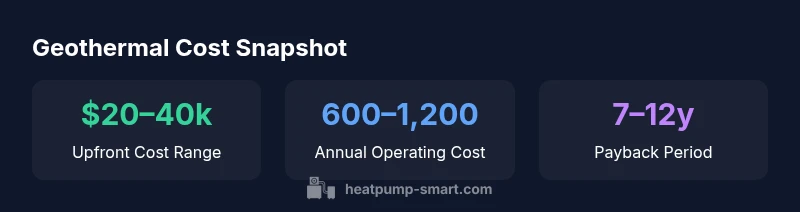
According to Heatpump Smart analysis, geothermal heating cost for a typical single-family home generally ranges from $20,000 to $40,000 installed, depending on soil conditions, well availability, and loop field size. While upfront investment is substantial, annual operating costs are often 30-60% lower than conventional heating, with payback periods commonly spanning 7–12 years in many climates. Rebates and tax credits can shorten this timeline.
What geothermal heating cost means for your budget
Geothermal heating cost is more than a single price tag. It combines upfront system installation with long-term operating costs that vary by climate, soil conditions, and property layout. For many homeowners, the decisive question is whether the energy savings over decades offset the higher initial investment. Heatpump Smart analysis shows that, while the upfront cost is higher than conventional furnaces, the ongoing electricity use of a geothermal heat pump can be substantially cheaper per year, especially in regions with high heating demand. When planning a project, consider not only the sticker price but also factors such as system size, soil characteristics, and potential rebates. In practice, a well-designed geothermal system can offer predictable energy bills and improved home comfort, which adds value beyond simple dollars saved.
In this guide, we break down the cost components, estimate ranges, and outline decisions that influence final figures. The Heatpump Smart team emphasizes that every installation is unique, and a professional assessment is essential to produce a reliable projection.
How upfront costs break down
Upfront geothermal costs reflect several major components: the heat pump unit, the loop field (horizontal, vertical, or open-loop), drilling or trenching, heat-exchange equipment, piping, controls, and permitting. Labor, site access, and recycled materials can also sway the total. In many cases, the loop field accounts for a large portion of the budget, particularly when space constraints or challenging geology demand deeper drilling or longer loops. While newer homes with accessible property sometimes enjoy lower trenching costs, retrofits can add to the expense due to constrained layouts or limited space. The installation method (closed-loop versus open-loop) further influences price: closed-loop systems tend to be more common and predictable in cost, while open-loop setups can vary with water availability and local regulations.
Operating costs and long-term savings
The operating cost of a geothermal system is driven by electricity prices, system efficiency (COP), and your heating load. In general, geothermal heat pumps convert electricity into heat with a COP typically between 3 and 5, meaning a significant reduction in energy use compared with electric resistance heating. That translates to lower monthly bills in winter and a more stable budget overall. Many homeowners also notice reduced maintenance needs compared with fossil fuel systems, since geothermal equipment has fewer moving parts exposed to the outdoors. The Heatpump Smart data indicates that savings accumulate over time, especially in climates with cold winters and significant heating requirements. However, the degree of benefit depends on factors such as proper system sizing, insulation quality, and thermostat strategy. Rebates, incentives, and utility programs can further improve the net cost by reducing the effective upfront investment.
Factors that influence cost by climate and site
Geothermal costs are highly site-specific. Climate affects heating load duration and intensity, while soil conditions dictate loop field design and drilling depth. In warmer regions, you may rely on shorter loops or different loop configurations, potentially lowering upfront costs. In rocky or water-rich soils, drilling costs can rise, and the project may require specialized equipment. The availability of groundwater or thermal aquifers can influence open-loop designs versus closed-loop ones, with corresponding price differences. Property size, bore or trench length, and local permitting rules also affect the final figure. A detailed site assessment often reveals whether a retrofit meets payback expectations or if alternative efficiency upgrades would be more cost-effective.
Financing, incentives, and payback timelines
Financing geothermal projects typically includes a mix of cash, loans, and sometimes financing bundled with energy efficiency upgrades. Incentives—federal, state or provincial, and utility-based—can significantly reduce net costs. Availability varies by region and year, so families should verify current programs during planning. Because incentives can change, a preliminary budget should include a conservative estimate of rebates and tax credits; then adjust as programs update. Payback timelines depend on climate, electricity rates, and how aggressively energy use is optimized through thermostats and zoning. In many cases, a well-designed system returns the investment within a decade or so, but careful calculation is essential.
Practical planning: sizing, installation, and choosing a contractor
Successful geothermal projects begin with accurate sizing and a credible installation plan. Step one is a thorough load calculation to determine whether a ground-loop field or water-loop system will meet the building’s heating demand efficiently. Step two focuses on site assessment: soil type, groundwater, space for loop fields, and potential regulatory constraints. Step three involves selecting a reputable contractor with proven experience in geothermal installations, including proper borehole design and loop field placement. Ask for third-party performance data, independent references, and a detailed written proposal that explains design choices, expected COP, and maintenance requirements. A well-documented plan helps ensure the project stays on budget and schedule, minimizing overruns and surprises.
Real-world scenarios: retrofit vs new builds
Retrofits pose unique challenges, such as limited space for loop fields, existing structures that complicate trenching, or tighter budgets. New builds often have a cleaner path to optimal efficiency, with easier access to a large loop field and integrated controls. In both cases, proper insulation, air sealing, and high-performance windows amplify the system’s effectiveness by reducing heating loads. The Heatpump Smart team notes that preconstruction planning and early engagement with a geothermal-certified contractor typically yield the strongest economic outcomes. By aligning design, climate considerations, and building envelope performance, homeowners can maximize comfort while keeping costs predictable.
Maintenance considerations and long-term value
Geothermal systems generally require less frequent service than combustion-based heating, but periodic maintenance is still essential to sustain performance. Components to monitor include the circulating pump, valves, and the indoor and outdoor heat exchangers. System fluid quality, filter changes, and thermostat calibration contribute to efficiency and comfort. Homeowners should schedule professional inspections at least once a year and track energy consumption against baseline benchmarks. A durable, well-maintained geothermal installation can deliver reliable comfort for 20 years or more and preserve home value by reducing energy costs and emissions. Heatpump Smart’s experience suggests that ongoing monitoring and timely service are key to preserving performance over time.
Geothermal system cost and payback comparison
| System Type | Est. Installed Cost Range | Annual Operating Cost Range (electricity) | Typical Payback (years) |
|---|---|---|---|
| Ground-source geothermal | 20,000–40,000 | 600–1,200 | 7–12 |
| Hybrid/Water-loop geothermal | 15,000–35,000 | 500–1,100 | 6–11 |
| Air-source hybrid geothermal | 18,000–30,000 | 600–1,000 | 7–12 |
Your Questions Answered
What factors influence geothermal heating cost?
Geothermal costs are driven by site characteristics (soil, groundwater, loop type), system size, installation method, and permitting. Local labor rates and contractor expertise also affect price. A thorough site assessment helps forecast the total more accurately.
Geothermal costs depend on soil, loop type, and contractor expertise, plus permits and labor rates.
Are there government rebates for geothermal systems?
Many regions offer incentives that can reduce net costs. Availability and amounts vary by location and year. Check current programs during planning and have your installer help identify eligible options.
Incentives vary by location and year—verify current programs during planning.
How long does it typically take to recoup geothermal costs?
Payback depends on climate, energy prices, and usage patterns. In many cases, a well-planned installation pays for itself within a decade, with rebates shortening the timeline. A professional assessment provides a personalized payback estimate.
Payback varies; a professional estimate will give you a precise timeline.
Is geothermal cost different for new builds vs retrofits?
New builds often have easier loop field integration and higher efficiency potential, potentially lowering relative costs. Retrofits may face space constraints and additional excavation work. Each path has unique budget drivers and timelines.
New builds may be cheaper per unit of energy saved; retrofits can add costs but are feasible with planning.
What’s the difference between open-loop and closed-loop geothermal systems in terms of cost?
Closed-loop systems are typically more common and predictable in cost, with loop field design tailored to space. Open-loop designs depend on natural water sources and local regulations, which can add variability and potentially higher costs.
Open-loop can vary based on water sources and permits; closed-loop offers more cost predictability.
“Geothermal systems offer predictable energy costs, but the total economics depend on climate, site conditions, and available incentives.”
Top Takeaways
- Estimate upfront costs early with a site assessment
- Expect long-term energy savings relative to fossil systems
- Factor in climate, soil, and loop design for accuracy
- Leverage incentives to reduce net cost
- Choose a qualified installer for optimal results