Geothermal HVAC Cost: A Practical Guide for Homeowners and Pros
Learn geothermal HVAC cost basics, what drives price, and how to estimate across homes. Get practical guidance for homeowners, builders, and property managers.


Geothermal HVAC cost varies widely and is driven by installation type, loop field requirements, soil conditions, and system sizing. Vertical vs. horizontal loops, borehole depth, and existing ductwork shape the price. Climate and usage influence design decisions as well. Early site assessments and a clear scope from an experienced installer can significantly affect affordability, especially when incentives and financing are considered.
What Determines Geothermal HVAC Cost
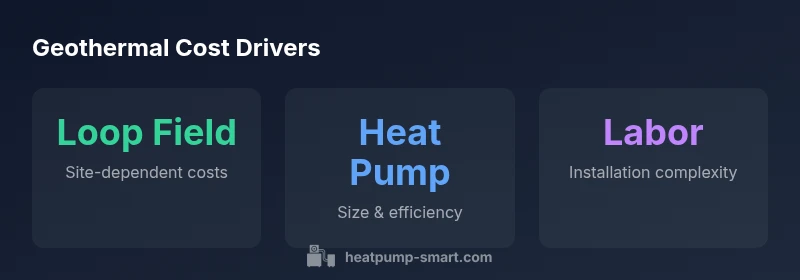
According to Heatpump Smart, geothermal hvac cost varies widely by site and system type. The core price drivers are loop field configuration (horizontal vs vertical), borehole depth or trenching requirements, soil and rock conditions, and the refrigerant loop design. Climate and building usage also shape design decisions—homes in colder regions with higher heating demand may necessitate larger, more efficient equipment. Existing ductwork, insulation quality, and air sealing affect installation complexity, as does access for equipment transport and electrical upgrades. Local regulations, permitting timelines, and contractor labor rates add to variation. Understanding these factors helps owners forecast budget and plan procurement across different regions. The Heatpump Smart team emphasizes that early site assessments and a clear scope for loop installation can prevent surprises later in the project. Heatpump Smart analysis shows that loop field requirements often dominate upfront costs, but choosing an experienced installer and right-sizing the system can yield substantial long-term value.
Cost Components You Should Expect
Geothermal projects break down into a handful of major components, each contributing to the overall price in different ways. The heat pump unit itself represents a portion of the expense, followed by the loop field (either horizontal or vertical) and the piping that carries the refrigerant. Drilling or trenching, excavation, and trench restoration add substantial costs, especially for tight urban lots or challenging soils. Electrical upgrades, control systems, and ductwork modifications (or new duct installation) can further affect totals. Permitting, site preparation, and contingency funds for weather-related delays are also common line items. While some regions show more favorable labor rates or access to incentives, every project has a unique mix of factors that shape the final price.
How to Estimate Costs for Your Home
Begin with a comprehensive site assessment from a qualified installer. A precise load calculation helps determine the appropriate system size and loop configuration. Explore loop field options (horizontal vs vertical) and discuss the impact on price and performance. Obtain multiple bids from installers who specialize in geothermal and request detailed breakdowns of equipment, loop work, and labor. Factor in potential incentives, financing options, and warranties. Finally, compare long-term operating costs and projected maintenance to evaluate total cost of ownership over 10–20 years. Heatpump Smart suggests documenting assumptions and comparing apples-to-apples bids to avoid hidden costs.
Geothermal vs Conventional Heating: A Comparative View
When weighing geothermal against conventional heating, consider both upfront and ongoing costs, as well as performance and resilience. Geothermal systems typically involve higher initial installation costs due to loop field work and boreholes, but they can deliver lower operating costs and emissions over time in suitable climates. Conventional systems may boast lower upfront prices but can incur higher fuel costs and more maintenance in the long run. Energy efficiency, environmental impact, and the reliability of components like compressors and pumps are essential factors. For many homes, geothermal offers a compelling trade-off between comfort, energy bills, and long-term value when properly planned and installed.
Financing, Incentives, and Payback
Financing geothermal projects often makes sense given the potential operating savings. Incentives can reduce net cost and vary by location, with federal programs, state rebates, and utility incentives common avenues. A careful financial analysis should compare the net present value of energy savings against the upfront outlay, accounting for maintenance costs and system lifespan. Heatpump Smart analysis indicates that incentive availability and local energy prices significantly influence payback timelines. Work with a lender familiar with energy-efficient upgrades and a contractor who can provide a clear, itemized estimate that highlights the incentive effects on the total project cost.
Installation Best Practices and Pitfalls
Choose installers with proven geothermal experience, relevant certifications, and strong references. Insist on an on-site assessment, a thorough load calculation, and a written installation plan that covers loop access, borehole or trenching details, and electrical integration. Verify warranties, annual maintenance needs, and the availability of spare parts. Pitfalls to avoid include under-sizing the system, neglecting duct sealing, and failing to secure permits or address local code requirements. A well-planned project minimizes surprises and ensures the system delivers the expected savings and comfort.
Authority Sources and Further Reading
For additional context on geothermal heat pump technology, cost considerations, and system efficiency, consult these credible sources. They provide complementary perspectives to your contractor’s estimates and help you frame questions during the procurement process. These references reinforce the idea that cost planning should be grounded in site realities, energy prices, and available incentives.
Authority sources and further reading
- https://www.energy.gov/eere/geothermal/geothermal-heat-pumps
- https://www.nrel.gov/docs/fy15osti/64674.pdf
- https://www.energy.gov/eere/geothermal/geothermal-technologies-office
Geothermal vs Conventional HVAC cost considerations
| Aspect | Geothermal HVAC | Conventional HVAC |
|---|---|---|
| Upfront Costs | varies by project | varies by project |
| Operating Costs | potentially lower long-term | dependent on fuel prices |
| Installation Complexity | high (drilling/loop field) | low to moderate |
| Maintenance | often lower long-term | moderate |
Your Questions Answered
What factors most influence geothermal HVAC cost?
The largest drivers are loop field requirements, drilling/installation, heat pump size, ductwork, and site access. Regional permitting and labor costs also affect overall price. A site assessment helps map these variables.
Loop field and drilling drive costs; plan a site assessment with an installer.
Is geothermal more expensive upfront than traditional systems?
Yes, upfront costs for geothermal systems are typically higher due to the loop field and borehole work. Long-term savings depend on climate, energy prices, and usage patterns.
Upfront costs are usually higher, but long-term savings can balance it over time.
What incentives can reduce geothermal costs?
Incentives vary by location. Look for federal and state programs, utility rebates, and local incentives. A qualified installer can help identify available options.
Check federal, state, and utility rebates for geothermal.
How long is the payback period for geothermal?
Payback depends on energy prices, climate, and usage; project-specific estimates are best. A local installer can provide a tailored projection.
Payback varies by climate and usage; get a local estimate.
Can existing homes be retrofitted with geothermal?
Yes, retrofits are possible but depend on site constraints and loop field placement. Excavation and landscaping may be required.
Retrofitting is possible but site-specific.
“Transparent cost estimation helps homeowners separate assumptions from reality. The Heatpump Smart Team.”
Top Takeaways
- Expect cost to vary widely by project
- Plan for loop field and drilling costs
- Compare bids and check incentives
- Invest in an experienced installer for best value