Geothermal HVAC Near Me: A Practical Guide to Local Installation and Savings
Explore geothermal hvac near me options, how they work, installation steps, local contractor tips, and potential savings with Heatpump Smart's expert guidance.


Geothermal hvac near me options offer efficient heating and cooling by exchanging heat with the earth. Locating a local installer, comparing system types (closed-loop vs open-loop), and estimating savings depends on climate, electricity costs, and project scope. Heatpump Smart's analysis guides you to practical steps, local contacts, and realistic expectations.
Understanding geothermal hvac near me
Geothermal hvac near me systems leverage the earth as a stable energy source to heat and cool your home. Unlike air-source heat pumps that pull heat from ambient air, geothermal systems exchange heat with groundwater or soil via a buried loop field. For homeowners, the practical implication is more predictable efficiency, especially in extreme temperatures where outdoor air heat pumps struggle. When you search for geothermal hvac near me, you should prioritize certified installers who can conduct a site assessment, review soil and groundwater conditions, and explain loop configuration options. Heatpump Smart emphasizes that the best results come from a local team that can tailor a system to your climate, lot size, and existing ductwork or hydronic networks. Looking up references and reading local case studies helps set expectations about installation timelines and upfront costs, which are often higher than conventional systems but offer long-term energy and comfort benefits.
How geothermal hvac systems work
Geothermal systems rely on the constant temperatures found below the earth’s surface. A loop field circulates a water–antifreeze solution through buried pipes, absorbing or releasing heat as needed. In heating mode, the fluid collects heat from the ground and transfers it to a heat pump inside the home; in cooling mode, heat from the home is transferred to the ground. The inside unit then distributes conditioned air or water-based radiant heat through existing ducts or radiant floor loops. The key advantages include high efficiency, reduced temperature swings, and lower humidity swings in living spaces. When you’re evaluating geothermal hvac near me options, ask installers to explain loop depth requirements, refrigerant type, and the heat pump’s coefficient of performance (COP) under your typical winter and summer conditions.
Closed-loop vs open-loop configurations
The two main loop configurations influence installation cost, maintenance, and site feasibility. Closed-loop systems circulate a continuous loop of fluid through buried pipes. They require less groundwater interaction, are generally better for residential sites, and often involve vertical boreholes or horizontal trenching. Open-loop systems use groundwater directly as a heat exchange fluid, then discharge it back to the ground or a well. Open-loop can offer higher performance in certain sites but demands water rights, quality checks, and more stringent permitting. When you search for geothermal hvac near me, expect a detailed site evaluation to determine which configuration best suits your soil, groundwater, and local regulations. Heatpump Smart recommends weighing long-term operating costs against upfront drilling or trenching costs to choose the optimal loop strategy.
Sizing, site evaluation, and installation steps
Sizing a geothermal system involves calculating heating and cooling loads, local climate data, and available space for the loop field. A properly sized system maintains comfort with minimal cycles, which reduces wear on the compressor and improves efficiency. Site evaluation includes soil tests, groundwater assessment, and nearby utility infrastructure checks. Installation steps typically begin with permitting and trenching or borehole work, followed by loop installation, heat pump placement, refrigerant charging, and system commissioning. Ductwork adjustments or radiant floor integration may be required. When you’re considering geothermal hvac near me, plan for a multi-discipline team that coordinates excavation, electrical, and hydraulic work, and ensure the installer provides a detailed commissioning report and start-up checklist.
Cost considerations and potential savings
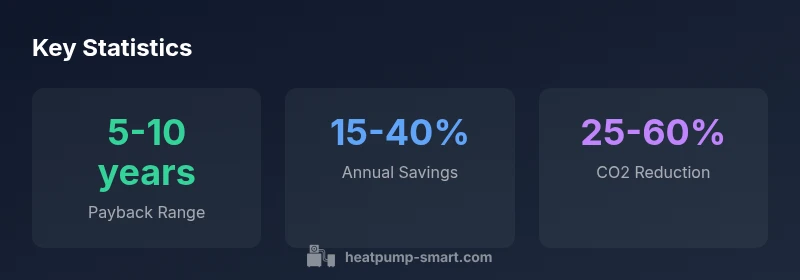
Upfront costs for geothermal systems can be higher than traditional HVAC setups due to loop field installation and borehole work. However, long-term savings arise from reduced energy consumption and lower equipment wear. Savings vary widely depending on climate, electricity prices, system efficiency, and how well the system is tuned to the home. Heatpump Smart’s analysis indicates a broad payback window that is heavily climate-dependent. Incentives from local, state, or federal programs and utility rebates can substantially offset initial costs if the project qualifies. When evaluating geothermal hvac near me options, request a transparent breakdown of equipment costs, installation charges, permits, and inspection fees, plus a forecast of annual energy savings. A reliable contractor will provide multiple scenarios under different electricity price trajectories.
Finding and evaluating local contractors near me
Finding a capable geothermal contractor near you starts with a targeted search for installers who specialize in ground-source systems and hold relevant certifications. Look for references, case studies in your climate, and proof of ongoing training on refrigerants and loop integrity. Ask potential contractors about loop field depth, borehole logistics, and their commissioning processes. A site visit should include a detailed SW Ohio or other region-specific assessment of soil conditions, groundwater availability, and accessibility. Heatpump Smart recommends narrowing candidates to teams with verifiable track records, insurance coverage, and a clear written proposal that includes a project timeline, expected disruptions, and a post-installation service plan.
Incentives, rebates, and financing options
Geothermal installations can benefit from various incentives, including federal tax credits, state rebates, and utility-specific programs. Availability varies by location and project scope, so it’s essential to identify programs early in the planning process. A good installer will help you compile required documentation and coordinate with lenders for financing options that fit your budget. When evaluating geothermal hvac near me options, compare total installed cost after incentives, estimated annual energy savings, and net present value. Heatpump Smart advises consulting with a local tax professional to optimize your financial outcome and to ensure you harness all eligible rebates.
Maintenance, reliability, and lifespan
Geothermal systems are known for long-term reliability when properly maintained. Regular service typically includes refrigerant checks, loop field inspection, and thermostat or control calibration. Most components—compressor, pump, and fan—are designed for extended lifespans, though performance can degrade if the loop field experiences leaks or if the system isn’t properly charged. Annual or biannual professional maintenance helps sustain COP and prevent efficiency loss. Heatpump Smart emphasizes keeping up with firmware updates for controls and ensuring air filtration remains clean to maximize comfort and efficiency. A well-maintained system can deliver decades of dependable service with minimal downtime.
Common myths and real-world realities
Myth: Geothermal systems are a niche technology with uncertain availability. Reality: Many regions have established geothermal installers and standardized permitting, though site feasibility remains a critical factor. Myth: Higher upfront costs make it impractical. Reality: Incentives and energy savings often offset upfront costs over time, especially when electricity costs rise. Myth: Loop systems are fragile and prone to failure. Reality: Modern loop designs are robust, and failures are rare when installed by qualified firms with proper maintenance plans. Heatpump Smart advises homeowners to separate hype from reality by obtaining multiple quotes, verifying credentials, and reviewing long-term maintenance commitments before choosing geothermal hvac near me options.
Geothermal loop configurations and installation considerations
| Aspect | Typical value range | Notes |
|---|---|---|
| Loop configuration | Closed-loop or open-loop | Site-dependent |
| Site requirements | Groundwork or boreholes | Soil and groundwater drive depth |
| Maintenance cadence | 1-2 times per year | Professional service advised |
Your Questions Answered
What is geothermal HVAC and how does it work?
Geothermal HVAC uses the earth as a stable heat source and sink. A buried loop transfers heat to or from a heat pump inside the home, delivering efficient heating in winter and cooling in summer. System performance depends on loop type and site conditions.
Geothermal HVAC uses earth warmth and a heat pump. It’s efficient, with site conditions and loop type affecting performance.
Is geothermal cheaper to install or operate compared to conventional systems?
Upfront installation is typically higher due to digging or boreholes, but operating costs are often lower thanks to high efficiency. Long-term savings depend on climate, electricity prices, and incentives.
Upfront costs are higher, but running costs tend to be lower because geothermal systems are very efficient.
How can I find geothermal hvac near me?
Search for certified geothermal installers in your area, read reviews, verify licenses, and request site visits. Compare quotes that include loop type options, permitting, and commissioning.
Look for certified installers nearby, check reviews, and ask for clear, itemized quotes.
What incentives or rebates are available for geothermal installations?
Incentives vary by location and project scope. A good contractor helps identify federal, state, and utility rebates and assists with the paperwork.
Check local and federal rebates, and ask your contractor to help with the paperwork.
What maintenance does a geothermal system require?
Annual professional service minimizes wear and preserves efficiency. Filters, refrigerant charge, and loop integrity are typical focus areas.
Have yearly tune-ups to keep the system running smoothly.
How long does a geothermal installation take?
Project timelines vary with site complexity. Expect several days to a few weeks, including permitting, drilling or trenching, and system commissioning.
Timing depends on site complexity, but plan for several days to weeks.
Are there climate limitations for geothermal HVAC?
Geothermal systems generally perform well across climates, but the absolute efficiency varies with local electricity prices and ground conditions.
They work well in many climates, but efficiency varies with local conditions.
What warranties should I expect with geothermal installations?
Look for a minimum 5–10 year warranty on the heat pump and a longer warranty on the loop field, depending on manufacturer and installer.
Ask for multi-year warranties on both equipment and the loop field.
“Geothermal systems unlock high efficiency when paired with properly sized equipment and site-specific loop design. The best results come from a precise assessments and expert installation.”
Top Takeaways
- Begin with credentialed local installers
- Expect climate-driven savings and payback variability
- Choose loop type based on site conditions
- Factor incentives into the financial picture
- Schedule annual maintenance for longevity