Heat Pump Costs Installed: A 2026 Homeowner's Guide
Explore what drives heat pump costs installed, from system type to installation complexity, incentives, and long-term savings. Learn how to compare quotes and budget effectively with Heatpump Smart insights.


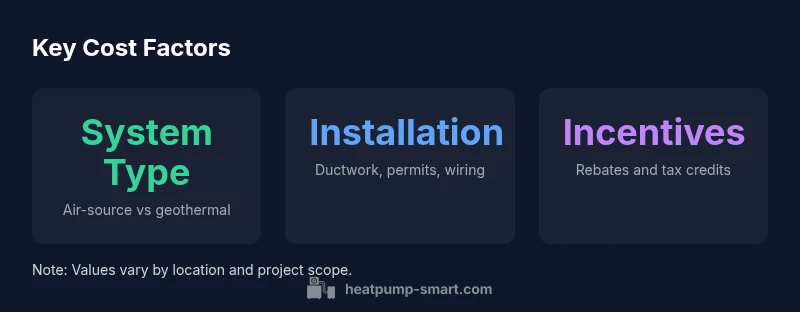
Installed heat pump costs vary widely by system type, size, installation complexity, and local codes. Air-source models are typically less expensive to install than geothermal systems, and older homes can add retrofitting costs. Expect quotes to differ based on refrigerant lines, ductwork, permits, and electrical upgrades. This guide helps you compare options and budgets accurately, with Heatpump Smart insights.
Why Costs Vary by System Type
Heat pump installed costs are not one-size-fits-all. The system you choose drives a large portion of the price you will pay, and the reason is simple: different technologies have different hardware, soil requirements, and installation steps. Air-source heat pumps, which pull heat from outdoor air, generally involve a smaller outdoor unit, simpler refrigerant routing, and fewer site preparation tasks than geothermal systems. In many climates, air-source options provide strong efficiency gains without the heavy upfront trenching or drilling that geothermal requires. Geothermal heat pumps, by contrast, use ground loops or vertical wells to access the earth’s steadier temperatures. That earth-grounding work can dramatically increase upfront costs, but it also has the potential to deliver very low operating costs in the long term if your property qualifies. In addition, ducted configurations vs. ductless mini-splits affect price: central, ducted systems require ductwork and sometimes zoning, while ductless options avoid ducts but may need multiple indoor units. When evaluating quotes, compare apples to apples: ensure the same system type, capacity, and control options are being proposed. A proper match between climate, home design, and equipment efficiency is essential for value. This is where Heatpump Smart’s guidance helps homeowners avoid overpaying for features they don’t need.
How Installation Factors Drive Price
Beyond the equipment price, installation costs are shaped by labor intensity, site specifics, and regulatory requirements. Local labor rates and contractor availability can push totals up or down, while permitting, electrical work, and inspections add predictable steps to the process. If your home requires new ductwork, reinforcements, or zoning changes for multi-zone systems, expect additional charges. Geothermal installations typically involve drilling or trenching for ground loops, which increases both time and cost but can pay off with superior efficiency in suitable locations. For retrofit projects, pre-existing duct efficiency, refrigerant run length, and indoor unit placement all influence labor time and materials. To avoid surprises, request a detailed scope of work with phased milestones, and verify that quotes cover equipment, controls, wiring, refrigerant, and commissioning.
Space, Climate, and Home Size: Impact on Installed Cost
The size of the home and its climate zone determine the system’s cooling and heating load, which in turn influences the required equipment capacity. Larger homes or spaces with extreme temperatures may require multiple indoor units or a higher-capacity outdoor condenser, increasing hardware and installation complexity. Climate also affects efficiency expectations: in milder regions, high-efficiency gains from a well-matched system may be modest, while in very cold or hot climates, advanced compressor technology and defrost cycles can add to both upfront and ongoing costs. Home layout matters too: homes with tight crawlspaces, limited attic access, or complex duct routing require careful planning and possibly more labor. A seasoned installer will map the expected load, verify insulation performance, and design a setup that minimizes heat loss or gain, maximizing value over time.
Hidden Costs and Budgeting Strategies
Cost visibility improves when you anticipate less obvious line items. Some common hidden costs include refrigerant charging adjustments, smart thermostat integration, energy modeling, and post-installation testing. Permits, electrical panel upgrades, and potential required trenching for geothermal can add to the budget, even if equipment pricing appears competitive. Consider contingencies for weather-related delays or changes in scope, such as upgrades to make the system compatible with existing hydro or gas utilities. A prudent budgeting approach sets aside a small contingency fund (often a small percentage of the quoted price) to cover unexpected challenges. Finally, plan for future maintenance needs like filter changes and coil cleaning, which contribute to long-term operating costs but are not included in the initial install.
Getting Accurate Quotes and Evaluating Proposals
Request on-site assessments from multiple licensed installers to compare apples-to-apples quotes. Ask for a labeled bill of materials that lists equipment, controls, duct work, wiring, and permits separately. Check warranty coverage for the compressor, refrigerant lines, and installation workmanship. Seek energy modeling or performance data to compare expected annual energy use under typical conditions. Encourage installers to provide a timeline, a fixed price with no surprise add-ons, and clear payment terms. Finally, verify references and prior project outcomes to ensure the quoted approach aligns with real-world performance.
Cost drivers by system type
| System Type | Key Cost Drivers | Typical Impact on Upfront Cost |
|---|---|---|
| Air-source heat pump | Outdoor unit size, refrigerant lines, thermostat integration | Moderate |
| Geothermal heat pump | Ground loop drilling/trenching, well installation | High |
| Ducted vs. ductless | Ductwork modifications or zoning, multiple indoor units | Variable |
Your Questions Answered
What exactly affects the installed cost of a heat pump?
Multiple factors, including system type, size, ductwork, electrical upgrades, and local labor rates, influence installed cost. Getting an on-site assessment helps estimate the final figure.
Costs depend on system type, home size, and local labor. An on-site assessment gives the best estimate.
Is geothermal more expensive to install than air-source, and is it worth it?
Geothermal generally has higher upfront costs due to ground work, but can offer greater energy savings in suitable climates. A cost-benefit analysis should consider climate, property, and incentives.
Geothermal upfront costs are higher, but it can pay off in favorable conditions.
Are there tax credits or rebates I can apply to heat pump costs installed?
Yes, many programs exist at federal, state, and local levels. Availability depends on installation type and eligibility; check program details and deadlines.
There are rebates and tax credits—check eligibility before you buy.
How long does installation typically take?
Most installations are completed within a day or two for a standard home, with extra time for permitting, ductwork, or zoning changes.
Most installs take a day or two, depending on scope.
How should I evaluate quotes to avoid overpaying?
Compare total installed cost, not just the equipment price. Ask about warranties, incentives, energy modeling, and labor charges.
Get multiple quotes and ask about warranties and ongoing costs.
“A properly matched heat pump isn’t just about the equipment; it’s about the whole system—from ductwork to controls.”
Top Takeaways
- Get multiple quotes for apples-to-apples comparisons
- Consider total cost of ownership, not just upfront price
- Factor in incentives, financing, and energy savings
- Climate and home design drive system choice
- Professional sizing and installation are critical for value