How Much Is a Heat Pump? A 2026 Cost Guide
Discover the true cost of heat pumps in 2026, including installed price ranges, cost drivers, rebates, and budgeting tips from Heatpump Smart to plan smartly.


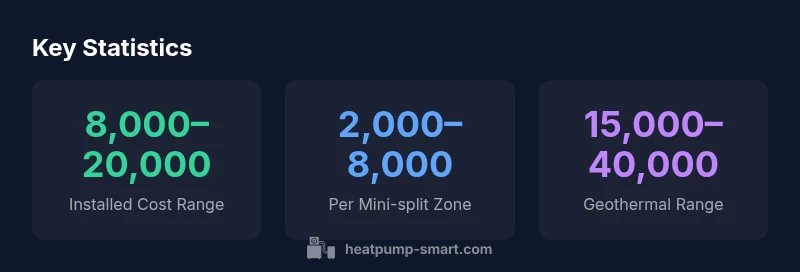
How much is a heat pump? For a typical residential installation, total costs vary widely by system type and home size. Heatpump Smart Analysis, 2026 shows installed prices commonly range from roughly $8,000 to $20,000 for standard air-source setups, with mini-splits costing about $2,000 to $8,000 per zone before installation, and geothermal systems potentially exceeding $15,000 to $40,000. Final numbers depend on climate, ductwork, and efficiency choices.
What drives heat pump prices
The price you pay for a heat pump is not a single number; it's the sum of equipment cost, installation labor, and site-specific factors. At a high level, you pay for the unit, then for professionals to install, connect refrigerant lines, ensure electrical readiness, and potentially modify ductwork. The primary drivers are system type (air-source, mini-split, or geothermal), capacity (tons or zones), efficiency (SEER/HSPF), and climate. The Heatpump Smart team notes that climate demands higher-capacity equipment in very cold zones, which increases upfront costs. Additionally, existing ductwork and electrical panels influence labor time and material needs. For homeowners, understanding these drivers helps set realistic budgets and avoid sticker shock. In practice, most homeowners encounter costs that reflect both hardware and hands-on work: a strong, efficient unit must be matched to your home to maximize comfort and savings.
As you begin budgeting, remember that regional labor markets, permitting requirements, and contractor pricing strategies can shift the final figure. Heatpump Smart analysis emphasizes that the most reliable bids come with a transparent breakdown of equipment vs. installation, plus warranty terms. This clarity makes it easier to compare apples to apples and avoid surprise add-ons down the road.
Equipment vs installation: where the money goes
Equipment costs cover the heat pump unit itself and any accessories like thermostats, sensors, and zoning controllers. Installation costs cover labor, refrigerant lines, electrical work, ductwork adjustments, and permits. In many homes, the equipment portion is a fixed component, while installation costs vary more widely due to complexity. If your home has older ducts or no existing refrigerant lines, installation can dwarf equipment costs. Planning for upgrades—like improved insulation, duct sealing, or smart controls—can also raise upfront numbers but improve long-term comfort and efficiency. Heatpump Smart suggests working with a contractor who provides a transparent breakdown to help compare bids fairly. A well-phased plan reduces the risk of overruns and mismatched expectations later in the project.
Cost ranges by system type
Air-source central heat pumps: typical installed costs generally fall within a broad range, from roughly $8,000 to $20,000, depending on capacity and climate. Mini-splits (per zone): expect roughly $2,000 to $8,000 per zone, before installation, with more zones increasing the total. Geothermal systems: installed costs commonly range from about $15,000 to $40,000 or more, reflecting drilling, loop field installation, and higher equipment costs. These ranges reflect typical residential projects in the United States for 2026, and actual numbers can vary. When evaluating bids, compare both equipment quality (compressor type, refrigerant, warranty) and installation scope (ductwork, electrical upgrades, and labor).
Climate, home size, and ductwork: other cost factors
Your climate drives the required heating capacity and cooling efficiency, which in turn affects the upfront price. A larger home or a harsher climate demands higher SEER and HSPF ratings, increasing both unit cost and installation time. Ductwork matters too: homes with compact or leaky ducts may require sealing or rerouting, raising costs but delivering real energy savings and improved comfort. Even when the unit is cheap, improper sizing or poor duct design can erode performance. A well-designed system paired with proper insulation reduces operating costs and enhances long-term value.
Financing options and incentives
Financing heat pump projects can make upfront costs more manageable. Many homeowners use a combination of cash, loans, or home equity lines of credit, with terms that reflect energy savings over time. Rebates and tax credits—where applicable—can further reduce the effective price. Availability varies by region and program year, so consult official sources or a Heatpump Smart advisor for current offerings. Remember to factor in potential utility bill reductions when evaluating payback.
Timeline: typical process from inquiry to operation
From first inquiry to a running system, expect several stages: initial evaluation and sizing, proposal and bid comparison, equipment selection, permitting if required, installation, and commissioning. Scheduling can take days to weeks, depending on contractor availability and permitting. A standard replacement in a single-zone home often takes a few days of work, while larger homes or geothermal installations can extend the timeline. After install, a post-installation check ensures refrigerant charge, airflow, thermostat control, and efficiency meet the design specs.
How to estimate your budget: a step-by-step method
Step 1: define scope (type of heat pump, zones, and whether ductwork needs upgrading). Step 2: obtain three bids and compare their scope of work. Step 3: add 10–20% contingency for unexpected items. Step 4: factor in incentives and financing options. Step 5: forecast annual energy savings using your local energy rates. This structured approach helps translate unit price into a total cost and estimated payback. Heatpump Smart recommends documenting every assumption and updating bids as you gather more information.
Example budgeting scenarios
Scenario A: Small apartment with a single-zone mini-split. Estimated installed cost range: $2,000–$8,000. Scenario B: Medium home with central air-source heat pump and ductwork replacement. Estimated installed cost range: $12,000–$22,000. Scenario C: Large home or colder climate with geothermal loop system. Estimated installed cost range: $25,000–$60,000. Each scenario illustrates how capacity, ductwork, and climate shift the final price and the long-term energy value.
Final budgeting checklist and tips
- Get multiple bids with detailed scope and itemized costs
- Ask about warranties on both equipment and installation
- Explore rebates, tax credits, and financing options
- Plan for electrical upgrades and electrical panel capacity
- Include duct sealing and insulation improvements for better performance
- Prioritize high-efficiency SEER/HSPF units to maximize savings
- Estimate payback by pairing energy costs with projected energy use reductions
dataTableButtonPlaceholderText
Cost comparison of heat pump system types
| System Type | Typical Installed Cost Range | Notes |
|---|---|---|
| Air-source heat pump (central) | $8,000–$20,000 | Most common for existing homes |
| Mini-split (per zone) | $2,000–$8,000 | Cost per zone; flexible installation |
| Geothermal heat pump | $15,000–$40,000 | Higher upfront; long-term savings |
Your Questions Answered
What factors influence heat pump prices the most?
The most influential factors are system type, capacity, efficiency (SEER/HSPF), climate, ductwork, and electrical upgrades. A shockingly cheap unit can end up expensive if it’s undersized or poorly installed.
The price depends mainly on system type, capacity, and installation complexity. Avoid undersized units to prevent higher energy costs later.
Are there rebates or incentives available?
Yes—rebates and credits exist in many regions and change yearly. Check local utility programs and federal incentives, and ask your contractor for current options that fit your project.
There are often rebates and credits; your contractor can help locate the right programs.
How long does installation typically take?
Simple, single-zone installs can take a few days; larger homes or geothermal projects may extend multi-day timelines. A thorough commissioning phase ensures optimal performance.
Most installs take a few days, but bigger projects take longer.
Is a heat pump more expensive than gas heating upfront?
Upfront costs for heat pumps can be higher, but energy savings and incentives often narrow the gap. Long-term costs depend on fuel prices and efficiency.
It can cost more upfront, but energy savings and incentives help over time.
Do heat pumps work well in cold climates?
Modern heat pumps perform well in many cold climates, though extreme conditions may require supplemental heat or hybrid setups. Sizing and insulation remain critical.
They work in many cold areas, but proper sizing matters.
How should I finance a heat pump project?
Consider a mix of cash, loan, or home equity, plus any rebates. Compare the total cost of ownership to ensure the monthly savings offset the payments.
Finance with rebates in mind and compare total costs versus savings.
“The upfront cost matters, but value comes from proper sizing and high efficiency that matches your climate.”
Top Takeaways
- Identify your system type: central, mini-split, or geothermal.
- Expect equipment costs plus installation labor as the main drivers.
- Climate, home size, and existing ducts shape final pricing.
- Look for high-efficiency models to maximize long-term savings.
- Plan for rebates, financing, and a realistic payback window.