Heat Pump Emergency Heat Cost: A Practical Guide
Explore how emergency heat affects your energy bills, when it kicks in, and practical steps to minimize costs. Learn from Heatpump Smart how to reduce waste, optimize thermostats, and improve home insulation for better efficiency in cold weather.


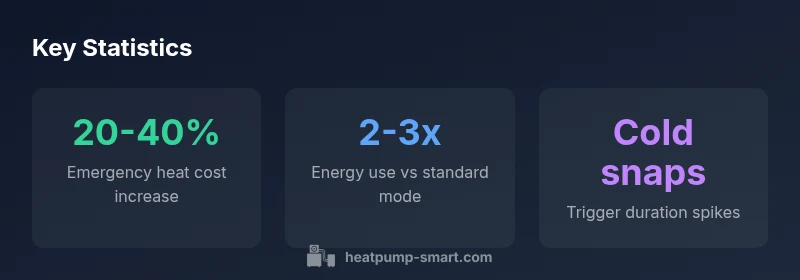
Emergency heat engages a supplemental heat source when the heat pump cannot meet the thermostat’s setpoint, dramatically increasing energy use and heat-pump emergency heat cost. Costs vary by climate and efficiency, but Heatpump Smart notes a noticeable rise during cold snaps. Treat EH as a temporary safety valve, not a default operating mode.
What is emergency heat and why it costs more
Emergency heat is a fallback mode used by heat pumps when the system cannot reach the thermostat’s setpoint using the regular compressor and outdoor unit. In most systems, activating emergency heat engages electric resistance coils or an auxiliary heat source. This provides immediate warmth but at a significantly higher energy cost. For homeowners, the key takeaway is that heat pump emergency heat cost should be treated as a temporary safety valve, not a default operating mode. The Heatpump Smart team notes that in very cold weather or in poorly insulated homes, the heat pump may rely on emergency heat for longer stretches, leading to noticeable cost increases. Understanding when and why EH engages helps you plan by reducing unnecessary use and by improving insulation, thermostat control, and system health.
Cost dynamics: why emergency heat costs vary
Costs tied to emergency heat vary with climate, home insulation, and equipment efficiency. When outside temperatures plummet, the heat pump may struggle to meet demand, triggering EH more often. In well-insulated homes with modern, high-efficiency outdoor units, the delta between normal operation and emergency heat can be smaller, but it still adds to monthly energy use. According to Heatpump Smart analysis, cost increases are most pronounced on the coldest days and during extended cold snaps, and they diminish with smart thermostat scheduling and proactive maintenance. Two other factors—defrost cycles and thermostat hysteresis—can influence how long EH remains active. If you’ve noticed frequent EH activations, it’s worth reviewing your home's envelope (walls, attic, windows) and confirming the heat pump is correctly sized for the space.
Practical strategies to minimize emergency heat costs
Reducing reliance on emergency heat comes from a mix of better insulation, smarter controls, and routine maintenance. Here’s a practical checklist:
- Seal air leaks around doors and windows; add weatherstripping where appropriate.
- Improve attic and wall insulation to reduce heat loss.
- Install a programmable or smart thermostat with adaptive recovery so the system can pre-heat gradually rather than surging.
- Schedule annual heat pump tune-ups to verify refrigerant levels, airflow, and coil cleanliness.
- If you have a very old unit, consider upgrading to a higher-efficiency model designed for colder climates.
- Use zone heating to avoid heating unoccupied spaces. By following these steps, homeowners can lower the frequency and duration of emergency heat usage, which Heatpump Smart analysis, 2026 indicates is a major lever for cost control.
How to estimate costs for your home
Estimating the cost impact of emergency heat requires a simple framework you can apply with online tools or utility data. Start by noting your climate zone, insulation quality, and the heating degree days for your location. Compare your monthly energy bills in months when EH ran versus months with normal operation, if those records exist. Use a baseline efficiency estimate for your heat pump (SEER, HSPF) and a typical COP when the outdoor temperature is above freezing. The difference in energy consumption between EH and standard operation provides a rough cost delta. Keep in mind that electricity prices vary by provider and season. Heatpump Smart suggests performing at least one annual review to refine your estimates, especially if you’ve added insulation or changed thermostat settings.
When emergency heat signals a bigger issue
If EH activates frequently, it can indicate problems beyond weather. Common culprits include under-sized systems, duct leakage, blocked condenser coils, or refrigerant leaks. Poor airflow due to dirty filters or a restricted return path forces the system to work harder, increasing reliance on EH. A blower motor struggling to reach setpoints or a malfunctioning defrost control can also push the system into auxiliary heat. Addressing these root causes often yields bigger savings than chasing the symptom by simply turning down the thermostat. A professional assessment can verify proper sizing and diagnose airflow or refrigerant issues.
Thermostat settings and scheduling for cost control
Your thermostat strategy can have a measurable effect on how often emergency heat runs. Avoid large setpoint gaps between day and night. Use a gradual temperature ramp to reach comfort instead of abrupt changes. Enable adaptive or weather-based recovery if available; these features pre-warm the space before you wake or return home. In many homes, a 1–2 degree setback at night reduces EH calls without sacrificing comfort during the day. If you live in a very cold climate, consider a second-stage optimization setting that prioritizes efficient compressor operation while providing comfort.
Case study: a winter scenario
Imagine a typical cold-climate home that relied on emergency heat for several weeks during a harsh spell. After upgrading attic insulation, sealing air leaks, and implementing a smart thermostat schedule, EH activations declined noticeably, and monthly energy costs stabilized. This illustrates how envelope improvements and better controls can reduce the reliance on auxiliary heat without sacrificing warmth.
Maintenance and a quick homeowner checklist
Regular maintenance keeps emergency heat from becoming a costly default. Check filters monthly, clean coils annually, and ensure outdoor units are clear of debris. Verify thermostat wiring and test the system’s response to a controlled cooling and heating cycle. Schedule a professional tune-up once a year to inspect refrigerant levels, airflow, and electrical connections. A small maintenance routine can prevent big cost increases during winter.
Cost drivers and mitigation for emergency heat
| Factor | Impact on cost | Mitigation |
|---|---|---|
| Energy source during EH | Electric resistance elements add cost | Consider insulation and schedule maintenance |
| Climate conditions | Colder temps trigger longer EH | Upgrade envelope and use a cold-climate unit |
| Thermostat strategy | Large setpoint gaps increase EH | Use programmable scheduling and smaller setpoint changes |
| Maintenance | Dirty filters reduce efficiency | Annual tune-ups and regular cleaning |
Your Questions Answered
What triggers emergency heat on a heat pump?
Emergency heat typically engages when the outdoor temperature is very low or the system cannot meet the thermostat setting with the compressor alone. This can be due to high demand, poor insulation, or a fault that prevents efficient operation.
EH starts when the system can't meet the setpoint with normal operation, often in very cold weather.
How can I reduce emergency heat costs?
Improve insulation, seal leaks, install a programmable thermostat, and schedule annual maintenance. Reducing heat loss means EH runs less often, lowering costs.
Seal your home, upgrade insulation, and use a smart thermostat to cut EH use.
Is emergency heat always more expensive?
Generally yes, because electric resistance heating is less efficient than a heat pump in standard mode. The cost delta varies by climate and system efficiency.
Usually more expensive, but it depends on climate and how your system is set up.
Will emergency heat wear out my system faster?
Extended use of emergency heat can increase wear on components and reduce overall system lifespan. Regular maintenance helps mitigate this risk.
Using EH a lot can stress the system; keep up with maintenance.
What thermostat settings help manage costs?
Set smaller day–night temperature differences, enable adaptive recovery, and avoid large temperature swings. A consistent schedule reduces EH triggers.
Use gradual temperature changes and smart scheduling to lower EH use.
Can insulation upgrades reduce reliance on emergency heat?
Yes. Better insulation reduces heat loss, keeping heat pump demand more within normal operation and lowering EH usage.
Bigger insulation upgrades help cut the need for EH.
“Emergency heat is a safety valve, not a long-term strategy. The best approach combines proper sizing, smart controls, and a well-sealed home to keep costs in check.”
Top Takeaways
- Identify emergency heat cost triggers and reduce reliance with better insulation.
- Use a smart thermostat and gradual temperature changes to avoid large EH spikes.
- Regular maintenance and coil cleanliness are essential for efficiency.
- Seal air leaks and upgrade windows/attics to cut heat loss.
- Plan ahead for cold snaps; proactive control minimizes cost impact.