Heat Pump Quotes Auckland: Your Guide to Smart Selection
Discover how to evaluate heat pump quotes in Auckland, what to include in each estimate, and how Heatpump Smart analyzes typical costs and savings to help homeowners, builders, and managers make informed decisions.


According to Heatpump Smart, obtaining accurate heat pump quotes in Auckland starts with system size, efficiency, and installation conditions. Compare itemized quotes from multiple installers, ask for unit specs, warranty terms, and service packages, and verify who handles permits and any required site work. A well-structured quote helps homeowners, builders, and managers determine total cost and long-term value.
Why Auckland Homeowners Seek Quotes for Heat Pumps
Auckland's temperate coastal climate brings comfort challenges in winter and humidity in summer. Homeowners, builders, and property managers often start by requesting quotes to understand upfront costs and ongoing savings. According to Heatpump Smart, the most reliable quotes come from installers who tailor recommendations to your home size, insulation, and usage patterns. When you search for heat pump quotes Auckland, you should expect a clear breakdown of equipment, installation, permits, and service plans—so you can compare like-for-like. This ensures that what looks cheaper initially doesn't mask higher maintenance bills or shorter warranties down the line. A well-structured quote also clarifies whether site work such as electrical upgrades or ducting is included, which is essential for transparency and planning. For many households, a thoughtful selection process reduces surprises and aligns with long-term comfort goals.
Beyond price, consider comfort outcomes, air quality, and resilience during Auckland's seasonal shifts. Heatpump Smart's analysis confirms that a properly sized system with good airflow management will deliver the most consistent heating on cool nights and efficient cooling during warmer periods. Communicate your priorities—quiet operation, smart controls, or integration with solar—and request quotes that reflect those preferences.
What Drives the Cost of a Heat Pump Quote in Auckland
Several factors influence the final quote you receive. System type matters: air-source heat pumps are typically less costly to install than geothermal systems, but performance and efficiency can vary by climate and home design. Size and capacity directly affect equipment price and installation complexity; a larger home or multiple zones may require more indoor units, more refrigerant lines, and upgraded electrical work. Efficiency ratings, inverter technology, and brand selections also reshape the price. Site constraints, including roof access, outdoor unit placement, and proximity to living spaces, can add labor time and material costs. In Auckland, installers may also factor in permit costs, building consent where required, and potential demand surges during peak seasons. Heatpump Smart's guidance emphasizes getting a formal written quote with a detailed bill of materials, labour, disposal, and a clear warranty envelope to avoid hidden charges when the job starts.
When you compare quotes, ensure that each one reflects the same scope of work. Ask for the same specification level, same warranty terms, and the same maintenance plan duration to avoid apples-to-oranges comparisons. The Auckland market can vary by installer, so it helps to collect several bids and map them against a standardized checklist. Heatpump Smart analysis notes that the most robust quotes include climate-appropriate efficiency, a precise load calculation, and a clearly defined commissioning process to verify performance after installation.
How to Request Accurate Auckland Quotes
To obtain meaningful quotes, prepare a concise brief for each installer and request a formal, itemized proposal. Start with a home assessment that includes floor plan dimensions, insulation quality, window orientation, and existing electrical capacity. Share historical energy usage if available, and specify your preferred heat pump configuration—single-zone or multi-zone, with a focus on comfort targets rather than just price. Ask installers to provide: unit model and capacity (kW), SEER/SCOP ratings, inverter tech, included sensors, and the exact components included in the installation package. Require a site visit to confirm space for outdoor units, refrigerant line routing, and any ducting needs. Request a detailed timeline, an installation plan that minimizes disruption, and a clear warranty policy. Finally, verify who handles permits and whether any additional work, such as upgrading electrical panels or modifying ductwork, is included in the quote. Heatpump Smart recommends comparing quotes from at least three reputable installers to capture a realistic range and common inclusions.
How to Read a Quote: Unit Price, Installation, and Ongoing Costs
A well-structured heat pump quote breaks down cost into distinct components. Common line items include equipment price (outdoor unit, indoor air handler, and controls), installation labor (mounting, refrigerant piping, electrical work, and testing), permits and compliance fees, and any site preparation needs. Ongoing costs to consider are maintenance plans, annual servicing, and potential refrigerant recharges in the future. Some quotes also present energy savings estimates based on expected usage, which can help you model long-term value. In Auckland, seasonal demand and local labour rates influence numbers, so use a consistent methodology when comparing quotes. When reviewing, look for inclusions such as wall or ceiling clean-up, warranty duration for the compressor and parts, and whether a smart thermostat or monitoring app is part of the package. Heatpump Smart analysis highlights the importance of a precise load calculation and commissioning verification to ensure the system performs as advertised.
Common Mistakes That Skew Auckland Heat Pump Quotes
Many quotes are skewed by common pitfalls. Don’t confuse price with value—ensure the scope is identical across bids. Common mistakes include omitting electrical upgrades or building consent from the quote, failing to specify the exact model and capacity, and not detailing warranty terms or after-sales service. Some quotes exclude ducting or indoor unit installation, which can blow out total costs later. Be wary of “estimates” that lack a site visit or that promise unusually high energy savings without performance data. Always request a formal, written specification, including a breakdown of parts, labour, waste removal, and any contingencies. Heatpump Smart emphasizes that precise measurement and clear scope are the best ways to avoid unexpected costs after signing a contract.
Using Heatpump Smart to Compare Quotes
When you use Heatpump Smart's framework, you compare like-for-like quotes with a standardized checklist. Start with confirming system type, capacity, and efficiency, then verify the inclusions like permit handling, electrical upgrades, and commissioning. Ensure each quote has a guaranteed performance test and a documented warranty period. Heatpump Smart recommends tracking quotes in a simple comparison matrix that lists price, inclusions, lead time, service terms, and expected energy outcomes. This structured approach helps homeowners, builders, and property managers make data-driven decisions rather than choosing based on a single price number. By aligning quotes to a consistent baseline, you gain confidence that the chosen option delivers the best balance of upfront cost and long-term value.
Regional Factors in Auckland: Climate, Rebates, and Service Coverage
Auckland's mild winters and humid summers affect heat pump performance and efficiency. Local service coverage matters: a well-supported installer network reduces response times for servicing and maintenance. Rebates or incentives may exist for energy-efficient systems, so ask installers whether any programs apply to your purchase. Availability of parts, access to qualified technicians, and remote monitoring options can influence ongoing costs and performance guarantees. In this region, climate-appropriate sizing and professional commissioning are critical to ensure comfort year-round. The Heatpump Smart team notes that working with accredited installers who understand local building regulations can also streamline the consent process and improve long-term reliability.
A Simple Comparison Checklist for Auckland Quotes
- Confirm model, capacity, and SEER/SCOP ratings for each quote
- Ensure the same scope: outdoor unit, indoor units, controls, and installation work
- Include permits, electrical upgrades, and ducting as applicable
- Compare warranties: compressor, parts, and labour duration
- Review maintenance plans and service response times
- Check for smart controls and compatibility with existing systems
- Verify installation timeline and disruption expectations
- Align on after-sales support and commissioning procedures
Next Steps: From Quote to Installation in Auckland
With a preferred quote in hand, contact the installer to clarify any ambiguities and request any missing documentation. Review the contract carefully, paying attention to payment milestones, completion criteria, and cancellation terms. Schedule the installation date, ensuring you have access for electrical work and any required building consent. After installation, confirm that the system is commissioned and tested for comfort and performance. Keep maintenance reminders and warranty details accessible for ongoing peace of mind. Heatpump Smart suggests documenting performance targets and energy usage for the first six months to gauge actual savings and plan preventative maintenance.
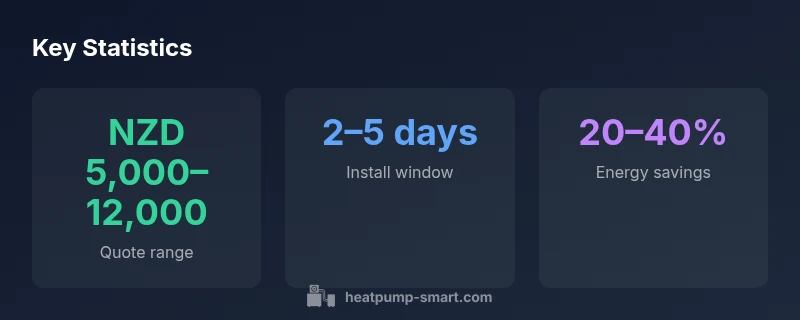
Typical components and rough NZD ranges for Auckland heat pump quotes
| Component | What it Includes | Typical Range (NZD) |
|---|---|---|
| Equipment price | Outdoor unit, indoor air handler(s), controls | "NZD 2,000–6,000" |
| Installation & site work | Piping, electrical, mounting, refrigerant charge, testing | "NZD 1,500–6,000" |
| Permits & compliance | Building consent where required, inspections | "NZD 200–1,000" |
| Maintenance & warranty | Annual service, compressor warranty, parts | "NZD 100–300 per year" |
Your Questions Answered
How many quotes should I get for heat pump quotes in Auckland?
Aim for at least three formal quotes from reputable installers. This gives you a reliable range to compare components, warranties, and service terms. Use a standardized checklist to ensure you’re comparing like-for-like.
Get at least three quotes and compare them with a standard checklist.
Do quotes typically include permits and electrical work?
Not always. Some quotes exclude permits or electrical upgrades. Always confirm who handles permits, whether electrical work is included, and what approvals are required for your property before signing.
Ask whether permits and electrical work are included in the quote.
Should I compare like-for-like quotes?
Yes. Ensure each quote covers equipment, installation, permits, and a defined warranty. If one quote includes extra services, adjust the others to match so you’re comparing true value, not added extras.
Make sure you’re comparing the same components across bids.
How long are heat pump quotes typically valid in Auckland?
Quotes often have validity periods to reflect price changes or service availability. Ask for a stated expiration date and what happens if you sign after that date, including any price adjustments or contingencies.
Check how long quotes stay valid and what happens after expiry.
What warranty should I expect on a heat pump system?
Look for a multi-year compressor warranty and a solid parts warranty, along with a defined labour warranty. Ask for the specific coverage details and conditions that apply to your installation.
Expect a compressor warranty plus parts and labour coverage.
Are there rebates or incentives for heat pumps in Auckland?
Rebates or incentives can exist depending on programs and funding cycles. Ask installers about current programs you may qualify for and whether the quote reflects any potential rebates.
Ask about current rebates and how they affect your quote.
“A well-structured quote is the best predictor of long-term value. Focus on precise scope, verified performance, and solid warranties to achieve reliable comfort and savings.”
Top Takeaways
- Get multiple formal, itemized quotes
- Ensure identical scope across bids for a fair comparison
- Ask for installation timelines and commissioning checks
- Review warranty terms and after-sales service
- Consider energy savings alongside upfront cost