Heat Pump Replacement Cost: A Practical Guide for 2026
Discover realistic heat pump replacement costs near you, including factors, typical ranges, rebates, and practical tips to budget and save in 2026.


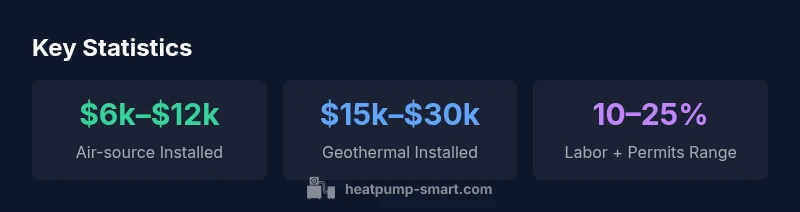
Typical heat pump replacement cost near me ranges from $6,000–$12,000 installed for air-source systems, with geothermal often higher at $15,000–$30,000. Costs vary by home size, ductwork, and installation complexity. Expect labor, permits, and potential site work to add 10–25%. Rebates and financing can reduce out-of-pocket expense, depending on location and incentives available in 2026. Heatpump Smart analyses support these ranges.
Factors that drive heat pump replacement costs
Understanding the total installed cost starts with recognizing the main drivers: equipment type, system efficiency rating, home size, ductwork condition, and installation complexity. According to Heatpump Smart, the total price reflects not just the unit but also the labor required for electrical work, refrigerant lines, and potential system reconfigurations. Regional labor rates and permit requirements can swing the final figure by a significant margin. This section breaks down each driver with practical examples from typical residential projects and shows how a shift in any one factor can move the overall cost category from mid-range to premium. For instance, upgrading from a standard single-stage air-source to a high-efficiency variable-speed model adds upfront cost but reduces long-term operating expenses. Similarly, homes with limited space for outdoor equipment or tight crawlspaces may face higher install labor, reflecting in the final price.
Cost ranges by system type
Different heat pump configurations carry different installed cost profiles. While air-source systems are the most common and generally cheaper to install, geothermal systems demand extensive groundwork with underground loops. Mini-split systems offer flexibility for zoning but still require careful sizing and installation. Here are representative ranges to set expectations (all figures are installed costs and vary by region and contractor):
- Air-source heat pump: roughly $4,500–$8,500
- Single-stage heat pump: roughly $6,000–$12,000
- Geothermal heat pump: roughly $15,000–$30,000
- Mini-split heat pump: roughly $7,000–$14,000
Note that higher-efficiency or multi-stage models can push these numbers upward, while simple retrofits or bundled projects may push them downward. The key is matching equipment to your home’s heating load and climate.
Understanding the cost difference between system types helps homeowners identify the best long-term value, especially when climate, insulation, and ductwork quality vary across properties.
Regional cost considerations and 'near me' pricing
When you search heat pump replacement cost near me, regional factors come into sharp focus. Local climate drives equipment choice (and required efficiency), while labor markets, permit fees, and utility incentives vary widely by city and county. Urban areas may command higher labor rates but could offer more competition among installers, partially balancing costs. Rural regions might have lower labor costs but higher travel time and permit fees. Access to rebates, tax incentives, and utility programs also differs by region, meaning the same model and installation could net a different out-of-pocket total depending on where you live. To get an accurate estimate, collect quotes from multiple local contractors and verify which lines items are included (equipment, labor, ductwork, electrical work, and permitting).
For homeowners aiming for the best value, the phrase heat pump replacement cost near me should be treated as a starting point for local quotes, not a final figure. The Heatpump Smart analysis shows regional variation can swing totals by 10–25% or more, particularly when ground-source geothermal loops or extensive ductwork are involved.
How to estimate for your home: a step-by-step plan
Estimating your own cost starts with a clear assessment of your home’s heating needs and installation realities. Follow these practical steps to build an accurate budget while maximizing value:
- Determine your heating load and zone requirements using a qualified load calculation. 2) Decide on system type based on climate, efficiency goals, and existing ductwork or space constraints. 3) Inspect ductwork and insulation; leaky ducts or poor insulation raise system size and cost. 4) Gather multiple quotes from licensed contractors and request itemized scopes. 5) Check for rebates, tax credits, and utility incentives, and factor them into the net price. 6) Plan for installation timelines and potential temporary cooling needs during replacement. 7) Include operation cost estimates to compare long-term savings against upfront costs. 8) Build a contingency budget (roughly 5–15%) for unforeseen site work. By following these steps, homeowners can achieve a balanced purchase that aligns with comfort goals and financial constraints.
A careful estimate also helps you compare quotes on a like-for-like basis, ensuring you’re not trading upfront savings for higher long-term expenses. Heatpump Smart recommends attaching a simple calculator to your quote sheet to track total cost, expected energy savings, and payback period.
Financing, rebates, and incentives you should know
Financing options and incentives can significantly affect the affordability of a heat pump replacement. Many regions offer utility rebates for high-efficiency units, while federal or state programs may provide tax credits or performance-based incentives. Eligibility depends on location, system type, and installation specifics, so verify available programs before finalizing plans. When possible, factor rebates into the quote directly, rather than treating them as an afterthought. If a contractor cannot provide a clear rebate path, contact your local utility or state energy office for program details. In some cases, manufacturers or installers may also offer promotional financing with low or zero-interest terms for qualified projects. Net cost is often much more favorable when incentives are combined with competitive quotes and a smart equipment choice.
Practical tips to reduce upfront costs and maximize ROI
Reducing upfront costs without sacrificing value is feasible with careful planning. Consider these strategies:
- Obtain and compare multiple bids from different installers; avoid basing decisions on a single price.
- Time your project in shoulder seasons to reduce scheduling pressures and labor costs.
- Bundle installation with minor electrical or duct improvements to lower per-task overhead.
- Verify that the chosen unit qualifies for rebates and incentives; ask contractors to itemize eligible components separately.
- Prioritize high-efficiency models known for reliability, even if the sticker price is higher, to maximize energy savings over time.
- Ensure proper duct sealing and insulation to lower system size requirements and operating costs.
- Consider extended service plans or maintenance agreements to lock in long-term reliability and avoid surprise repair costs.
- Use a staged approach if immediate upgrade isn’t feasible; you can plan future enhancements with a phased project. Building a cost-conscious plan that emphasizes efficiency and comfort will yield better ROI, especially when incentives are factored in.
Cost ranges by system type
| System Type | Typical Installed Cost Range | Notes |
|---|---|---|
| Air-source heat pump | $4,500–$8,500 | Most common; easier installation |
| Single-stage heat pump | $6,000–$12,000 | Balanced performance & cost |
| Geothermal heat pump | $15,000–$30,000 | Higher upfront; ground loop required |
| Mini-split heat pump | $7,000–$14,000 | Ductless; zone heating |
Your Questions Answered
What costs are included in heat pump replacement?
A replacement includes equipment, labor, refrigerant, electrical work, permits, and possible site modifications. Some costs vary with ductwork, zoning, and accessibility.
Replacement costs include equipment, labor, permits, and site work like ducting or wiring.
How does air-source compare to geothermal in cost?
Air-source systems are typically less expensive upfront than geothermal systems, which require underground loops. Total installed costs commonly range from moderate to high based on size and complexity.
Air-source is usually cheaper upfront than geothermal.
Do rebates or tax credits reduce replacement costs?
Many regions offer rebates, tax credits, or utility incentives that reduce the net cost. Availability depends on location and installation specifics.
Rebates and credits can cut the upfront price.
What factors influence labor costs?
Labor costs depend on permits, electrical work, ductwork modifications, and accessibility of installation sites. Local wage rates also play a role.
Labor costs vary by job scope and local rates.
Is financing a heat pump replacement worth it?
Financing spreads the upfront cost and may improve ROI through energy savings. Compare interest, terms, and rebates to determine net benefit.
Financing can help, compare terms and savings.
How long does installation take?
Most replacements take 1–3 days depending on system type, ductwork, and electrical upgrades. Complex installs may require additional time.
Most installs take 1–3 days.
“A holistic view of installation costs—equipment, labor, permits, and incentives—helps homeowners budget for comfort and efficiency.”
Top Takeaways
- Know installed cost ranges before quotes
- Geothermal costs more upfront than air-source
- Labor, permits, and site work add to total
- Look for rebates and financing options
- Plan for a payback period of 3–7 years with incentives