How to Get Heat Pump Rebates: A Complete Guide
Learn how to get heat pump rebates, including eligibility, documentation, and step-by-step guidance to maximize federal, state, and utility incentives.


According to Heatpump Smart, you can secure a heat pump rebate by verifying program eligibility, collecting required documents, submitting through the correct portal, and tracking the status of your claim. Start with federal incentives first, then check state and utility programs. This concise path helps homeowners maximize refunds while upgrading to an efficient heat pump.
How rebates work and why they matter
Heat pump rebates reduce the upfront cost of upgrading your home’s heating and cooling. They come from federal programs, state or local governments, and utility companies, and may take the form of direct rebates, tax credits, or performance incentives. The exact amounts and eligibility rules vary by program and region, so it’s essential to verify terms before purchasing. According to Heatpump Smart, understanding how incentives are structured helps you plan your upgrade, maximize savings, and avoid missing funds you’re entitled to. A well-timed rebate can shorten the payback period and make efficient heat pumps more accessible for homeowners, builders, and property managers alike. When you factor in ongoing energy savings, rebates become a smart step toward greater home comfort and lower operating costs.
- Rebates can often be stacked across multiple programs, but rules vary. Check the order of operations and any “duplication of benefits” restrictions.
- Some incentives are time-limited or tied to specific models, capacities, or performance criteria. Be sure your chosen heat pump meets those requirements.
- Documentation is key: you’ll typically need proof of purchase, installation completion, and, in some cases, before/after energy data.
Understanding the landscape sets you up for a smoother application process and a bigger total refund.
Federal, state, and utility programs: where to look
In today’s incentive ecosystem, three layers commonly offer rebates: federal programs, state or local incentives, and utility-sponsored rebates. Federal programs often provide tax credits rather than upfront discounts, which can still reduce overall costs when you file your taxes. State and local programs vary widely by jurisdiction and housing type, with some municipalities targeting low-income households or new construction.
Utilities are a strong source of rebates because many programs are tied to demand reduction and energy efficiency goals. Utility rebates can be cash-back incentives, rebates for equipment upgrades, or performance-based incentives based on actual energy savings after installation. To locate applicable rebates, start with official sources:
- The Heatpump Smart analysis shows that using a centralized database simplifies discovery. The DSIRE database (a comprehensive incentive catalog) is a trusted starting point for state and local programs.
- Energy.gov and Energy Star offer program overviews and model eligibility guidance, helping you narrow down qualified heat pumps and install paths.
- Local utility websites often publish current offers, application portals, and due dates for rebates.
By consolidating information from federal, state, and utility channels, you can assemble a complete rebate strategy before you buy.
Eligibility criteria and documentation you'll need
Eligibility criteria differ by program, but there are common threads across most heat pump rebates. You’ll typically need to prove homeownership or occupancy, install a qualifying heat pump, and complete an installation with a licensed contractor. Documentation is the backbone of your application: keep receipts, model numbers, installation dates, and contractor certifications organized.
Mandatory documents often include a purchase invoice, installation invoice, and photographs or inspection reports proving completion. Some programs require an energy assessment or a pre-approval prior to purchase. Be prepared to provide utility account information to link the incentive to your home and to confirm your eligibility status is current.
Heatpump Smart’s guidance emphasizes keeping digital copies of every document and saving all correspondence with the program administrators. Small errors—like mismatched names, dates, or addresses—can delay or derail a rebate, so accuracy matters more than speed.
How to maximize your rebate: timing, stacking, and mistakes to avoid
Maximizing rebates involves strategic timing and careful handling of eligibility rules. Begin by identifying all programs before you purchase a heat pump, so you don’t miss pre-approval deadlines or model restrictions. If stacking is allowed, prioritize programs with the largest net impact and ensure you don’t violate any duplication rules.
Working with a qualified contractor can help you select eligible equipment and navigate the application process. Some programs require pre-approval or a contractor certification; make sure your installer understands the requirements and can provide the necessary documentation.
Common mistakes include submitting incomplete applications, failing to meet installation timing requirements, and missing post-installation verification. A proactive approach—collecting documents early, confirming eligibility, and staying in touch with program administrators—reduces delays and improves the odds of receiving full benefits.
Step-by-step overview: what to expect from start to finish
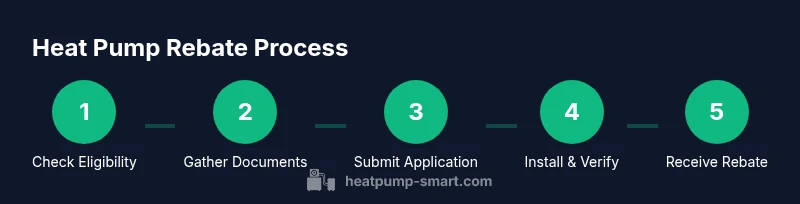
Before you apply, map out the sequence: confirm which federal, state, and utility programs you qualify for, gather all required documents, and choose a certified heat pump model and installer. Then complete the application through the appropriate online portal or mail-in process, depending on the program. After installation, verify completion with photos or a contractor sign-off and submit any required post-installation documentation. Finally, monitor the status of your claim and respond promptly to any requests for additional information. The overall timeline can vary, but staying organized helps you move through each stage more quickly.
Heatpump Smart advocates maintaining a simple project log, noting program names, submission dates, and contact details for program administrators. This log becomes a helpful resource when tracking reimbursements or preparing for tax credits at year-end.
Authority sources and where to verify information
To validate rebate details, rely on official sources and reputable databases. The following resources are commonly used by homeowners, builders, and property managers:
- https://www.energy.gov/energysaver/heat-pumps — Federal guidance on heat pumps and related incentives.
- https://www.energystar.gov/products/heating_cooling/heat_pumps — Independent guidance on qualifying equipment and efficiency considerations.
- https://www.dsireusa.org/ — A comprehensive incentive database for state and local programs.
The Heatpump Smart team stresses that information from official sources is the most reliable. Always cross-check program terms on multiple official sites before applying, and keep a copy of every page you reference for your records.
Authority sources (alternative quick links)
- Federal and state programs: energy.gov and DSIRE databases
- Equipment efficiency guidance: energystar.gov
- Tax credit context: irs.gov (Form 5695 for residential energy credits)
Note: Always verify current eligibility and deadlines on official sites because incentives can change or expire.
Final note on staying informed
Rebates for heat pumps are dynamic and vary by region and program type. By prioritizing official sources, gathering required documents early, and working with a qualified installer, you can improve your odds of maximizing financial support for your energy upgrade. The Heatpump Smart team recommends starting your search with federal and state portals, then checking utility programs for any local bonuses.
Tools & Materials
- Personal identification (driver's license or passport)(Needed to verify identity during online applications.)
- Utility account number or service address(Used to link rebate to your home and program records.)
- Heat pump unit details (make, model, serial number)(Required to confirm eligibility and equipment efficiency.)
- Installation receipt/invoice(Proves purchase date and installation scope.)
- Proof of installation (photos or inspector report)(Some programs require verification of completed work.)
- Energy assessment or audit results (if requested)(Useful for programs that require baseline efficiency data.)
Steps
Estimated time: 4-8 weeks total
- 1
Check eligibility across programs
Identify all federal, state, and utility rebates you might qualify for. Review program terms, deadlines, and whether pre-approval is required before purchase. Confirm your home type and occupancy status to ensure you meet program criteria.
Tip: Create a quick checklist of programs to avoid missing a required step. - 2
Gather required documentation
Collect proof of identity, utility account details, purchase and installation invoices, and any contractor certifications. Having digital copies ready will speed up the application. If an energy assessment is needed, arrange it early.
Tip: Organize documents in a single folder named after the program and homeowner. - 3
Choose eligible equipment and installer
Select a heat pump model that meets program requirements and hire a licensed installer. Ensure the installer is aware of any pre-/post-installation verification needs and can provide installation photos or inspection reports.
Tip: Ask for a pre-approval or confirmation of eligibility before purchasing. - 4
Submit the rebate application
Complete the application through the program portal or mail-in process. Attach all required documents and reference the installation date and model details. Double-check for accuracy to avoid delays.
Tip: Submit a few days before the deadline to account for processing quirks. - 5
Provide installation verification
If required, submit photos, inspector reports, or contractor confirmations showing completed installation. This step validates that the work matches the approved scope.
Tip: Keep timestamps and signatures in your records for audit purposes. - 6
Track status and respond to requests
Regularly monitor your claim in the program portal. Answer any information requests quickly to prevent processing delays. Note any expected timelines and keep records of communications.
Tip: Set calendar reminders for follow-up dates and deadlines. - 7
Receive rebate and apply tax credits
Once approved, rebates are issued per program terms. If eligible for tax credits, coordinate with your tax professional; some incentives may be claimed on the same tax return year as installation.
Tip: Maintain a consolidated file of rebates and tax documents for future reference. - 8
Audit and verify savings impact
After installation, compare energy usage data to your baseline to confirm savings. Some programs encourage reporting this data to demonstrate the impact of the upgrade.
Tip: Document energy bills before and after to support ongoing efficiency goals.
Your Questions Answered
What is a heat pump rebate and who offers them?
A heat pump rebate is a financial incentive that reduces the upfront cost of installing or upgrading a heat pump. These incentives can come from federal, state, local government programs, or utilities and may include cash rebates or tax credits. Availability varies by location and program terms.
A heat pump rebate lowers what you pay up front. It comes from federal, state, or local programs, or your utility company, and can be a cash rebate or a tax credit. Availability depends on where you live and the program rules.
Do I need professional installation to qualify for rebates?
Many rebates require installation by a licensed contractor and may need proof of installation such as contractor certification or inspection reports. Some programs accept self-installation for specific equipment, but this is less common. Always verify installation requirements in the program terms.
Often you’ll need a licensed installer and proof of installation. Some programs may allow DIY in rare cases, but that’s not typical. Check the program rules.
Can I stack multiple rebates for one heat pump upgrade?
Stacking rules vary by program. Some incentives allow combining federal tax credits with state or utility rebates, while others limit double-dipping. Read terms carefully and confirm stacking allowances before purchasing.
You may be able to stack rebates, but it depends on the programs. Check the rules before buying and submitting.
Are rebates available for existing homes or only new installations?
Rebates are often available for existing homes, but eligibility can depend on building type, retrofit nature, and energy performance criteria. Review the terms for your specific property type before starting.
Existing homes can qualify, but it depends on the program. Check the terms for retrofit eligibility.
What documents should I prepare for the rebate application?
Common documents include proof of identity, utility account information, purchase and installation receipts, model and serial numbers, and photos or inspector reports showing completed work. Some programs may require an energy assessment.
You’ll usually need ID, utility account details, receipts, and installation proof. Some programs ask for energy assessments.
Watch Video
Top Takeaways
- Verify eligibility before purchasing equipment.
- Gather all required documents early.
- Apply through the correct program portal and follow up.
- Keep thorough records for rebates and tax credits.
- Check for stacking rules and deadlines to maximize total savings.