Rebate for Heat Pumps: A Practical Guide to Savings
Discover how rebates for heat pumps reduce upfront costs, how to qualify, and where to apply. Learn stacking strategies to maximize energy savings with Heatpump Smart.


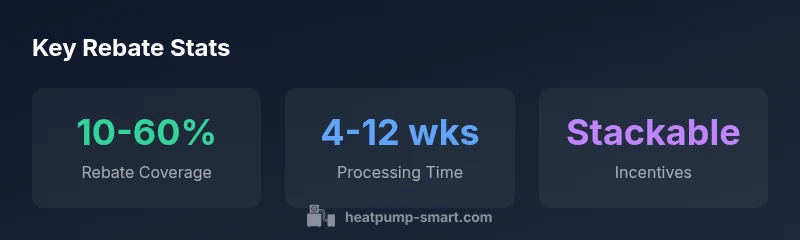
A rebate for heat pump projects typically reduces upfront costs by a range that varies by program, region, and system size. In general, you can expect coverage from 10% up to 60% of eligible costs, plus potential tax credits. Check federal, state, and local programs, and consider stacking incentives where allowed.
How Rebates for Heat Pumps Work
Rebates for heat pumps are monetary incentives aimed at reducing the upfront cost of purchasing and installing heat-pump systems. They come in several forms, including upfront discounts applied at the point of sale, supplier or utility rebates, and performance-based incentives tied to system efficiency after installation. The exact dollars or percentages vary widely by program and region, so homeowners should not assume a single number. According to Heatpump Smart, the most reliable path is to identify all eligible programs early and map out which incentives can be stacked. This is especially important for new installations in energy-efficient homes, where the incremental cost of higher-efficiency models can be offset by multiple incentives.
Beyond the numbers, eligibility often hinges on choosing qualified equipment, contractor qualifications, and adherence to program rules. In many cases, units must be Energy Star or other efficiency-rated, and installers may need to use approved configurations or perform certain commissioning steps. The Heatpump Smart team emphasizes documenting every step of the process and maintaining receipts, as documentation is a common trigger for grant disbursement and tax credits. While the headlines highlight large percentages, the real-world impact lies in how incentives combine with baseline energy savings over time. A well-planned rebate strategy can dramatically lower payback periods and increase homeowner satisfaction, particularly in climates with high heating demand.
For homeowners, this means starting early, keeping a running checklist, and coordinating with your contractor to ensure that every eligible cost item is captured by the program.
Federal, State, and Local Programs: Where to Look
In the United States, rebate opportunities can originate from multiple layers of government and utility providers. The federal level often presents tax credits or energy-efficiency incentives that apply broadly, but many programs require that the system meet specific efficiency criteria and be installed by a licensed professional. State energy offices frequently administer rebate programs that target regional climate needs and building codes. Local municipalities or utilities may offer additional rebates, sometimes conditioned on energy audits or performance targets. The practical approach is to search a centralized database that catalogs available incentives by location and equipment type. One widely used resource is the DSIRE database, which aggregates program details across government and utility programs, though availability and amounts change with budget cycles. When considering a rebate for heat pump purchases, cross-reference federal guidance with state and local program pages, plus any utility-specific offerings. This multi-source approach helps you assemble a complete incentive package rather than chasing a single program.
The Heatpump Smart team recommends compiling a map of eligible programs before engaging installers. This reduces the risk of missing out on an incentive or misinterpreting requirements. In addition to official government sites, industry organizations often publish summaries and practical checklists that can simplify the qualification process. Always verify current year eligibility, since some programs expire or adjust parameters annually. A proactive, well-documented plan yields smoother processing and reduces the risk of last-minute disqualifications.
Eligibility and How to Apply: Step-by-Step Guide
Eligibility criteria for heat-pump rebates typically revolve around the equipment’s efficiency, installation integrity, and compliant documentation. Programs may require the unit to be ENERGY STAR rated, to be installed by a licensed contractor, and to replace an older, less efficient heating system. Some incentives are opened only to certain customer categories, such as homeowners, renters, or commercial properties, but many programs extend to all eligible customers. Application steps usually follow a common pattern: verify eligibility, gather supporting documentation (receipts, model numbers, installation dates, and contractor qualifications), have the installer certify compliance, submit the application either online or by mail, and await approval and reimbursement. It’s critical to keep records of all related purchases and work orders, because missing documents can delay or derail approval. The Heatpump Smart guidance emphasizes submitting early in the project timeline to avoid supply-chain or processing delays, and to coordinate with your installer on model selection and configuration so that every eligible cost is captured.
Grant administrators often require post-installation verification, such as invoices showing equipment specifications or energy performance data. If a project is staged (partial installation), confirm how incentives apply to each phase. By planning ahead and maintaining thorough documentation, you maximize the likelihood of receiving the full rebate.
Strategies to Maximize Your Rebate: Stacking and Timing
To maximize savings, look for opportunities to stack multiple incentives, as many programs permit combining federal, state, local, and utility rebates. The most effective stacking strategies often involve aligning program timelines with project milestones: pre-approval for eligible equipment, installation during a defined funding window, and timely post-installation verification. Some programs require the system to meet enhanced efficiency criteria or energy-performance metrics; in such cases, upsizing or selecting higher efficiency models can unlock larger rebates. It’s essential to understand any limits on total funds per property or per year, as well as restrictions on the order of claim submissions (e.g., federal credits may be claimed on tax returns for the tax year in which installation is completed, while other incentives are paid out after verification). Heatpump Smart notes that coordinating with your contractor early on which model to install can prevent missing out on design-related incentives and ensure all eligible components—equipment, controls, and installation labor—are captured.
Timing matters: certain incentives are only available during specific quarters or fiscal years, and some programs feature enrollment caps or seasonal campaigns. If you plan a retrofit during a busy energy-efficiency cycle, you may need to move quickly to secure funding. Finally, consider non-monetary benefits such as energy audits, performance guarantees, or warranty extensions that some programs bundle with rebates. Thoughtful planning and clear communication with your installer can yield a more favorable financial outcome.
Common Mistakes and How to Avoid Them
A few recurring missteps can derail rebate eligibility. First, selecting a non-qualified heat pump or using an installer who is not approved by the program often disqualifies the project. Second, failing to document every cost item—equipment, permits, labor, and testing—can reduce the rebate amount or trigger rejection of the claim. Third, attempting to claim incentives for work performed before pre-approval or outside the program’s eligible window frequently fails. The Heatpump Smart analysis underscores the importance of double-checking model numbers, installation dates, and contractor credentials before submitting applications. Fourth, duplicating incentives from incompatible sources can complicate tax reporting and may require additional documentation to avoid penalties.
To avoid these pitfalls, maintain a centralized folder with scanned invoices, energy-performance certificates, and correspondence with the program administrator. Schedule pre-approval when possible, and verify that every cost item aligns with program definitions. Finally, plan for post-installation verification by your contractor; some programs require performance data or energy savings demonstrations that prove the system operates as intended. By anticipating these requirements, you can reduce delays and improve your overall rebate outcome.
Real-World Scenarios: Homes, Rentals, and Multi-Unit Buildings
Different property types encounter different rebate dynamics. A single-family home may qualify for substantial upfront rebates if it replaces an older fossil-fuel system with a high-efficiency heat pump, especially in regions with heating-dominant climates. Rental properties often face additional constraints, as rebates may require tenant-landlord agreements and disclosures, but many programs allow pass-through incentives if the owner projects energy savings. Multi-unit buildings introduce complexity with multiple units and shared systems; applying for rebates can involve coordinating with a property management company, ensuring that equipment selections and installation methods meet the requirements for all units. The Heatpump Smart team highlights that upfront planning—such as a phased upgrade plan, energy audits for common areas, and a combined retrofit approach—can unlock incentives across units, resulting in a more favorable overall payback. Case studies show that even modest unit upgrades, when bundled with eligible professional services, can dramatically improve total project economics and tenant comfort.
The Future of Heat Pump Rebates: Trends to Watch
Rebate programs continue to evolve as energy policy shifts toward decarbonization and grid resilience. Expect more performance-based incentives tied to actual energy savings rather than solely on equipment cost; increased emphasis on indoor comfort and resilience; and a growing number of utility-led programs designed to integrate with smart-home controls and demand-response strategies. The Heatpump Smart analysis, 2026, suggests that customers who plan ahead, select high-efficiency systems, and navigate the incentives landscape early will see the strongest financial outcomes. Homeowners should monitor changes in eligibility criteria, explore local incentives, and leverage professional guidance to create a holistic, savings-focused plan for the next heating season.
Overview of common rebate programs
| Program Type | Typical Range | Eligibility | Notes |
|---|---|---|---|
| Federal tax credit | 10-30% | Energy Star equipment, installer qualifications | Subject to IRS guidelines; annual updates possible |
| State or local rebates | variable | State energy office criteria | Depends on climate goals and program budget |
| Utility company rebates | variable | Enrollment with utility program, often energy audits | Typically stackable with other incentives |
Your Questions Answered
What counts as eligible equipment for heat-pump rebates?
Eligibility generally requires an Energy Star-rated heat pump and compliant installation. Some programs also mandate specific configurations or controls. Always verify current program criteria before purchase.
Eligibility usually means Energy Star equipment installed by a qualified contractor, with some programs needing special configurations.
Can rebates be combined with tax credits?
In many cases, yes. Federal tax credits and utility rebates can be stacked, but rules vary by program and year. Check latest guidance from the program administrators and consult a tax professional.
Yes, many programs allow stacking, but rules vary—check current guidance and plan accordingly.
Do rebates require professional installation?
Most rebates require installation by a licensed contractor and may require proof of proper commissioning. DIY installations are typically not eligible.
Usually you need a licensed installer and proper commissioning.
How long does the application process take?
Processing times range from a few weeks to several months, depending on program demand and completeness of documentation. Early submission helps avoid delays.
Processing can take several weeks; submit early and keep good records.
Are there income-based limitations on rebates?
Some programs include income-based eligibility or caps on total funding per household, while others are open to all qualified applicants. Always check the specific program rules.
Some programs have income limits or caps; others are open to all qualified applicants.
What if the project is split into phases?
Phased installations are common; confirm eligible costs per phase and ensure pre-approval for each stage to avoid losing incentives.
Phased installs are okay, but verify per-phase eligibility and approvals.
“Rebate programs are most valuable when you plan ahead, select high-efficiency equipment, and coordinate closely with your installer to ensure every eligible cost is captured.”
Top Takeaways
- Check all government and utility programs early
- Plan stacking to maximize total incentives
- Document every cost item and keep receipts
- Coordinate with an approved installer for compliance